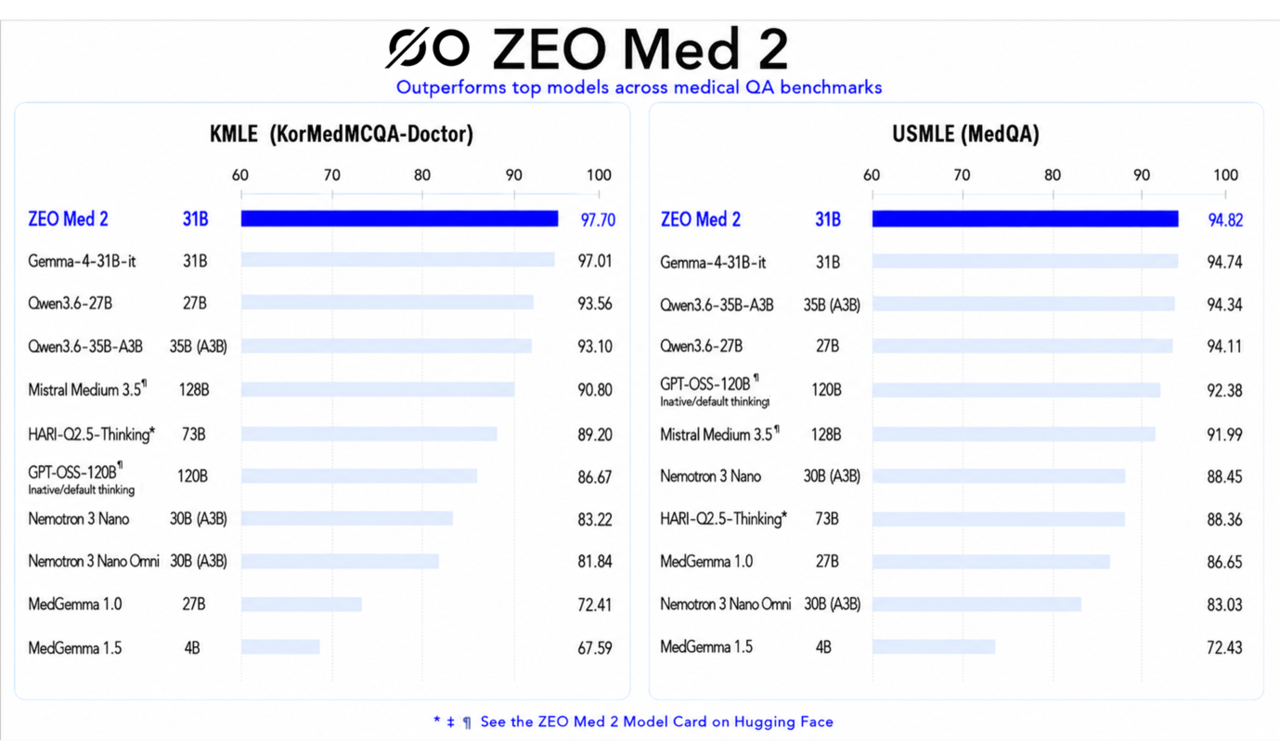
A medical AI model developed by Samsung Medical Center, ZEO Med 2, has outperformed GPT-5.2 and Google Gemini to achieve state-of-the-art results on benchmark evaluations based on Korean and US medical licensing exams.
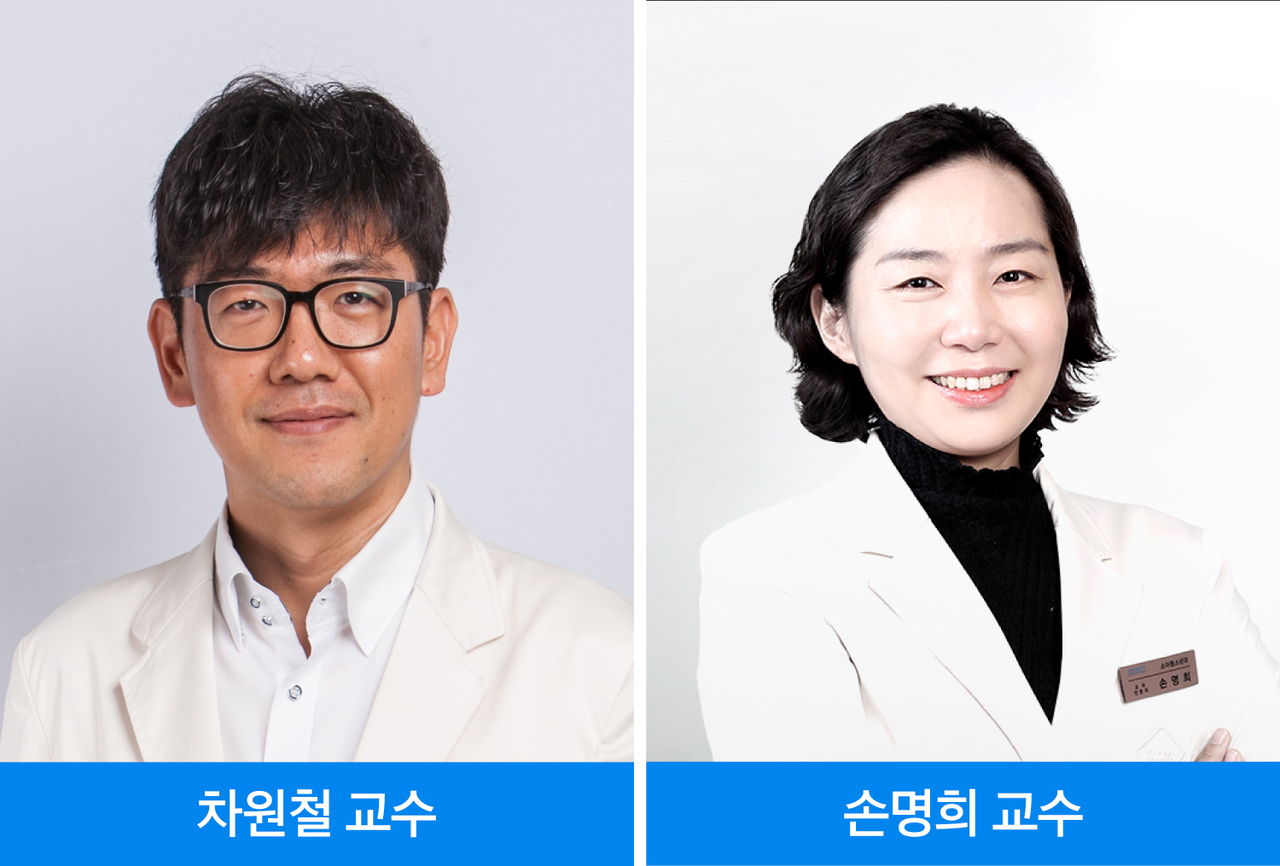
ZEO Med 2 was developed by a research team led by emergency medicine professors Cha Won-chul and Son Myung-hee, in collaboration with AI specialist firm Zero One AI, under a Ministry of Science and ICT project supporting advanced GPU use. On the KorMedMCQA benchmark — a collection of Korean national licensing exam questions for doctors, nurses, pharmacists and dentists — ZEO Med 2 answered 425 out of 435 physician-track questions correctly, for an accuracy rate of 97.70 percent.
GPT-5.2, evaluated under the same conditions, answered 424 questions correctly for a rate of 97.47 percent, while Google Gemini 3.1 Flash-Lite scored 96.09 percent. ZEO Med 2 outpaced GPT-5.2 by one question and Gemini by seven.
ZEO Med 2 also scored 94.8 on the MedQA-USMLE benchmark, surpassing competing models, according to the hospital. The model's weights, detailed benchmark performance data, evaluation logs and reproducibility code have been made publicly available on Hugging Face, the global AI model sharing platform, allowing anyone to use them.
Cha described the achievement as "the fruit of an organic collaboration among the government, the hospital and a private company," adding that "it is the combined result of GPU support from the government, the hospital's extensive clinical experience and data, and the technical expertise of an AI specialist firm."
With ZEO Med 2's performance now validated, Samsung Medical Center plans to refine the model further for deployment in real clinical settings. The hospital intends to improve the model using clinical data and expand its capabilities to handle multimodal inputs such as voice and video, while strengthening controllability through harness engineering to meet the safety and reliability demands of medical environments. The team also plans to lighten the model to broaden practical usability.
"The key now is not how many more exam questions the model can answer correctly, but building one that covers voice and video, connects reliably to real-world services, and can be used anywhere in a lightweight form," Cha said. "We will develop it into a clinically specialized AI that makes a genuine contribution on the ground."
kty@heraldcorp.com