"The people who used to come have disappeared one by one, but no new ones are taking their place."
Around 2:30 p.m. Thursday, a single elderly man sat alone eating a late meal at a heat-relief shelter on the second floor of Ujeong Senior Center in Nagwon-dong, Jongno-gu, Seoul. One more person walked in about 10 minutes later, but that was all — just two. The space was once filled with seniors playing hwatu card games and chatting.
Park Gil-seong, the center's chairman, said the place used to be far busier. "Some have passed away, and many others have gotten too sick to come," he said.
At the same hour, the area around Tapgol Park was teeming with elderly visitors. Benches were lined with seniors cooling off from the heat, and the nearby hangover-soup restaurants and cafes were filled almost entirely with older patrons. But once the sun goes down, the scene shifts in an instant. The elderly who fill Jongno's streets during the day return to their cramped single-room lodgings or homes, and their spots are taken by young people seeking the outdoor drinking tents known as "yajang."
The playgrounds that have long sustained Jongno's daytime streets — the spaces built for and by the elderly — are slowly disappearing.
'I'm afraid the singing room will be gone in a few years'
At Yeonbunhong Noraebang, a singing room three minutes on foot from Tapgol Park, chairs bearing the words "Rest here on your way up" are placed on every landing of the four-story staircase.
Just after 2 p.m. Thursday, five elderly patrons took turns at the microphone inside. One asked the accompanist to adjust the key; after each song, applause and words of encouragement followed.

Strangers greeted each other as naturally as old friends. In one corner, a man sipped soju he had brought from home while listening to others sing. For those who spent hours there singing and talking, the place was far more than a noraebang — it was a community living room.
Three years ago, 15 to 20 people visited each day. Now the daily count hovers around five. Yeonbunhong (80), who has run the singing room for five years, said the crowds have thinned sharply. "It used to be packed all day long, but these days far fewer people come," she said. "Climbing up and down four flights of stairs is getting harder for me too."
Kim Jong-dong (84), who commutes by subway from Paju — a two-hour ride — more than three times a week, set down the microphone Thursday after singing "Oji Anneun Nim" by Na Hoon-a. "The people who used to come are either sick or gone," Kim said. "The newly elderly prefer places like 7080 live cafes over somewhere like this. I'm afraid the singing room will disappear in a few years."
Senior centers tell a similar story. Unni Senior Center, visited Friday morning, had only its first-floor women's section open; the second-floor men's section was locked and no longer in operation. Chairwoman Eom Yun-ja (78) recalled that a decade ago, two male members would bring friends to play hwatu and socialize. "One passed away and the other stopped coming, so now nobody shows up at all," she said.
Gukbap joints, barbershops, movie theaters — aging alongside Jongno
Most seniors leaving the singing room headed to the same kinds of places: a bowl of gukbap at a hangover-soup restaurant, a stop at the barbershop for a trim, or an afternoon in Tapgol Park.
At Somun-nan-jip — known as the favorite haunt of the late broadcaster Song Hae, who died in 2022 — elderly patrons lingered over late lunches of ugeojihaejang-guk (cabbage hangover soup) and makgeolli. Choi Yeong-u (74), a 30-year regular, still makes the trip to Jongno four times a week even after moving to Namyangju. "There's a warmth here you don't find anywhere else — that's what keeps me coming back," he said.

A nearby restaurant owner, surnamed A, who has run a dried pollack hangover-soup restaurant for more than 30 years, said he too has felt the decline. "Business dropped off during COVID-19, and free meal programs have expanded, so it's not like it used to be," he said. "Selling gukbap for 3,000 to 4,000 won leaves almost nothing."
The pojangmacha food stall in front of Tapgol Park's east gate was quiet as well. It once drew crowds of elderly men pairing eel with soju, but only two customers were there Thursday afternoon. The vendor, surnamed Seo (69), who has worked the stall for seven years, said the old regulars have either died or grown too frail to come out. "The newly elderly don't really come to places like this," he said.
At Star Barbershop on Friday morning, seniors waiting for haircuts and dye jobs watched TV news and chatted. Both a haircut and a dye job cost 6,000 won. Kang Dae-hee (67), a five-year regular, said the price is part of the draw, but not all of it. "The skill is good, so I keep coming back — but it's also a community living room where you talk about what's going on in the world," he said.
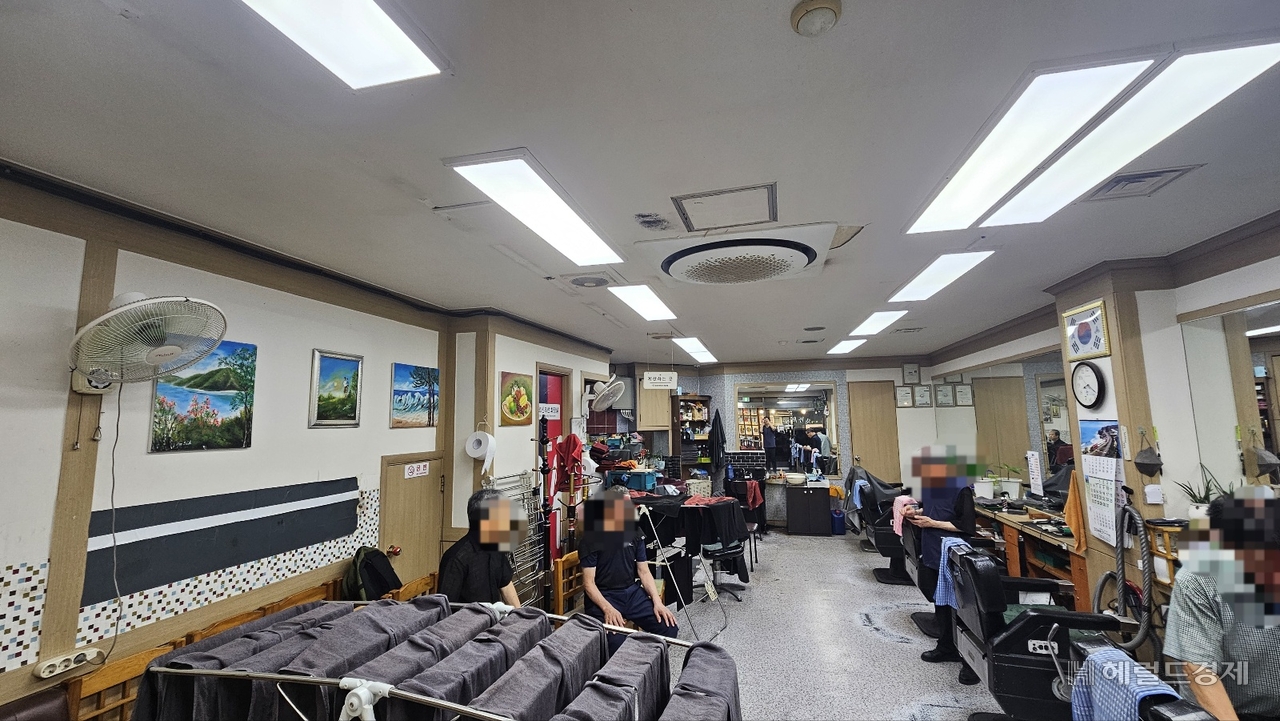
A barber surnamed Lee (75), with eight years on the job, described a typical day for many of his elderly customers: "They come in with a 10,000-won bill, get a haircut, eat a bowl of gukbap and stop by the park." His biggest worry, he said, is succession. "When we retire, there will be no one to carry on the craft." At nearby Myeongjin Barbershop and Shinsegae Barbershop, staff voiced the same concern, noting that the youngest barber in the area is already in his mid-70s.
A senior movie theater near Tapgol Park faces a similar reckoning. About 10 elderly patrons were already queuing at the box office before the 10 a.m. opening. Admission costs 2,000 won, and the film screening that day was the 1933 movie "Cavalcade." A theater official said most of the current audience is 80 or older. "When the generation changes, the way we operate will inevitably have to change too," the official said.
A vanishing 'senior culture'
Experts say the changes sweeping Jongno's senior economy reflect a generational shift more than a simple economic downturn.
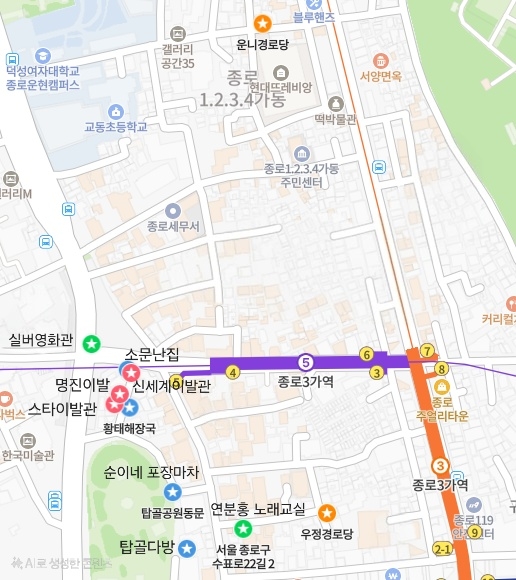
Jung Soon-dool, a social welfare professor at Ewha Womans University, said Jongno has long been a symbolic space for senior culture, shaped around Tapgol Park and the old Hollywood Theater. "The elderly who come to Jongno today are a generation that built their leisure culture around affordable restaurants, barbershops and movie theaters at a time when cultural opportunities were scarce," she said.
She added that the cohort now entering old age — people in their 60s and 70s — has different levels of education, cultural experience and lifestyle expectations. "They are unlikely to simply continue the same senior culture as it exists today," Jung said. "What we will see in Jongno is not so much the disappearance of senior culture as its transformation into a new form through generational change."
Seon Jong-pil, head of the commercial real estate research firm Sangga News Radar, said Jongno holds the memories of youth for the current generation of seniors. "The existing senior commercial district will gradually shrink in scale, but some spaces are likely to survive until redevelopment comes," he said.
jookapooka@heraldcorp.com
raining@heraldcorp.com