
6,093 fake items from Louis Vuitton, Chanel and others seized
Family and acquaintances recruited to handle sales and money laundering
Goods distributed through KakaoTalk, YouTube and offline stores
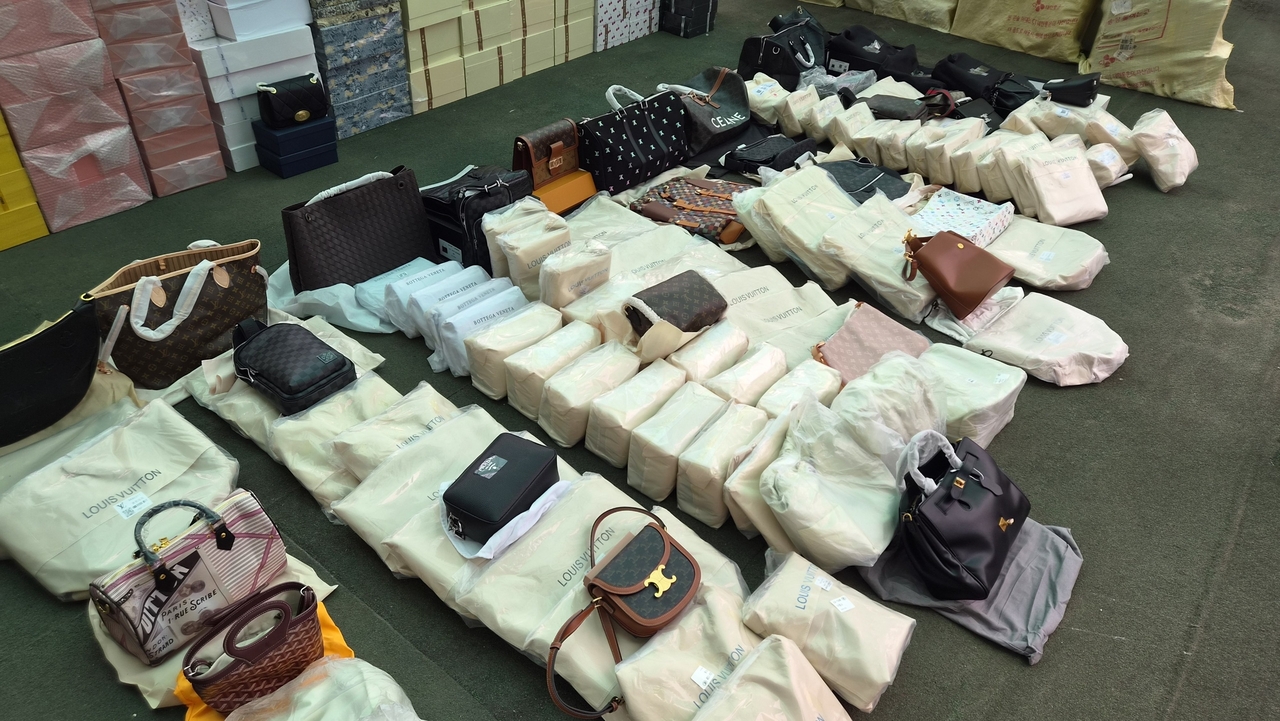
Police have arrested a gang that distributed more than 6,000 counterfeit luxury goods — including fake Louis Vuitton and Chanel items imported from China — and concealed over 5 billion won ($3.74 million) in criminal proceeds. The ringleader, who enlisted family members and acquaintances to handle sales and money laundering, has been handed over to prosecutors in custody.
Seoul's Seongbuk Police Station said Thursday it had forwarded the case to prosecutors with the ringleader — a woman in her 40s identified only as A — detained on charges of trademark law violations, concealment of criminal proceeds and violations of the Electronic Financial Transactions Act. Ten other members of the operation, who took part in sales, logistics and money laundering, were referred without detention on trademark and electronic financial transactions charges. All are South Korean nationals.
A and the others are accused of importing counterfeit bags, wallets and other goods made in China and selling them through online and offline channels from February last year to February this year. Police seized 6,093 counterfeit items across 27 product types, with an estimated retail value of about 35.5 billion won at authentic prices. "Calculated at genuine retail prices, the value approaches nearly 40 billion won, so we consider the scale of the seizure to be significant," a police official said.
The group divided responsibilities along a chain running from a Chinese supplier to a domestic sales chief, then to sales and retail operations, and finally to money laundering. A is believed to have assigned sales, distribution and money laundering duties to a son and several acquaintances.
The Chinese supplier, identified as B, used personal customs clearance codes to bring the counterfeit goods into the country and delivered them through women-only safe parcel lockers and similar services. The fakes were sold directly through online shopping malls and video platforms, or supplied to retail stores in major commercial districts such as Dongdaemun and Myeong-dong at 2 to 3 percent of the genuine retail price.
Online sales were conducted through dedicated websites and KakaoTalk, and more recently through YouTube live streams. "They used KakaoTalk a lot at one point, but these days a lot of the selling happens on YouTube," a police official said. "The methods are varied — they sell in formats that look like live broadcasts."
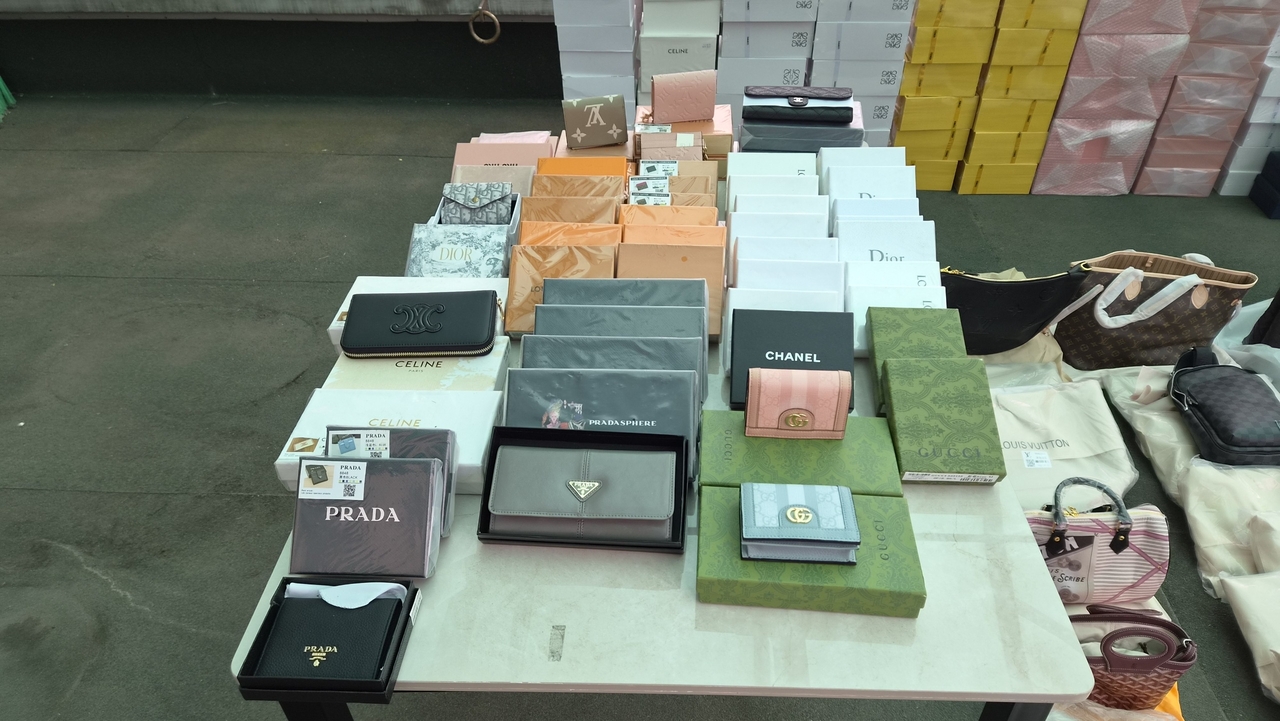
Police believe the retailers who received the counterfeit goods were aware they were fakes. Gang members were paid either a fixed percentage of the supply amount as commission or a set salary, and sales proceeds were concealed by routing payments through accounts held in other people's names before being converted to cash.
The investigation began Feb. 24, after a tip to the 112 emergency line reporting a warehouse storing counterfeit luxury goods. Police arrested two employees at the scene on trademark violation charges and then conducted search and seizure operations at additional warehouses.
Investigators then analyzed more than 50 financial accounts, identifying about 5.1 billion won in criminal proceeds, and used seized mobile phones and call records to track down additional distribution and logistics members as well as retail operators.
Police are pursuing the overseas-based supply chief, who fled abroad, and have secured a pre-indictment asset preservation order on 35 million won of the criminal proceeds. "Distributing counterfeit goods harms not only consumers but also legitimate trademark holders and retailers," a police official said. "We will continue investigating related crimes to eradicate trademark infringement and protect intellectual property rights."
jookapooka@heraldcorp.com




