The Korea Value-up Index hit an all-time high last month, with the combined net assets of exchange-traded funds tracking the index swelling to the 4 trillion won ($2.61 billion) range.
According to the "June 2026 Monthly Corporate Value Enhancement Report" released by Korea Exchange on Tuesday, the Korea Value-up Index — designed to encourage investment in companies with strong corporate value — reached 4,276.72 on June 22, setting an all-time high.
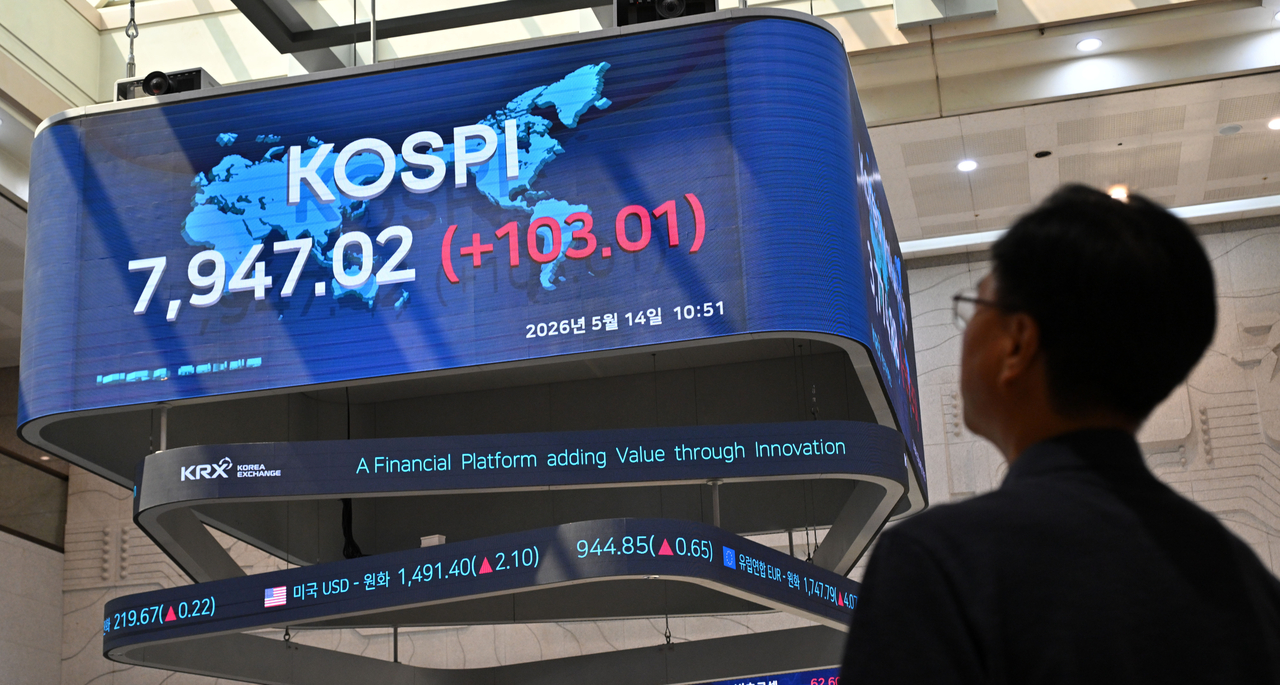
That marks a 331 percent gain from the index's base date of Sept. 30, 2024, outpacing the Kospi's rise over the same period by 79.6 percentage points.
Korea Exchange developed the Value-up Index to steer investment toward companies with superior corporate value, selecting constituent stocks based on company size, profitability and shareholder returns.
The combined net assets of the 13 Value-up ETFs tracking the index stood at 4.2 trillion won at the end of last month, up 762 percent from when the first fund launched on Nov. 4, 2024.
Twelve companies filed new corporate value enhancement plans last month.
Of those, four were classified as high-dividend companies, and four submitted periodic disclosures — filings made by companies that have previously submitted a plan and include a progress assessment of their earlier commitment.
The total number of companies that have filed disclosures now stands at 741, comprising 347 Kospi-listed firms and 394 Kosdaq-listed firms.
The combined market capitalization of disclosing companies accounted for 85.5 percent of the overall market, with Kospi-listed disclosers representing 89.4 percent of the Kospi's total market cap.
The trend of listed companies strengthening shareholder returns continued last month.
Mirae Asset Securities decided to buy back 300 billion won worth of its own shares, while Pearl Abyss disclosed plans to cancel 17.3 billion won worth of treasury shares.
With buybacks, share cancellations and cash dividends among listed companies all rising over the past three years, companies are increasingly following through on shareholder return commitments made in their value enhancement disclosures.
On its plans going forward, Korea Exchange said it had established the basis for identifying and publishing a list of low price-to-book ratio companies to encourage voluntary corporate value improvement, adding that it plans to finalize the selection criteria, publication method and related guidelines this month.
The exchange is considering publishing a list of companies whose PBR ranks in the bottom 20 percent of their sector across two consecutive regular reports, excluding quarterly filings. The intent is to use public disclosure to prompt undervalued companies to take steps on their own to improve corporate value.
However, analysts note that PBR is not something companies can lift quickly, and that escaping the stigma of a low-PBR designation will require sustained long-term efforts — including stronger shareholder returns, improved profitability and greater capital efficiency.
jiyun@heraldcorp.com