190 meetings held, 1,020 people consulted, 452 policy tasks reviewed
North Port dome stadium may cost more than expected, team says
New political affairs line being 'cleanly and quickly' arranged
Final model for Busan-Ulsan-South Gyeongnam cooperation yet to be decided
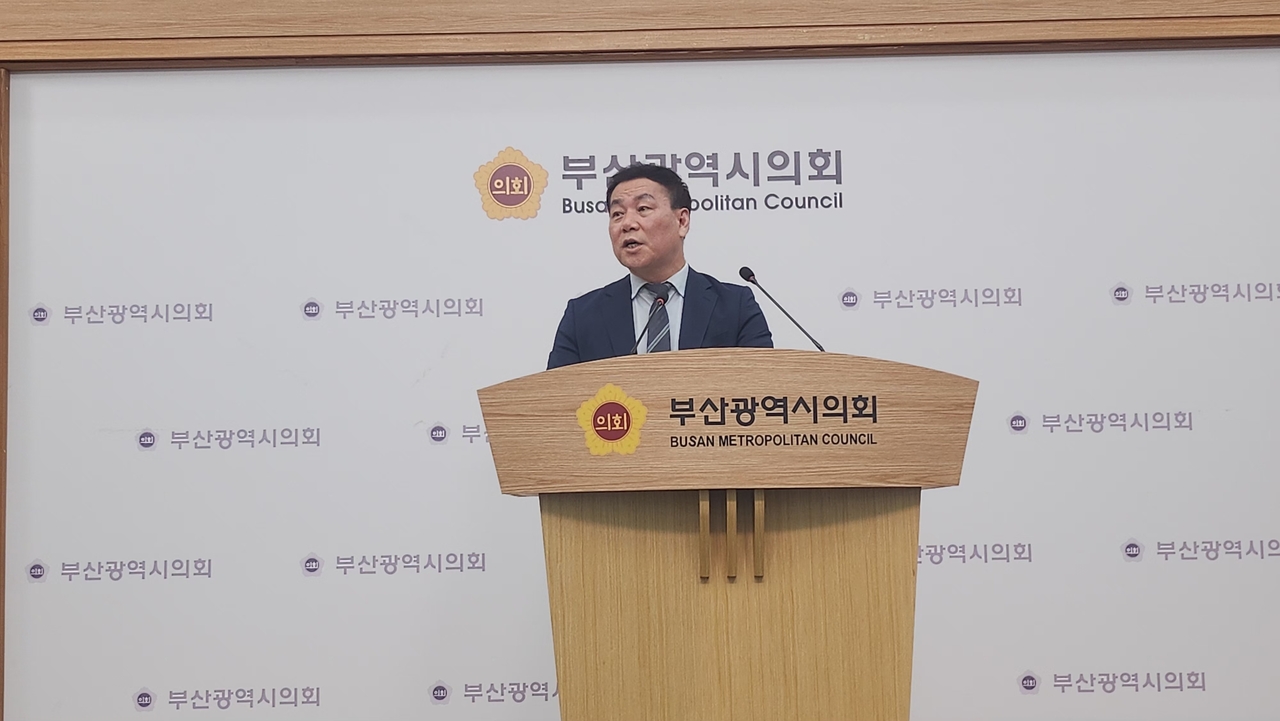
Cha Jae-kwon, chairman of the transition committee for Busan Mayor-elect Jeon Jae-soo, held a press conference at the Busan City Council briefing room on Tuesday. He said the committee had held 190 meetings and consultations since its launch, met with 1,020 citizens and field officials, and reviewed 452 policy tasks covering campaign pledges, citizen proposals and key pending issues.
On the campaign pledge to build a retractable dome baseball stadium at North Port, Cha said the project could cost more than envisioned during the campaign and was ultimately tied to the question of what to do with Sajik Stadium, adding that the committee would weigh the matter comprehensively. "We are also exploring a third option that could reduce the budget if possible," he said.
Asked about personnel appointments for the ninth elected-term administration, Cha said the transition committee had no interest in and no role in personnel matters. He added that "the political affairs line is being cleanly and quickly arranged in line with the mayor-elect's wishes as the one who holds appointment authority."
Responding to criticism that cultural and tourism policy beyond the Pompidou Center and La Scala performance projects was hard to see, Cha said the arts and culture sector varied too widely by genre to address all at once. The policies to be announced after the transition period would resolve any doubts, he said.
On communication with the People Power Party, which holds a majority in the Busan City Council, Cha said city administration could not run on the executive branch alone. "Given the environment — a 37-to-11 council composition and an 18-to-zero lineup of local National Assembly members — it will be hard to move forward without listening to the voices of citizens with conservative leanings," he said.
Cha added that Mayor-elect Jeon had instructed the team: "Since all stakeholders may think differently, don't just meet with people who are convenient for us — try to hear as many uncomfortable opinions as possible."
On metropolitan cooperation among Busan, Ulsan and South Gyeongsang Province, Cha said there would likely be calls for the three regions to work together from the planning stage on issues related to the central government's "five-pole, three-special" regional development framework. He said the committee would gather a wide range of public opinion before settling on a final model — whether to continue the separate administrative integration pursued by Busan and South Gyeongsang Province, to pursue a Busan-Ulsan-South Gyeongsang mega-city regional federation, or to move from federation toward full integration. No supra-regional cooperation model has been decided, he said.
On the top campaign pledge — a 100-day emergency livelihood package — Cha said it was difficult to state the total budget precisely, as the committee was still confirming available funds with the budget department. "It will become clear when we finalize the policy pledges," he said.
Meanwhile, the transition committee has held 39 field consultations to date, meeting with 396 officials to examine Busan's key industries and livelihood conditions on the ground, and 36 public consultations in which 227 citizens, association representatives and civic group officials presented policy proposals.
kaf2002@heraldcorp.com