Ministry of Trade, Industry and Energy holds second joint public-private export expansion meeting
![Minister of Trade, Industry and Energy Kim Jung-kwan [Yonhap]](https://wimg.heraldcorp.com/news/cms/2026/06/24/rcv.YNA.20260623.PYH2026062312850001301_P1.jpg)
The government plans to double the number of overseas test and certification documents issuable domestically by 2028 and to develop 10 flagship "national team" K-reverse-purchase platforms by 2030, as part of efforts to help small and medium-sized consumer goods companies expand into overseas markets.
South Korea's Ministry of Trade, Industry and Energy said Wednesday it held the Second Joint Public-Private Export Expansion Meeting at the Korea Trade Insurance Corporation in Jongno-gu, Seoul, chaired by Minister Kim Jung-kwan, where it discussed measures to support K-consumer goods exports.
The meeting featured presentations on three topics: a comprehensive overseas certification support strategy for exporting companies, a plan to build a combined retail and K-consumer goods export platform, and measures to support entry into the halal market to diversify consumer goods exports.
The government's first priority is to reduce the cost and time companies spend obtaining overseas certifications. The number of overseas test and certification documents issuable domestically will expand from the current 212 to 500 by 2028, and the scale of export voucher support will also increase.
An AI-based information portal on overseas certifications and technical regulations will be upgraded, and tailored consulting will be provided to 2,000 companies by 2027.
For unreasonable overseas certification regimes, the Korean Agency for Technology and Standards, overseas diplomatic missions and KOTRA will respond as a unified team.
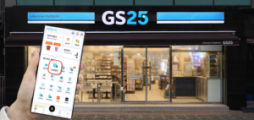
The government will also strengthen programs combining K-consumer goods with the retail industry. With a goal of developing 10 flagship K-reverse-purchase platforms by 2030, it will support connections between domestic consumer goods companies, overseas marketing and the expansion of payment infrastructure.
A one-stop export support system called "K-Consumer Goods Carrier" will also be established, enabling retail companies to serve as comprehensive agents covering product discovery, certification and promotion, while relevant agencies provide tailored support when difficulties arise.
To that end, 13 retail platform companies and eight export support agencies signed an MOU at the meeting.
The Korea International Trade Association will take the lead in implementing measures to support K-consumer goods companies' entry into the halal market. It will facilitate exchanges between domestic and overseas halal certification bodies to expand the number of recognized partner countries and eligible product categories, and will build a comprehensive halal information system to provide one-on-one tailored consulting.
Low-interest trade promotion loans worth 10 billion won ($6.51 million) will also be made available to halal exporters.
"To leap into the ranks of the world's top five export nations, 'exports for all' — where not just a handful of companies or specific products but everyone shares in the results — is essential," Kim said. "The public and private sectors will join forces to help K-consumer goods small and medium-sized enterprises overcome overseas certification barriers and expand globally through retail platforms."
oskymoon@heraldcorp.com