Three-pillar growth vision: completing Cheongnyangni traditional market's 'Design Innovation Market,' the Hongneung biotech cluster, and the Dapsimni-Jangan Heritage Project
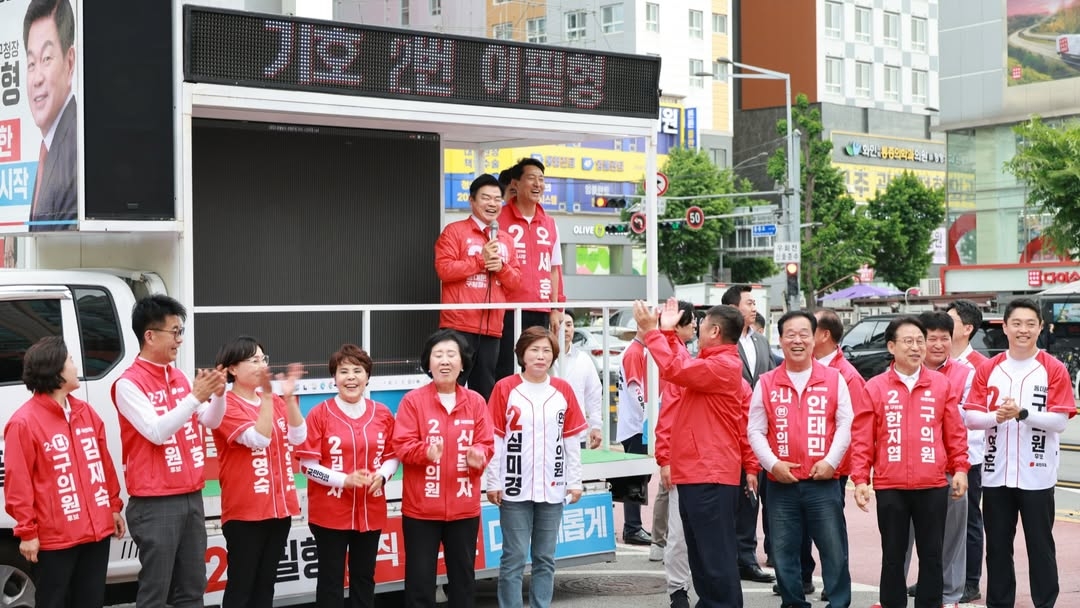
Lee Pil-hyung, the candidate for Dongdaemun-gu district chief, unveiled a three-pillar economic growth vision for the district and declared strong opposition to plans to build public rental housing on land in the Hongneung area.
The three pillars Lee put forward are: completing Cheongnyangni traditional market's Design Innovation Market, completing the Hongneung biotech cluster, and the Dapsimni-Jangan Heritage Project.
Lee particularly emphasized the Hongneung biotech cluster — the second pillar of his economic vision — and directly criticized plans to build public rental apartments on a site he said should be reserved for future-growth industries. In January, South Korea's Ministry of Land, Infrastructure and Transport announced a plan to supply 60,000 units of public rental housing on prime sites within Seoul, including land in Hongneung currently occupied by the Korea Institute for Defense Analyses and the Korea Economic Development Exhibition Hall.
"Along Hoegi-ro, there are many talented young people from Korea University, KAIST, Kyung Hee University and other top institutions, and Hongneung — where biotech research institutes are concentrated — is destined to become a leading hub for Seoul's and South Korea's future industries," Lee said. "Talking about building public rental apartments there is simply absurd."
Lee doubled down, saying that "while the aging residential neighborhoods across the street, which have been suffering for decades and desperately need genuine redevelopment and reconstruction, are being completely ignored, building new public rental housing in a strategic location where Dongdaemun's advanced industries should be attracted and grown would ultimately kill the city." He added that the Hongneung area must be developed as a biotech and R&D cluster.
As the first economic pillar, Lee cited revitalizing neighborhood commerce through the modernization of traditional markets. Cheongnyangni traditional market gained momentum in May when the Seoul Metropolitan Government's investment review committee gave conditional approval for 22.4 billion won ($16 million) in investment for the Design Innovation Market development project.
"We will boost tourism by completing the Design Innovation Market and the Jeegi-dong hanok village," Lee said. "By connecting to Cheongnyangni Station through the Wangsanno Street of Lights project, for which Seoul city funding has already been secured, we will make the traditional market the economic heart linking the east and west of Cheongnyangni."
The Dapsimni-Jangan Heritage Project was introduced as the third pillar, completing the historical and cultural economic axis. The project aims to create a sweeping economic corridor linking the Dapsimni antique art district, Gandeme Park, Dapsimni Park, the Seoul Metropolitan Dongdaemun Library and the Jangan waterfront park into a single connected zone.
"The Heritage Project represents history and culture, the Design Innovation Market represents the present, and the Hongneung biotech and R&D cluster represents the industries of the future," Lee said. "On the foundation of this triangular economic axis connecting past, present and future, I will build a great economic corridor that goes beyond Dongdaemun-gu to encompass all of Seoul."
seouldream01@heraldcorp.com