Seoul Metro will remove 49 manual steel gates at 39 stations on lines 5–8 and replace them with flap-type automatic fare gates, improving accessibility for wheelchair users and stroller passengers while helping prevent fare evasion.
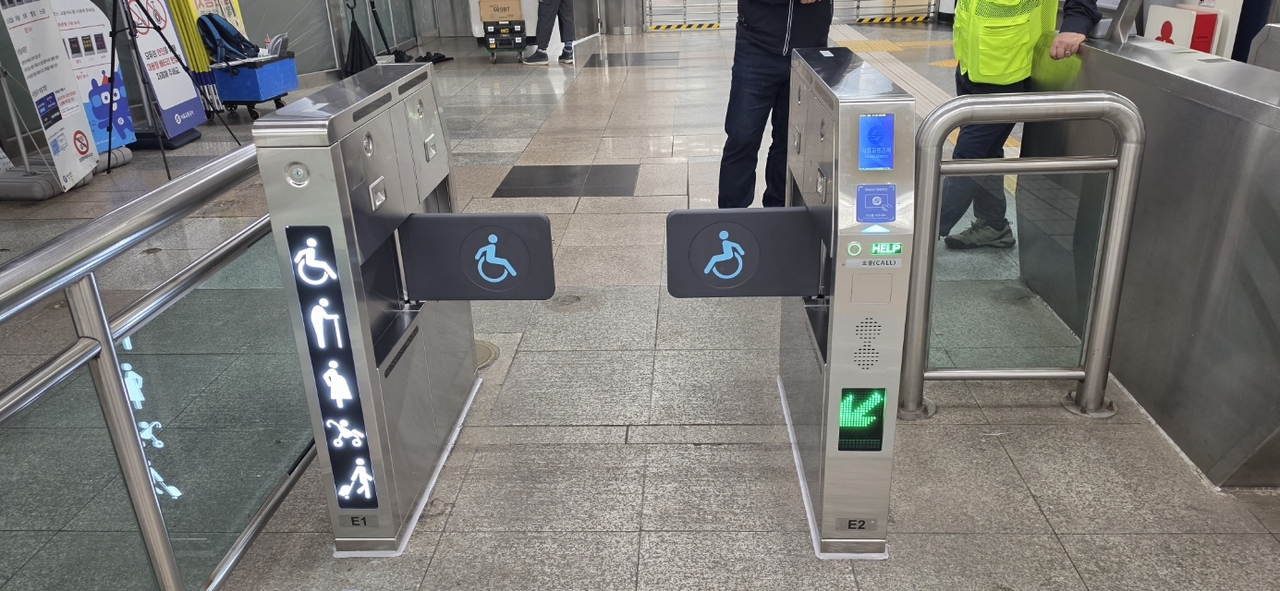
Seoul Metro is moving ahead with a project to replace manual steel gates designated for passengers with mobility needs, along with long-in-service fare gates across its network. Once complete, the upgrades are expected to improve accessibility for those passengers and enhance overall subway safety.
The agency said it will remove 49 manual steel gates at 39 stations on lines 5 through 8 — the last remaining stations on those lines still using the old design — and replace them with flap-type automatic fare gates. The project covers stations across all 559 accessible passageways on lines 1 through 8.
The existing steel emergency gates operate as single-direction, manually pushed doors, meaning wheelchair users, stroller passengers and cyclists have had to push the gate themselves or rely on station staff for help.
The gates also lack transit card readers, forcing passengers with mobility needs to tap their cards at a separate fare gate before doubling back to pass through, creating disrupted foot traffic and congestion inside stations.
The new flap-type gates will let passengers tap their transit cards and pass through in a single, uninterrupted movement, Seoul Metro said, improving both convenience and overall passenger flow. The change is also expected to reduce fare evasion and ease the workload of station staff, who currently must manually open the gates and guide passengers through.

The upgrade also brings meaningful safety improvements. The existing steel manual gates open in only one direction, which could obstruct evacuation routes in emergencies such as fires. The new flap-type gates are linked to fire alarm systems and open automatically, Seoul Metro said, helping secure evacuation paths and improve passenger safety during emergencies.
The project reflects improvement recommendations from the Ministry of Land, Infrastructure and Transport's 2023 safety and accessibility assessment of railway stations. Alongside the gate replacements, Seoul Metro is also sequentially replacing worn fare gates at 51 locations across 41 stations with the latest flap-type models. The agency expects to complete both projects by the end of July.

Under the enforcement rules of the Act on Promotion of the Transportation Convenience of Mobility Disadvantaged Persons and urban rail station design guidelines, stations must install at least one automatic fare gate for passengers with mobility needs measuring 900 millimeters or more in width.
"This fare gate improvement project is a measure to ensure that all citizens, including those with mobility needs, can use the subway more safely and conveniently," said Kim Ki-byung, head of Seoul Metro's technology division. "We will continue to push forward with facility improvements to create an urban rail environment centered on passenger safety."
seouldream01@heraldcorp.com