'Ultra-late night' covers midnight to 4 a.m.; extra rest recommended for repeat workers
'48 hours off after two consecutive night shifts' drawn from nursing-staff guidelines
Mandatory health checks apply; support for workplaces cutting night hours starts next year
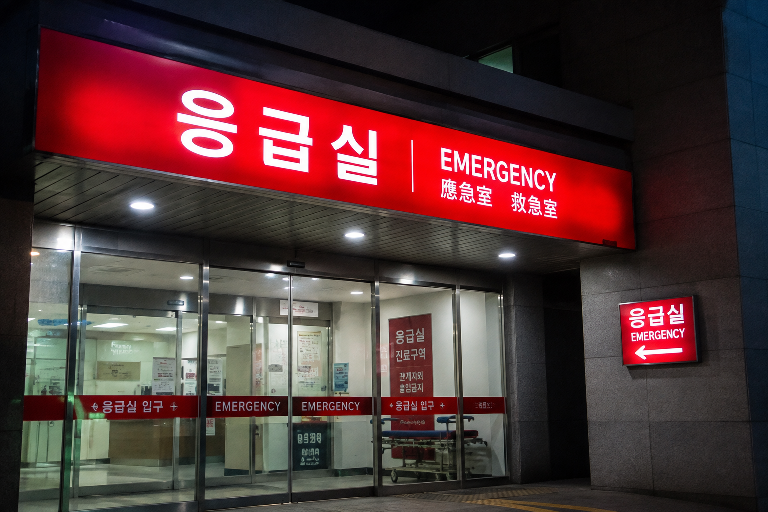
South Korea's Ministry of Employment and Labor on Sunday released a health-protection guide for night-shift workers, recommending that employees who regularly work between midnight and 4 a.m. receive additional rest or leave. The following Q&A, based on the ministry's release and explanatory materials, covers key questions — from whether working at 2 a.m. automatically means more break time, to how often a worker must do night shifts before a special health examination is required.
― Does working at 2 a.m. entitle a worker to extra rest?
The guide designates midnight to 4 a.m. as the "ultra-late night" period and identifies workers who regularly and repeatedly work those hours as a priority protection group. It recommends that workplaces, through labor-management consultation, extend in-shift breaks or post-shift rest periods, or use a compensatory leave scheme that grants additional leave on top of leave already equivalent to night-shift pay. The specific amount of rest time and how it is structured are left to labor-management negotiation based on each workplace's circumstances.
― Does working two consecutive night shifts mean 48 hours off?
The "48 or more hours of rest after two or more consecutive night shifts" cited in the guide is drawn from the Ministry of Health and Welfare's nursing-staff night-shift guidelines. "No more than three consecutive night shifts" is similarly a reference standard included in the guide. The intent of the recommendation is to keep the number of consecutive night shifts at a manageable level and to ensure sufficient recovery time after shifts end. There are no separate sanctions for failing to follow the guide.
― How often must a worker do night shifts before a special health examination is required?
An employer must arrange a special health examination if a worker meets either of two criteria: averaging four or more times per month over six months of continuous eight-hour shifts that include the midnight-to-5 a.m. window, or averaging 60 or more hours per month over the same period working between 10 p.m. and 6 a.m. the following morning. Workers subject to the requirement must undergo a pre-placement health check, then a first special examination within six months of being assigned to night work, followed by regular check-ups every 12 months. Where examination results indicate a need, employers must take measures such as restricting night-shift hours or reassigning the worker.
― What about factories or hospitals that operate around the clock?
All workplaces where work takes place between 10 p.m. and 6 a.m. may refer to the guide's basic principles, including recording and managing shift hours. Workplaces that require night work are encouraged to have labor and management consult on options suited to their circumstances — such as restructuring shift rotations, adjusting the intensity of overnight duties, and securing adequate rest time. The guide also recommends examining whether tasks with a high accident risk during ultra-late-night hours can be moved to other time slots, and, where night work is unavoidable, strengthening safety management and supervision.
― Which workplaces will be eligible for support next year?
The government will add a night-work reduction support component to its "Work-Life Balance Plus 4.5 Project" in 2027. Eligible workplaces are those that, through labor-management agreement, reduce night-shift hours or guarantee additional breaks and rest without cutting pay. Workplaces that reduce ultra-late-night hours will receive preferential treatment. For certain categories — including life-and-safety operations, shift-rotation restructuring, and long-hours workplaces — companies with 300 or more employees will also be eligible.
― Will separate night-shift standards be set for early-morning delivery or care workers?
The ministry plans to discuss dedicated protection measures for the delivery and care sectors, where long hours and high workload intensity make protection urgent. Definitions of night workers, caps on night-shift hours, and standards for guaranteed rest after night shifts will also be reviewed through social dialogue involving labor, management and experts.
fact0514@heraldcorp.com