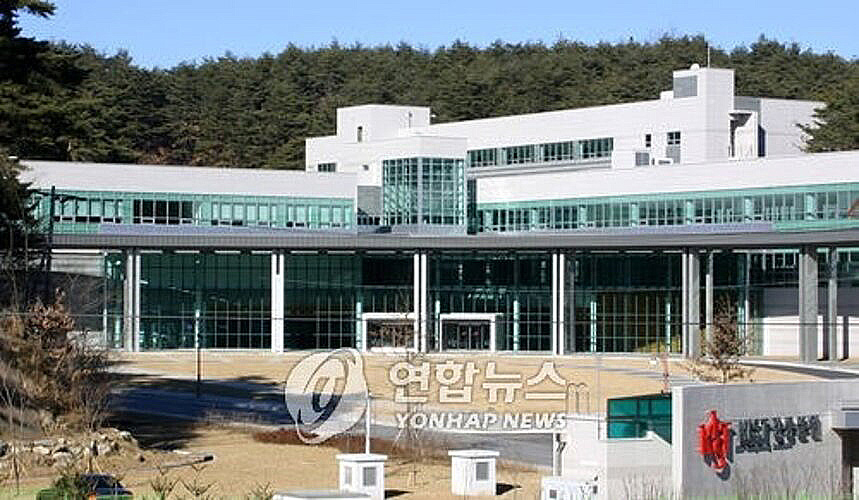
Gangwon Special Self-Governing Province announced Saturday it will carry out a regional autonomous research and development project with the Korea Institute of Science and Technology's Gangneung branch, committing a combined 158.8 billion won ($118 million) — 128.8 billion won in national funds and 30 billion won in local government funds.
The project, led by the Gangwon Regional Autonomous R&D Business Group, runs from this month through December 2030 and centers on training personnel in key technology fields while advancing technology development and commercialization.
Priority technology areas include functional bio-materials for bio-healthcare and ceramic materials for semiconductors and hydrogen applications. A pilot phase costing 8.8 billion won will wrap up by the end of this year, after which the main project will launch with 150 billion won invested over 2027 to 2030.
The regional autonomous R&D initiative is part of President Lee Jae Myung's national policy agenda and one of the core projects under the systems innovation track aimed at making South Korea one of the world's top five science and technology powers. Directed and supported by the Ministry of Science and ICT, the project seeks to build sustainable regional science and technology capacity through a shift to a four-hub, three-special-zone regional autonomous R&D framework.
KIST will link its priority R&D technologies — functional bio-materials and ceramic materials — with Gangwon Province's strategic industries, including bio-healthcare, to conduct research driven by the technology needs of local companies.
KIST will also serve as a hub for transferring strong research outcomes from government-funded research institutes in the province to local businesses, supporting joint research, demonstration projects and product development to strengthen the technological competitiveness and boost sales of companies in the region.
Separately, the KIST Gangneung branch will lead an 8.88 billion won project to develop innovative natural-substance technologies tailored to different frailty profiles, with Yonsei University's Wonju College of Medicine participating.
The project will draw on a frailty cohort — aging and frailty data collected from thousands of residents by Yonsei University's Wonju College of Medicine — to develop materials and products for frailty prevention by linking medical data with natural-substance data.
Specific development targets identified so far include more than 30 types of care foods and functional bio-materials, along with two clinical candidate substances.
Gangwon Province said it expects the project to drive growth among local biotech companies in food and pharmaceuticals and attract anchor firms by developing AI-based frailty classification systems and care foods targeting musculoskeletal health, cognitive function and cancer prevention, then transferring those technologies to partner companies for commercialization.
The province also projected that the initiative will accelerate the development of personalized precision medicine and functional food products for elderly health management, ultimately building a pool of natural-substance materials for frailty-tailored care foods and generating commercialization cases.
abc@heraldcorp.com