
Concerns raised over potential 'paparazzi' effect as reward reaches 500 million won
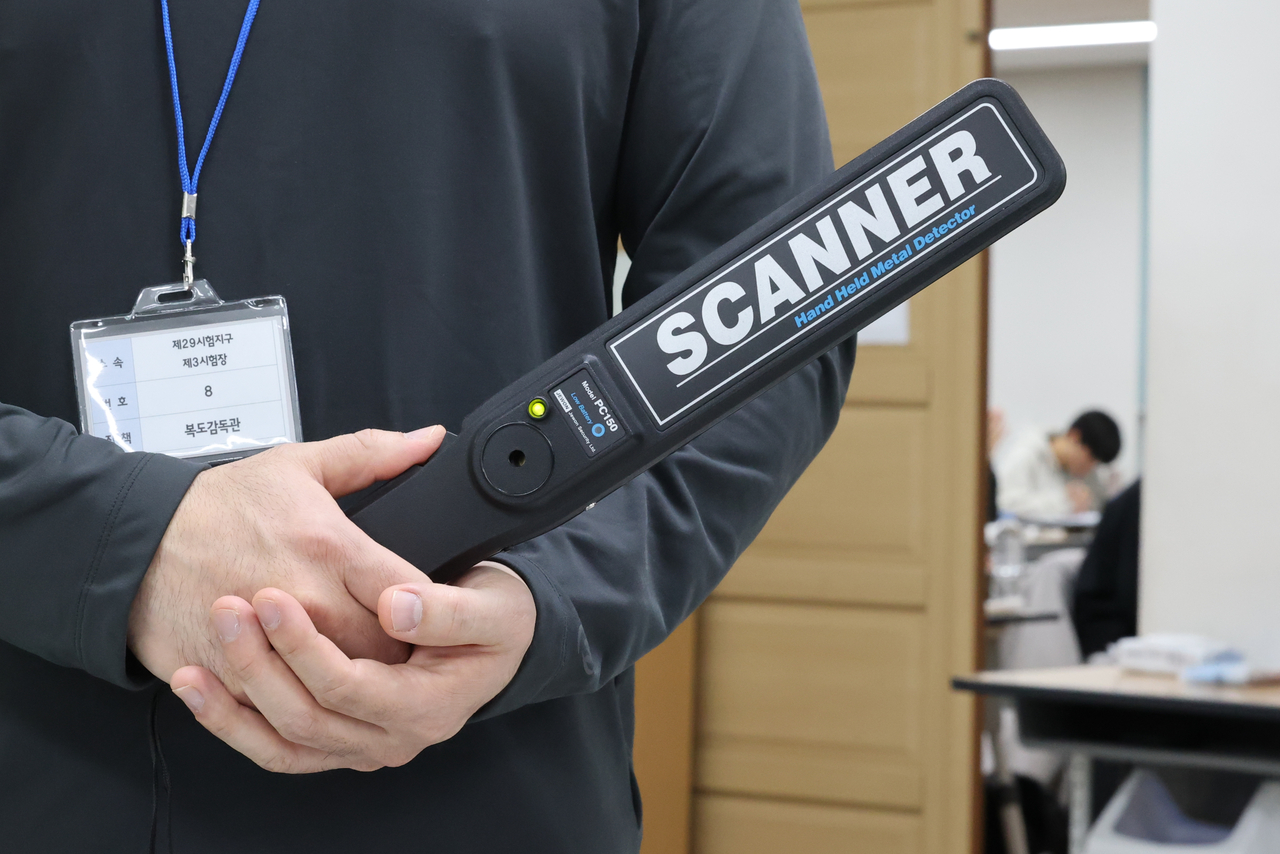
As AI-assisted cheating on national exams comes to light with increasing frequency, the government has announced a whistleblower reward of up to 500 million won ($372,000) — but the move is drawing warnings that it could spawn a new breed of exam-hall bounty hunters.
The government announced on Nov. 18, the day before the 2027 College Scholastic Ability Test, that it would offer 100 million won per reported case of cheating.
The pledge was one of several hastily assembled measures after anxiety over AI-assisted cheating spread following an incident in which the top scorer on a tax accountant licensing exam was found to have used a smart device.
When unease over "AI cheating" persisted even after the CSAT was held, the reward amount jumped fivefold.
President Lee Jae Myung wrote on X, formerly Twitter, on Nov. 21 that "the reporting reward is not a maximum of 100 million won — it is a minimum of 100 million won per act of cheating, and in principle it is multiplied by the number of cheaters involved." Two days later, the Anti-Corruption and Civil Rights Commission announced the reward would reach a maximum of 500 million won.
The announcement set online communities frequented by test-takers and the general public buzzing. Posts and comments ranged from "lucky enough and this exam is a lottery ticket" and "a tidy little side hustle" to more cynical remarks that "if two people collude just right, that's 250 million won each."
Some in education circles, including teacher organizations, have warned that raising the reward to 500 million won could unleash a wave of exam-hall paparazzi, sowing chaos at test sites across the country.
With proctors already stretched thin, they argue that a scramble among test-takers to catch and report one another for the bounty could dramatically increase the burden on exam administrators.
Democratic Party of Korea lawmaker Kim Moon-su raised the issue at a plenary session of the National Assembly's Education Committee on Friday, saying there are "opposing views that the reward money could encourage students to develop an uneducational and unethical mindset in pursuit of money."
"I understand the government's determination to catch cheaters who slip through the cracks in supervision," an education sector official said, "but it could end up disrupting the normal exam experience for ordinary test-takers." The official added that a surge in false or exaggerated reports filed in pursuit of the reward could also waste considerable administrative resources.
In practice, of the 306 cheating-related tips and reports received by the Ministry of Education as of Wednesday, none involved serious cases that could be classified as "AI cheating."
A significant number of the submissions were reportedly malicious accusations or unsubstantiated rumors.
Choe Eun-ok, acting minister of education, told the Assembly's Education Committee on Friday that the reporting center, which had been operating since Nov. 5, was consolidated under the Anti-Corruption and Civil Rights Commission after the CSAT. "The legal basis for the reward lies with the commission," she said, adding that once an amendment to the Higher Education Act passes, the Ministry of Education will be able to issue rewards directly.
20ki@heraldcorp.com




