New Zealand researchers stopped 30 pedestrians on an icy hill to test a local tip: pull a pair of socks over your shoes
Sock-wearers slipped far less — the only side effect was 'embarrassment'
The study won the 2010 Ig Nobel Prize in Physics
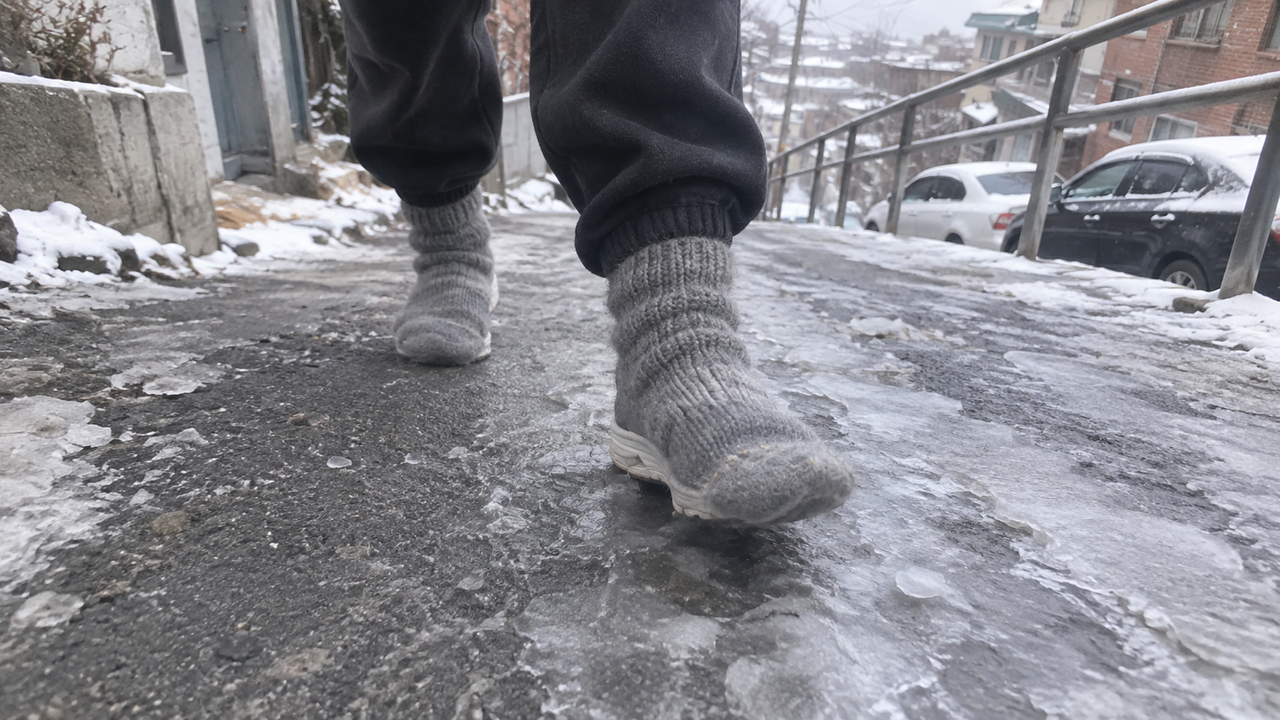
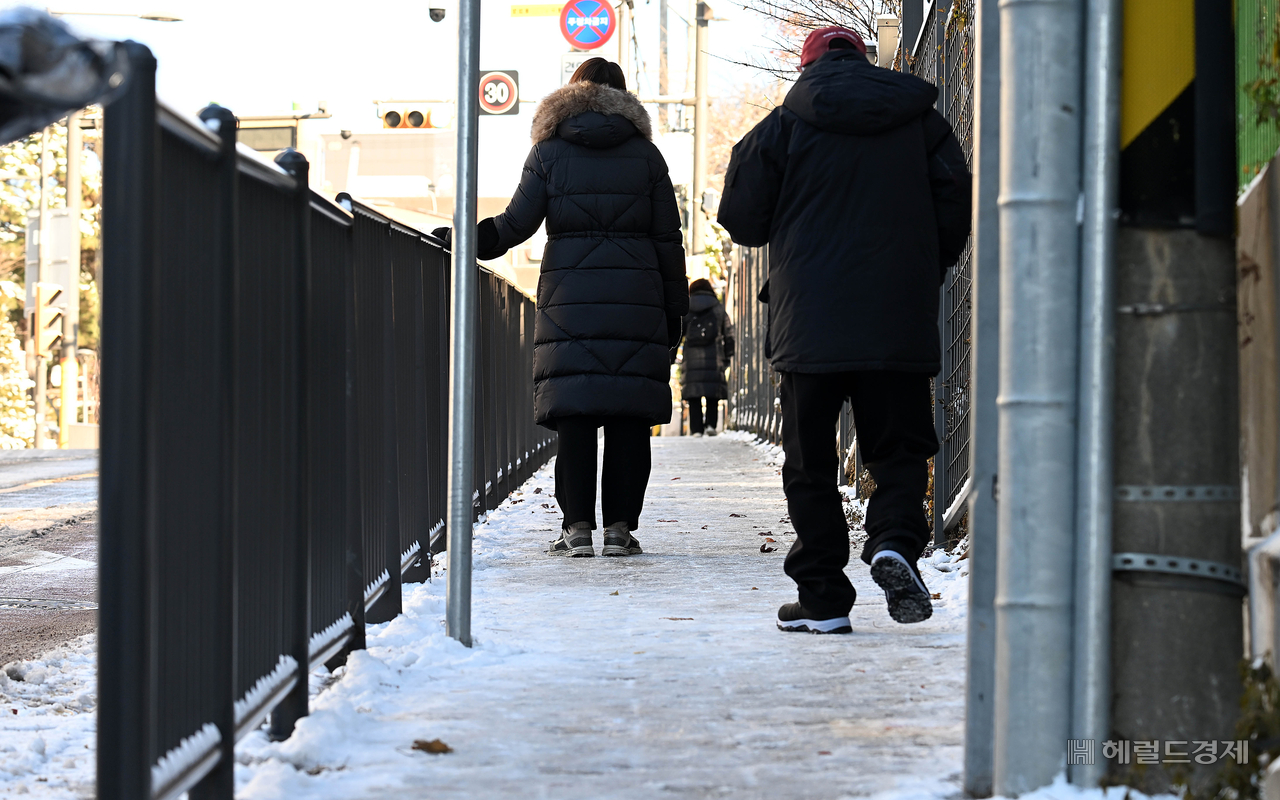
With Seoul's first snowfall of the year arriving unusually early and raising fresh concerns about icy-pavement falls, a study that experimentally confirmed wearing socks over shoes reduces slipping is drawing renewed attention.
According to the Korea Meteorological Administration, Seoul's first snow this year fell on Nov. 8 — 26 days earlier than last year, 12 days ahead of the historical average, and the sixth-earliest first snowfall since records began in 1973. Once the first snow arrives, icy-road season is not far behind.
The unusual finding that pulling socks over shoes makes icy surfaces less treacherous came from an actual experiment conducted by a research team led by Professor Lianne Parkin of the University of Otago in New Zealand. The study earned the team the Ig Nobel Prize in Physics in 2010.
The Ig Nobel Prize is awarded by the American humor science magazine Annals of Improbable Research, which has since 1991 recognized research that "first makes people laugh, then makes them think."
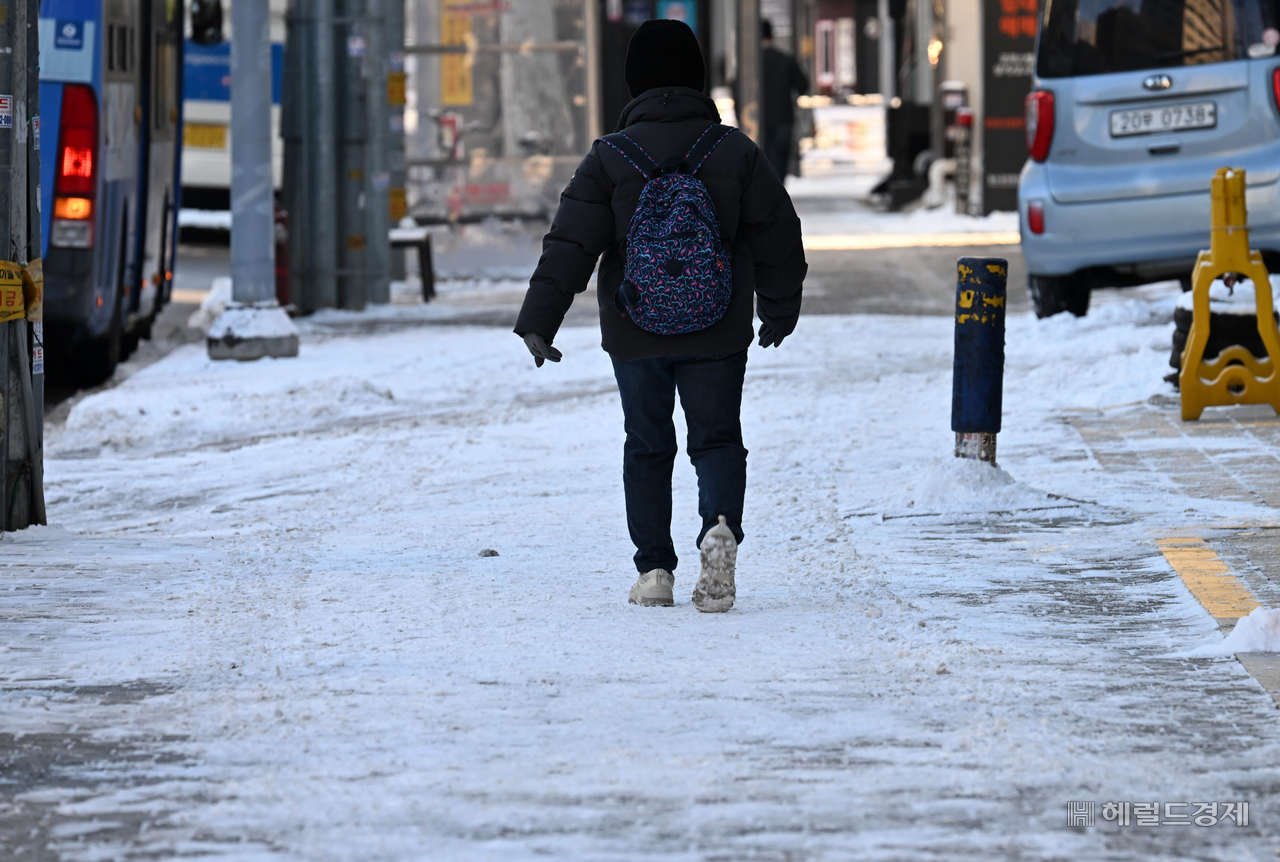
Socks over old shoes on icy roads — does the advice actually work?
The city of Dunedin, New Zealand, where the research team was based at the time, had long advised residents to "wear an old pair of socks over their footwear to prevent slipping" when walking on icy winter streets. According to the paper, the team designed the experiment to find out whether the city's icy-road safety tip actually worked in practice.
Dunedin's universities, hospitals and shops are clustered on flat ground, but most residential neighborhoods are spread across surrounding hills. The team wrote in the paper that "in winter, after a period of wet weather followed by sub-zero temperatures, a short commute can become a long and dangerous expedition."
They then searched a medical literature database using the keywords "ice," "falls," "prevention" and "socks," but said they "found no studies evaluating this novel approach to footwear."
The team initially considered Baldwin Street in Dunedin — listed in the Guinness World Records as the world's steepest residential street — as the test site.
However, they said sending volunteers down a steep, icy slope "seemed neither ethically nor legally wise." They also noted that because the street is a dead end, both researchers and volunteers would first have to climb the hill — something they described as "not particularly appealing."
The team settled on two hilly paths regularly used by university staff and students on their morning commutes. All members of the research team said they knew from "painful experience" just how slippery those paths could be.
Because roads do not freeze without moisture even when temperatures drop below zero, the team could not schedule the experiment in advance. The department head suggested secretly spraying water on the slope, but the team declined and waited for the path to freeze naturally. The experiment was eventually carried out on the morning of Aug. 15, 2008 — the middle of winter in the Southern Hemisphere.
Labels removed, experiment taken seriously
On the day of the experiment, the team stopped pedestrians coming down the hill and asked them to take part. Participants drew envelopes to be randomly assigned to one of two groups. One group pulled socks over their shoes; the other walked down in their regular footwear.
Researchers stationed at the bottom of the hill observed how much each participant slipped and whether anyone fell, and recorded the time it took each person to descend.
The socks used were large-size work socks (sizes 11–14 in NZ/AU/UK sizing, or 290–325 mm) bought in bulk from a discount store. Participants were told only that the study was "comparing the performance of different types of footwear and socks" — a deliberate measure to prevent them from expecting the socks to help.
The team distributed the socks in three mixed colors to prevent any "sock advocates" who had heard which type performed better from guessing what was being tested. The paper also noted that the socks carried a brand label reading "alpha ♂" — a male symbol — and the team worried this might encourage sock-wearing participants to show off.
In the days before the experiment, researchers had repeatedly spotted young men sliding down the icy hill for fun, so participants were specifically asked not to slide on purpose.
Clear results, one side effect: embarrassment
According to the paper, the team approached 50 pedestrians. Seventeen declined to participate, with most citing being late for class. The team also noted that one young woman who did agree to take part turned around and disappeared back up the hill partway through the experiment for unknown reasons. Some 65 percent of participants said they had previously fallen on ice.
Participants rated the slipperiness of their descent on a scale of 1 (not slippery) to 5 (very slippery). The sock-wearing group averaged 1.6, while the regular-footwear group averaged 2.9 — a clear difference showing the sock group felt far less at risk of slipping. Researchers observing from the bottom of the hill reached similar assessments to those of the participants themselves.
Among those who walked down with confidence, 10 of 14 (71 percent) were in the sock group, compared with 8 of 15 (53 percent) in the regular-footwear group.
Two people in the regular-footwear group slipped, and one in the sock group did as well. The one sock-wearer who slipped had put the socks on incorrectly, and the excess fabric bunched at the toe tripped them up.
The two groups differed by just over two seconds in the time it took to descend, suggesting that wearing socks did not cause participants to let their guard down and rush.
Participants offered comments including "Socks are the key!!", "Brilliant," "Would recommend socks to someone with a hangover," and "It helped with the slipping, but I wouldn't wear them to school."
The team told participants they could keep the socks, but according to the paper, a significant number of those who appeared "concerned about their appearance" returned them. One young man handed back his socks, walked away from the assessment area — and immediately fell.
The only side effect the team reported was "brief embarrassment experienced by some appearance-conscious participants."
The team acknowledged limitations: the sample of 30 participants was small, and neither researchers nor participants could be blinded to who was wearing socks. The regular-footwear group also included a higher proportion of people who had previously fallen on ice, meaning they may have perceived the path as more slippery to begin with.
Even so, the team said, "Given the frequency of icy falls and the simplicity of the intervention, we will be wearing socks over our shoes this winter — as long as we put them on correctly."
The paper's conflict-of-interest disclosure also drew notice. The team wrote: "No known conflicts of interest. In particular, none of the authors has a financial relationship with a sock manufacturer."
Reference
DOI: None (New Zealand Medical Journal did not assign DOIs during this period)
Citation: Parkin L, Williams SM, Priest P. Preventing winter falls: a randomised controlled trial of a novel intervention. N Z Med J. 2009;122(1298):31-38.
dbsdn1110@heraldcorp.com