Even if stock markets stage a year-end rebound, investors should treat the move as an opportunity to trim equity holdings rather than buy the dip, according to a new brokerage analysis.
With uncertainty still hanging over further Federal Reserve tightening and the growth trajectory of the AI industry, investors should reduce their exposure to risk assets and instead lock in stable cash flow through US government bonds and dividend stocks offering around 5 percent annual yield, the report said. However, it maintained an overweight view on Korean equities, noting that the domestic market had already undergone a steeper correction than the United States.
Shinyoung Securities laid out the recommendation in its December asset allocation strategy report, titled "December: More Burden, Less Interest," acknowledging the possibility of a year-end market rebound while urging caution against increasing equity weightings.
The brokerage identified weakening growth expectations for the AI industry, regulatory and accounting uncertainties, and fears of additional Fed tightening as the main drivers behind the recent sharp market selloff.
While AI-related companies continue to post solid earnings, the market's expectations for future growth have dimmed, putting pressure on valuations, the report said. The combination of anticipated Fed rate hikes and year-end portfolio rebalancing by institutional investors makes it difficult to identify a clear catalyst for a sustained rebound in the near term, it added.
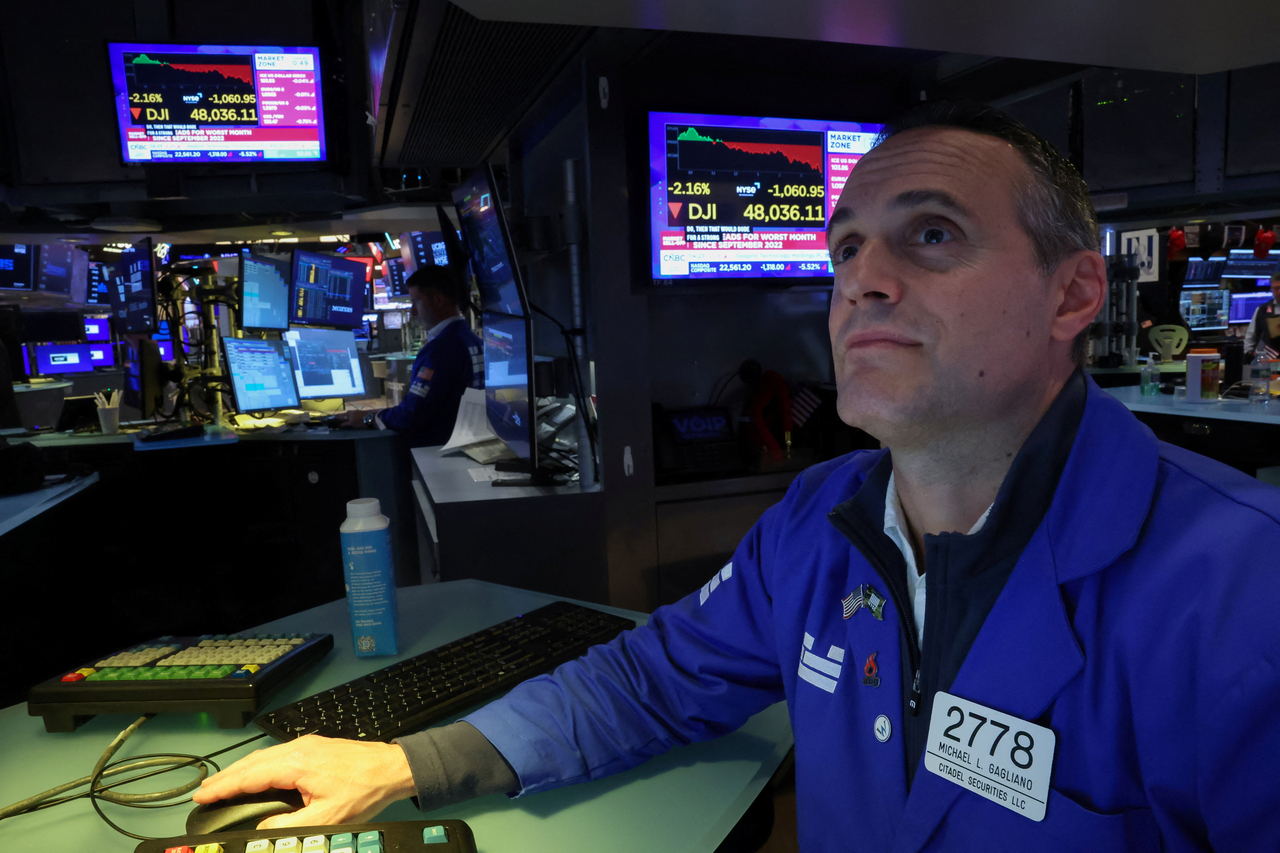
Global markets have in fact been undergoing sharp corrections on doubts about the AI industry and tightening fears. As of Thursday, the S&P 500 had fallen 5.24 percent so far this month, according to Shinyoung Securities. Over the same period, Kospi tumbled 17.79 percent.
Shinyoung Securities said market liquidity expectations could revive if inflation begins to ease in the latter part of next year's first quarter. However, it cautioned that any equity rebound during that process should not be mistaken for the start of a sustained uptrend.
The report projected that AI-related concerns would persist for the time being, and recommended that investors use any stock market rebound as a chance to reduce — not increase — their equity exposure.
High interest rates are the key obstacle to a market recovery. Shinyoung Securities forecast that the Fed would raise its benchmark interest rate by 25 basis points next month and follow up with one additional hike in the first quarter of next year, pushing the current target range of 3.75 to 4.00 percent up to 4.25 to 4.50 percent by early next year.
Higher rates erode the relative appeal of equities. From an investor's standpoint, holding relatively stable government bonds can generate attractive interest income without having to absorb the volatility that comes with stocks.
Shinyoung Securities accordingly advised investors to fill the space left by reduced equity holdings with US government bonds and dividend stocks. The report forecast that the yield on the 10-year US Treasury would fluctuate in the upper 4 percent range for the time being. With rates approaching 5 percent, a strategy focused on securing bond interest income — rather than betting on share price gains — makes sense, it said.
Dividend stocks were also highlighted as a key investment alternative. The idea is to lower expectations for capital gains and instead secure regular dividend income to improve the stability of an investment portfolio.
As alternatives to developed-market equity exposure, Shinyoung Securities pointed to ETFs investing in dividend stocks, including the TIGER US Dividend Dow Jones ETF and the TIGER US S&P 500 US Bond Blended 50 ETF.
Domestically, the brokerage said the investment appeal of cash-equivalent assets has also risen with benchmark rate hikes. Key short-term rates — including the certificate of deposit rate, KORIBOR and the call rate — are hovering in the low-to-mid 3 percent range, meaning investors can secure a certain level of return without taking on share price risk, it said.
On Korean equities, however, Shinyoung Securities offered a different assessment. While acknowledging that the Korean market could still fall in tandem with global equities, the brokerage noted that it had already undergone a sharper correction than the United States.
In past major global bear markets, Kospi has tended to start declining before the NASDAQ but also to bottom out relatively earlier, the report said. Barring a global recession, it expected the scope for further downside in Korean equities to be comparatively limited this time as well.
th5@heraldcorp.com