
37% expect Kospi to rise further
'Gap between real and financial economy'
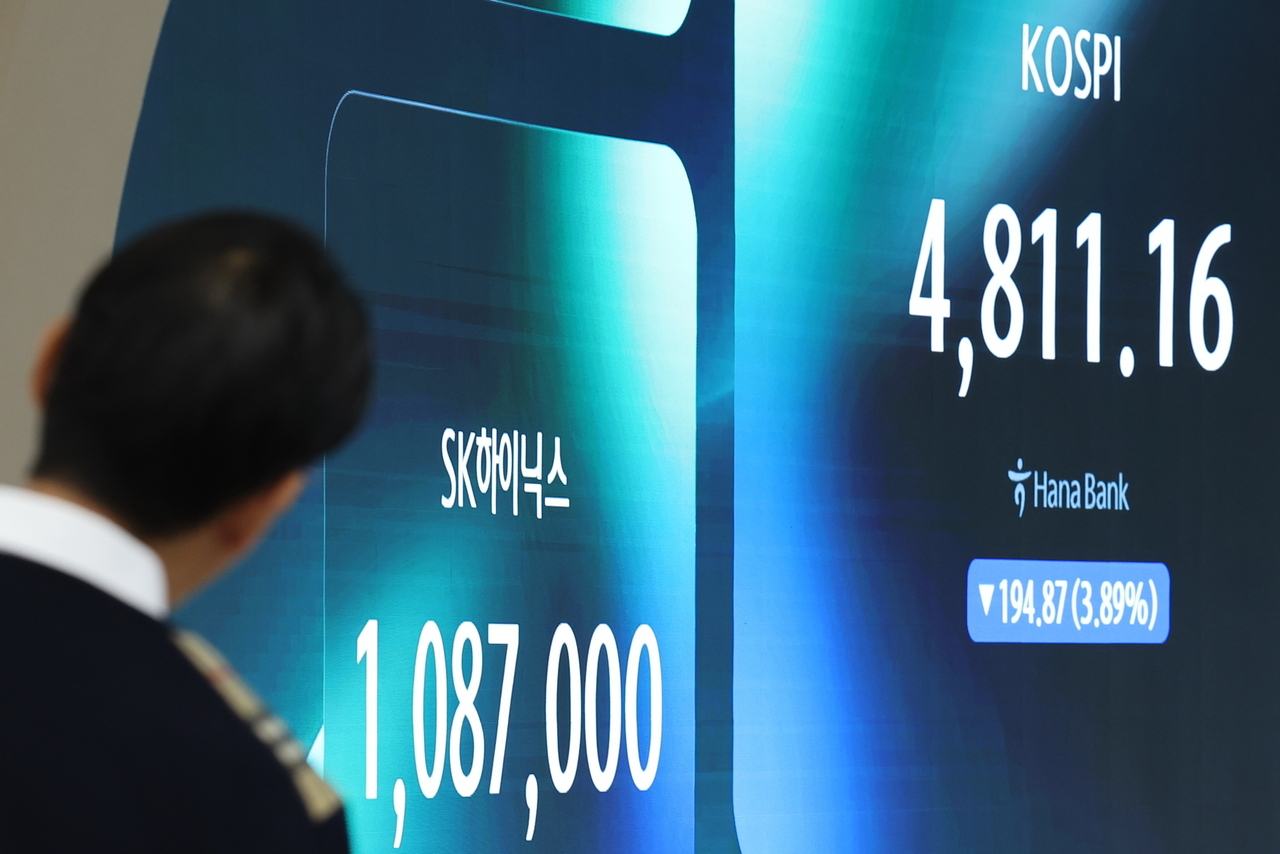
Seven in 10 domestic stock investors lost money this year, according to a poll released Friday. Just 37 percent of respondents said they expect the local stock market to rise further.
Gallup Korea surveyed 1,000 people aged 18 and older nationwide from Tuesday through Thursday, asking about their outlook for South Korea's stock index over the next year. Thirty-seven percent said they expect the Kospi to rise from its current level, while 32 percent said it would fall and 16 percent said it would stay roughly the same. The remaining 16 percent withheld their opinion.
Among domestic stock investors, the share who hold investments broke down by political leaning: 47 percent among conservatives, 54 percent among moderates and 58 percent among progressives.
"The Kospi outlook is more positive than the overall economic outlook surveyed last week, which can also be read as a perceived gap between the real economy and the financial economy," Gallup Korea said.
When asked about their profit-and-loss situation this year, 69 percent of investors said they had taken losses. In a separate question put to 489 domestic stock investors, 69 percent said they had lost money or were in the red. Twenty percent said they had made a profit or were in positive territory, while 11 percent said they had broken even.
Among the 97 investors who said they had made money in domestic stocks this year, 61 percent expected the Kospi to rise going forward. However, among the 338 investors who had recorded losses, the outlook was nearly split — 40 percent expected a rise and 38 percent a decline.
Forty-nine percent of respondents said they had traded or held domestic stocks or exchange-traded funds this year. Among domestic stock investors, office and managerial workers made up the largest share at 67 percent, followed by the self-employed at 55 percent.
The survey was conducted via telephone interviews using randomly selected virtual mobile numbers. The margin of error is plus or minus 3.1 percentage points at a 95 percent confidence level. The contact rate was 43.0 percent and the response rate was 10.9 percent. Further details are available on the website of the National Election Survey Deliberation Commission.
raining@heraldcorp.com




