
Seoul comprehensive real estate tax notices sent to 450,000; single-home owners up 53%
Dogok Rexle hits 6.34 million won, Mapo Prestige Xi 1.94 million won in tax bills
'Han River belt landlords without residency likely to raise monthly rents'
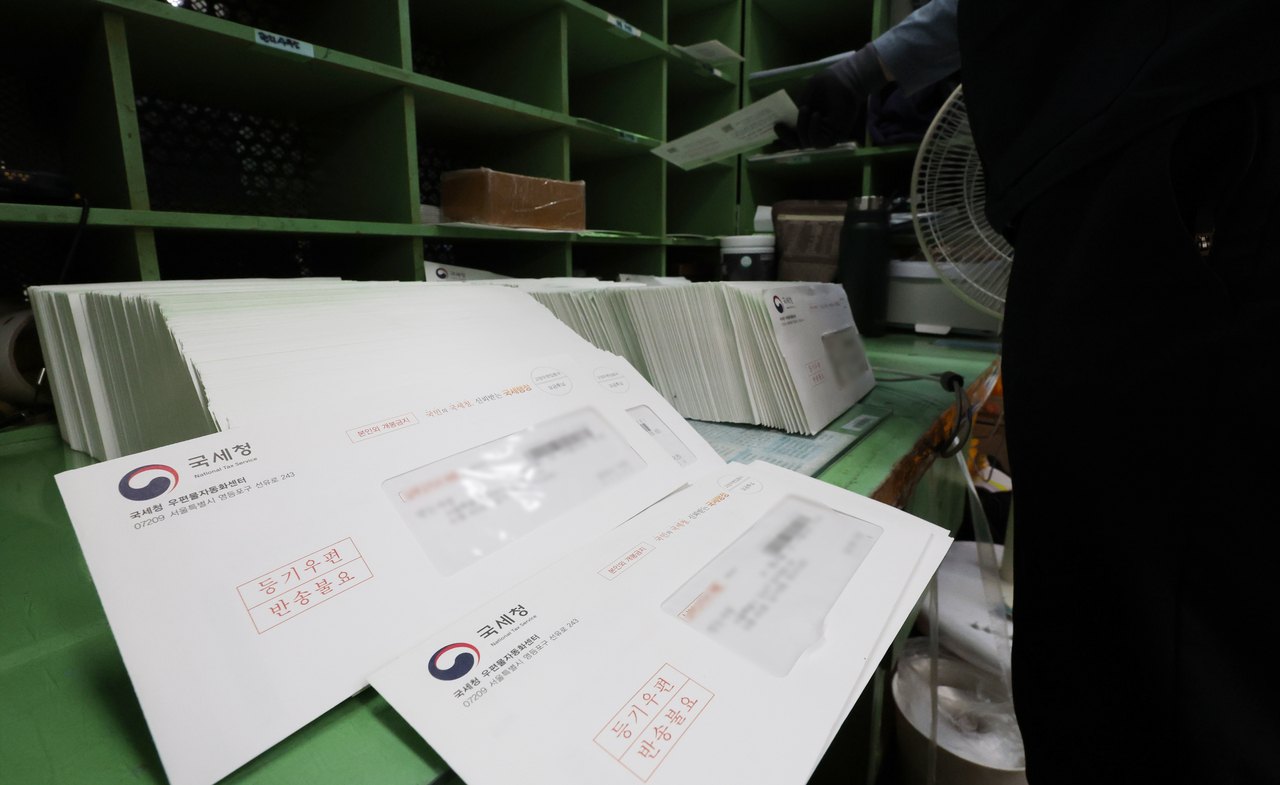
A sharp rise in apartment prices across Seoul's key neighborhoods has pushed comprehensive real estate tax bills significantly higher this year, raising concerns that landlords will pass the added burden on to tenants. With jeonse units already scarce, analysts warn that any move by landlords to fold higher tax costs into rents could squeeze tenants even further.
According to the National Tax Service on Friday, comprehensive real estate tax notices were sent to 669,000 homeowners nationwide. Of those, 459,263 in Seoul received bills totaling 1.34 trillion won ($997 million) — about 1.8 times last year's final assessed amount of 741.1 billion won. The surge in both the number of taxpayers and the amounts owed reflects a steep climb in home values: Seoul's publicly announced housing prices rose 18.6 percent from the previous year.
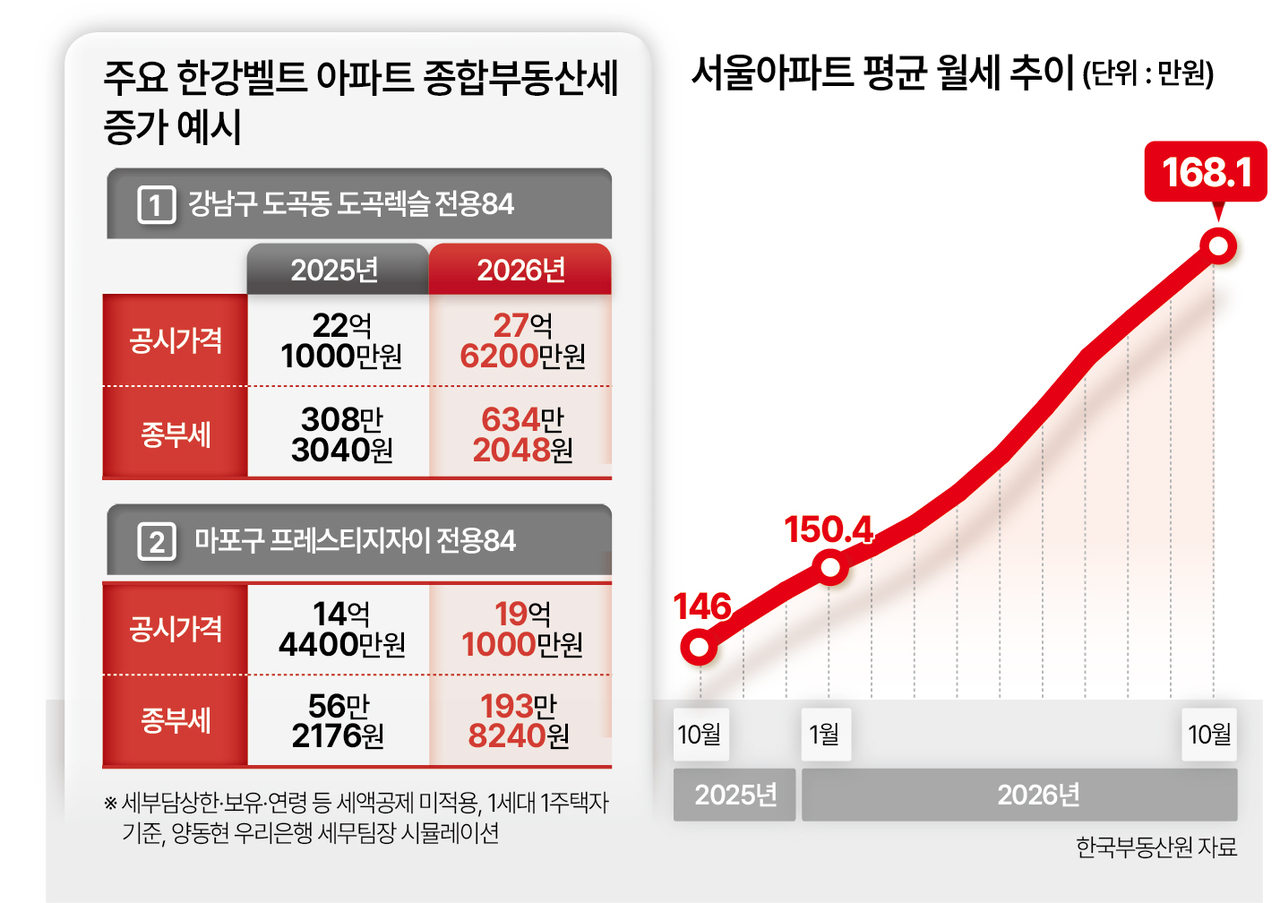
At some complexes, bills more than doubled in a single year. A simulation commissioned from Yang Dong-hyeon, head of the tax team at Woori Bank, found that the comprehensive real estate tax on an 84-square-meter unit at Prestige Xi in Mapo-gu reached 1.94 million won this year — 3.4 times the roughly 560,000 won owed last year — based on a single-homeowner household with no tax credits applied. At Dogok Rexle in Dogok-dong, the bill on an 84-square-meter unit came to 6.34 million won, more than double the roughly 3.08 million won assessed last year.
Industry observers say the sudden tax increase could feed through to rents. Ham Young-jin, head of the real estate research lab at Woori Bank, said the rental market is already under pressure. "The volume of move-ins is low, and lease supply has shrunk further as units are being vacated for sale," Ham said. "Non-resident single-homeowners in the Han River belt — areas such as Gwangjin, Dongjak, Mapo-gu, Seongdong and Yongsan that are directly hit by the higher tax burden — are likely to raise rents, particularly on new contracts where tenants cannot exercise lease renewal rights."
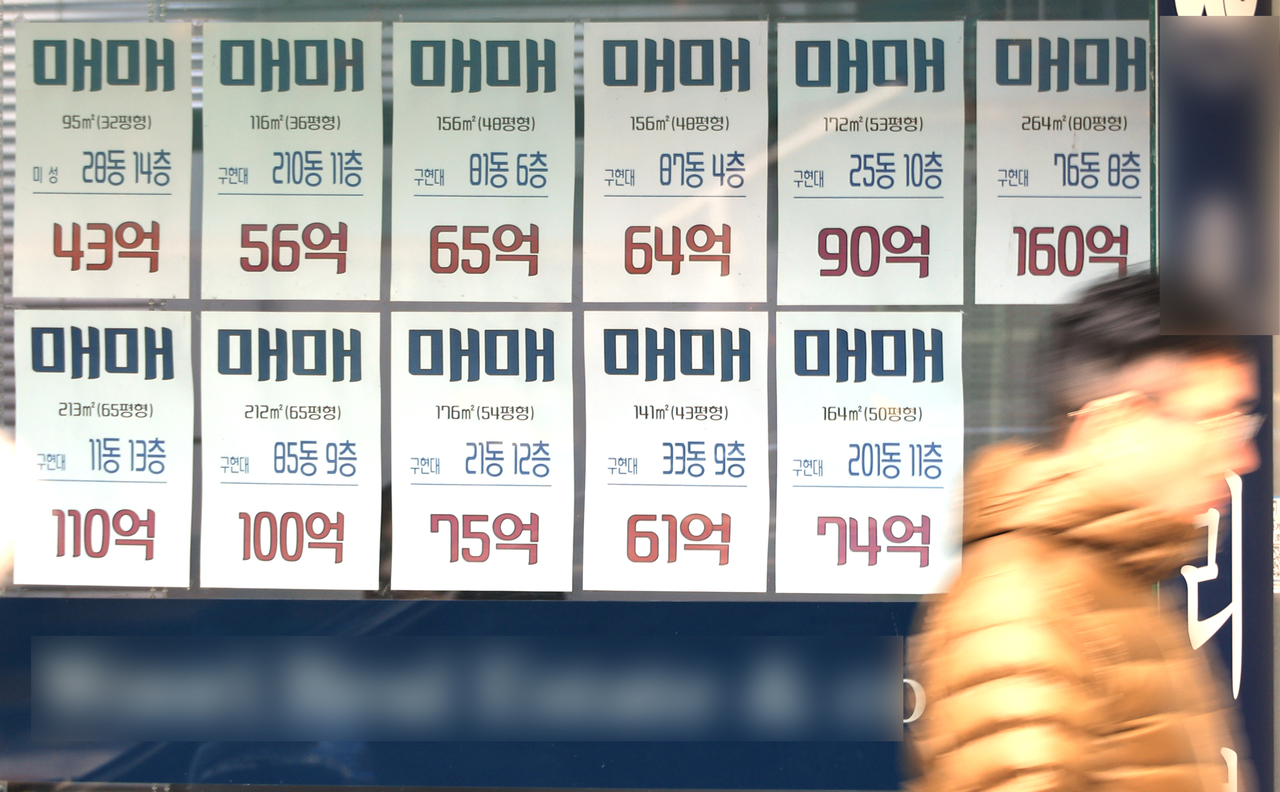
The supply of jeonse and monthly-rent listings for Seoul apartments stood at 42,993 as of Thursday, according to real estate platform Asil — down more than 10 percent from 48,195 a year earlier, a result of regulations favoring owner-occupancy and a broader supply shortage. As rising jeonse prices push landlords toward semi-jeonse arrangements — converting part of the deposit into monthly rent — analysts say a growing number of landlords seeking to offset higher comprehensive real estate tax bills through rental income could accelerate the shift away from jeonse altogether. Seoul's average monthly apartment rent already hit a record 1.68 million won last month, according to the Korea Real Estate Board.
A real estate expert who asked not to be named said the tax increase functions like a cost increase for landlords. "Tax shifting is inevitable," the expert said. "In a period of supply shortage like this, the side effects — higher living costs and the entrenchment of monthly rent — are unavoidable."
Homeowners who received higher-than-expected bills have been venting on online communities, with some writing that their comprehensive real estate tax rose 2.5 times from last year. "My tenant's renewal date is coming up, and I feel bad, but I think I'll have to raise it at least a little," one post read.
Kim Hyo-seon, a senior real estate specialist at KB Kookmin Bank, said landlords will look to adjust rents or restructure the deposit-to-monthly-rent ratio at renewal to offset the drop in net income from higher property taxes. "The pool of taxpayers is expanding and the burden on single-homeowners is likely to grow further," Kim said. "In areas like the Han River belt, where rental demand is strong and alternative listings are scarce, this will act as upward pressure on rents."
This year's residential comprehensive real estate tax base expanded primarily among single-homeowners. The number of single-household, single-home taxpayers receiving notices rose 53 percent from last year to 231,000 — accounting for 34.5 percent, or one in three, of all individual payers of the residential tax. The total tax assessed on single-homeowners reached 366 billion won, 2.2 times last year's figure.
The burden on owners of high-value single homes is expected to grow further. Although the government has decided to hold next year's publicly announced price realization rate at this year's level, market price increases will still be reflected. Additional factors — including higher tax rates, an increase in the fair market value ratio used to calculate the tax base, and the abolition of the long-term ownership tax credit — could push taxpayers' bills even higher.
hope@heraldcorp.com




