
Labor pressure pushes year-end legislation
Phased increase to 65 by 2037 seen as leading option
Youth employment safeguards, labor-management divide remain key hurdles
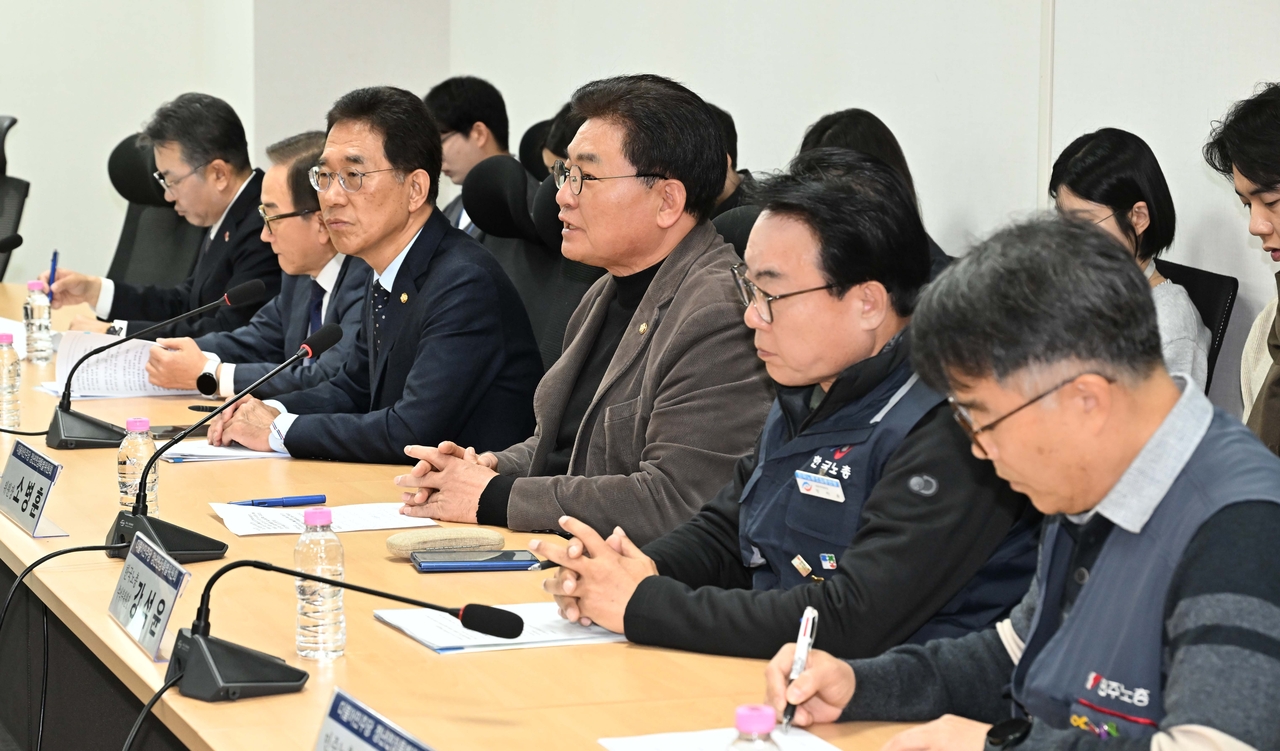
The Democratic Party of Korea launched final negotiations Friday with labor and management representatives over legislation to raise the mandatory retirement age to 65 before the end of the year. Whether the party can bridge the gap between the two sides while putting together long-delayed measures to protect youth employment remains the central question heading into the final stretch.
Kim Ju-young, who leads the Democratic Party's side on the special committee on retirement age extension, said at a subcommittee meeting at the National Assembly that he believed a consensus agreement would be reached. "However, if an agreement ultimately cannot be reached, we have arrived at a point where we have no choice but to wrap up based on the proposals discussed so far," Kim said.
The Democratic Party's special committee presented labor and management with three options late last year, each calling for a phased increase of the statutory retirement age to 65, with target years of 2036, 2039 and 2041 respectively. The option currently seen as the frontrunner would raise the statutory retirement age to 61 in 2029, then add one year every two years until reaching 65 in 2037.
However, the Democratic Party has yet to produce concrete measures to protect youth employment. So Byung-hoon, chairman of the special committee, said the process had taken longer because youth employment issues had to be factored in alongside the retirement age question. "The party set up its own youth special committee, but youth issues are broad in scope, so the government has been continuously working on them, and that is how we have arrived at today," So said.
The subcommittee convened for the first time in about 10 months since January, and the Democratic Party said its commitment to passing the legislation this year remains unchanged. Business groups, however, voiced repeated concern. Lee Dong-geun, vice chairman of the Korea Enterprises Federation, said pushing ahead with a retirement age extension without any plan to address youth employment "is far too harsh on the next generation." Oh Ki-woong, standing vice chairman of the Korea Federation of SMEs, said a blanket extension without reforming the wage structure "risks further dampening companies' new hiring and workforce management."
Han Seong-gyu, vice chairman of the Korean Confederation of Trade Unions, rebuffed those concerns, saying that while companies do face some burden, they have remained silent about the extensive government support and tax breaks they have received over the years. "I cannot agree with characterizing the modest cost of extending the retirement age as the single greatest burden on businesses," Han said. Han added that while some youth jobs could be lost if the retirement age is raised, public-sector employers and large corporations in particular are not expanding their workforces regardless.
thanks@heraldcorp.com




