
Second installment of 'Future Seoul Morning Lecture' series
The Seoul Metropolitan Government held the second installment of its internal "Future Seoul Morning Lecture" relay series Friday morning at a multipurpose hall on the eighth floor of Seoul City Hall, with the session focused on "Urban Spaces Seoul's Autonomous Driving Will Transform." The lecture format features bureau and division directors with more than 20 years of field experience addressing a single future agenda item from each department's perspective. About 200 people attended, including Seoul Mayor Oh Se-hoon, deputy mayors, bureau and headquarters directors, and division-chief-level civil servants.
The first lecture featured Yeo Jang-kwon, head of the transportation bureau, who examined how mobility and traffic systems would change in the age of autonomous driving. In this session, Choi Jin-seok, head of the Seoul Metropolitan Government's disaster and safety bureau, explored how roads, parking lots and pedestrian spaces could be reorganized under the theme of "changes to urban space" brought about by autonomous driving. Choi previously served as head of the housing bureau, the urban infrastructure headquarters and the urban planning bureau, and drew on that field experience in urban planning and infrastructure to envision the city in an autonomous-driving era. He outlined a future in which some vehicle lanes in alleyways are converted into pedestrian zones or green spaces, and medical and cultural services travel to where residents are rather than the other way around. He also examined how the functions of roads and below-ground spaces would shift, and what impact autonomous driving could have on redevelopment and reconstruction projects.
Among the specific proposals introduced were "time-based road zoning," which would change how roads are used depending on the time of day, and a "capillary transit-oriented area" concept under which the boundary between transit-oriented and non-transit-oriented areas would gradually blur.
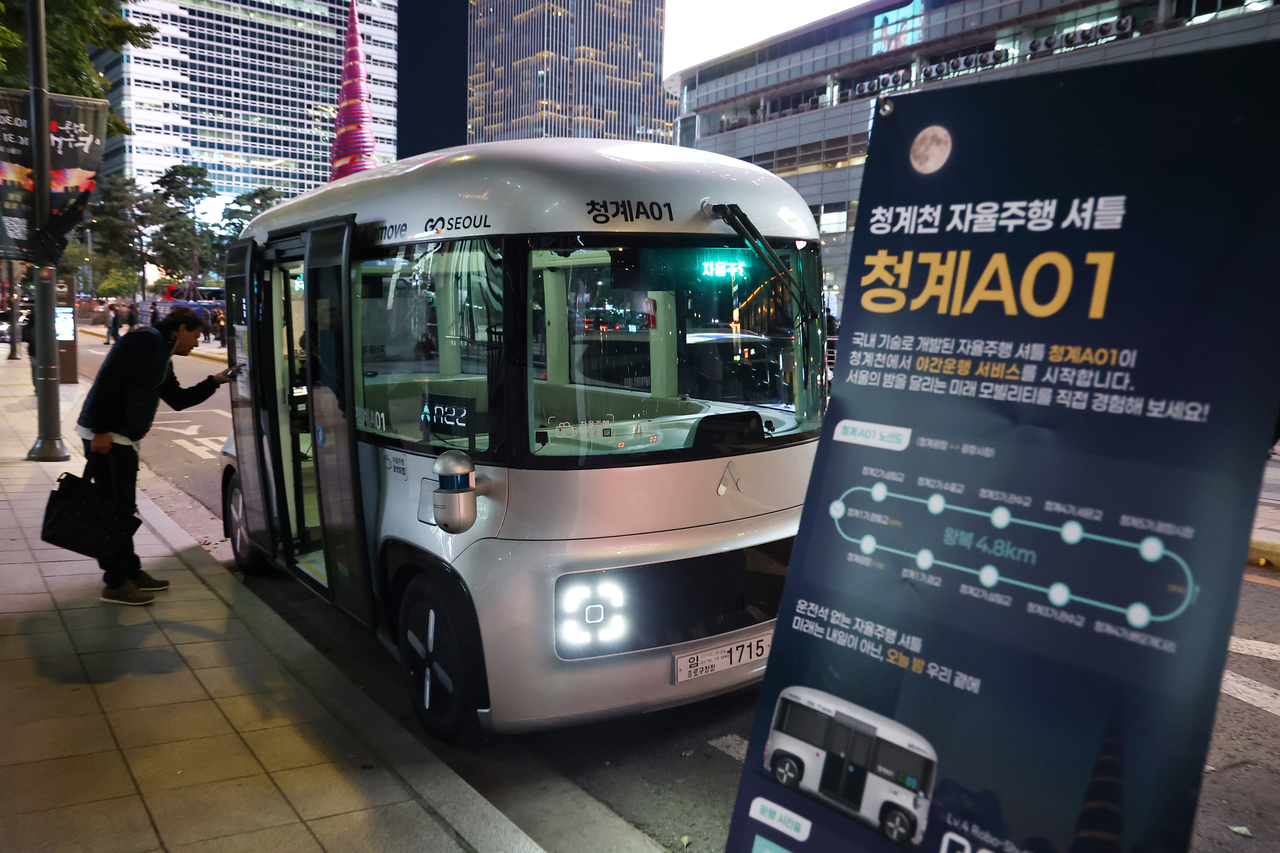
The Seoul Metropolitan Government plans to expand its autonomous bus fleet to 500 vehicles by 2030 as part of "G3 Seoul Plan," the top-level blueprint for the city's ninth elected administration. The city is set to begin Level 4 robotaxi pilot operations in the second half of this year. Night service on the Cheonggyecheon autonomous bus route also launched in October.
The Seoul Metropolitan Government launched the "Future Seoul Morning Lecture" series in 2021 and introduced the internal relay lecture format in October.
"The commercialization of autonomous driving demands not just a rethinking of transportation, but a full redesign of road and underground infrastructure and the entire urban space," Oh said. "When bureau and division directors who have built deep field experience across different areas share their visions and break down the walls between departments to put their heads together proactively, the future city of Seoul we envision will arrive in the daily lives of our citizens that much sooner."
Meanwhile, the Seoul Metropolitan Government is pursuing a phased roadmap for autonomous city buses, covering prototype development in 2026 and 2027, pilot and demonstration services in 2028, and a full-scale replacement of existing city buses beginning in 2029. In the early stages of operation, the service will focus on dedicated center bus lanes and early-morning and late-night hours, with plans to expand to general lanes over time to establish an uninterrupted transit system.
Alongside this, the city has been operating a late-night autonomous taxi service in Gangnam since September 2024. The service recorded a total of 15,140 rides through the end of July this year, with 6,176 rides logged even after the service shifted to a paid model in April this year. Since Aug. 20 this year, the Gangnam late-night autonomous taxi fleet has been expanded from seven to 19 vehicles.
cook@heraldcorp.com




