
Looking for a hobby you can stick with
Easy to start, expensive to obsess over
Wang Kkeok-gyu, a 50-year-old department head at a mid-sized company in Seoul (a pseudonym), had an unforgettable experience a few months ago while playing billiards with a friend. The friend, who had come along to the billiards hall, began groaning quietly in the waiting area. Wang assumed the friend was simply feeling under the weather, but the moaning continued. Sensing something was seriously wrong, Wang urged the friend to leave and ultimately rushed to the emergency room of a nearby university hospital.
The diagnosis was a myocardial infarction. The situation was far more serious than it appeared. Even after being transferred to another hospital for further treatment, the friend's condition was too poor for a stent procedure. The friend ultimately had to undergo coronary artery bypass surgery lasting more than seven hours. About two weeks after the operation, the friend called Wang and said, "You saved my life."
Having witnessed a friend's brush with death up close, Wang could not treat it as someone else's problem. He resolved to cut back on alcohol and cigarettes and lose weight. Above all, he decided he needed to find an enjoyable sport he could keep up consistently — not just a one-time resolution. But when it came down to actually starting, questions arose. Which sport should he choose? Every activity came with different equipment requirements, facility fees and recurring costs.
How much of a burden does a health-motivated hobby actually place on your wallet? When starting out, a few pieces of gear seem like all you need — but lesson fees, facility charges and consumable replacement costs soon follow. Friends may invite you to join them, or as your skills improve, you find yourself eyeing better equipment. What begins as a pursuit of health can quietly shift into a preoccupation with gear and spending.
This article examines the costs of six sports popular among office workers as hobbies: running, gym workouts, badminton, billiards, tennis and golf. Costs are broken down for the first year and for the second year onward, when initial equipment purchases no longer apply. The assumed frequency is a sustainable, moderate level of participation for each sport. High-end gear and professional-level training are excluded; the figures reflect realistic costs for a recreational beginner. Club membership fees, meals, tournament entry fees and transportation are not included.
Running: one pair of shoes to start — costs grow as the hobby deepens
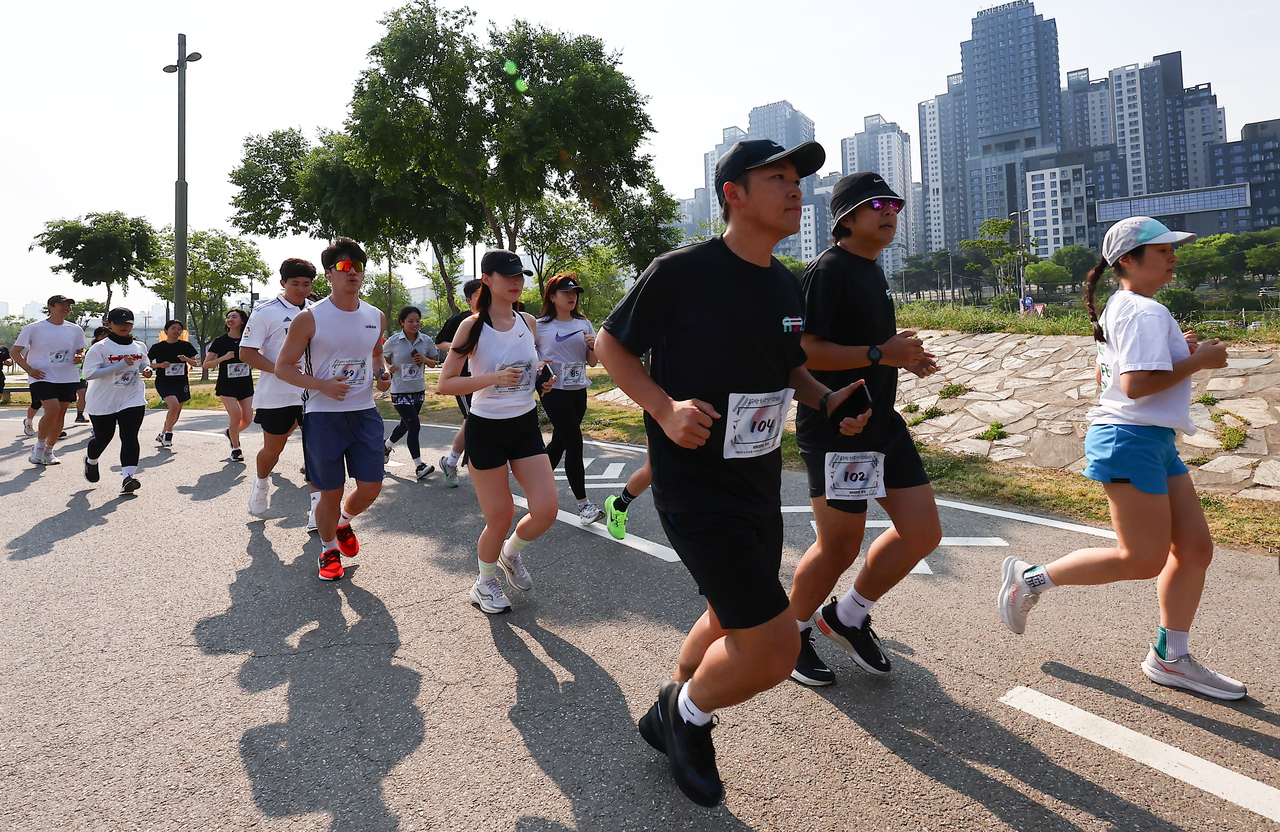
Running is the most accessible sport to take up. No special facility or equipment is required — you can head out the front door and start on a road or in a park. There is no gym membership to buy or lesson to register for. A pair of running shoes and comfortable workout clothes are all you need. Compared with other sports, the barrier to entry is low and the fixed ongoing costs are almost nonexistent.
That said, being able to run without any gear does not mean there is nothing to prepare. Running in ill-fitting shoes raises the risk of injury. Anyone planning to run consistently should invest in a proper pair of running shoes with adequate cushioning and stability. Add moisture-wicking workout clothes and socks, and the basics are covered. Initial gear costs — entry-level running shoes and workout wear — come to about 240,000 won ($179).
The appeal of running is that once the initial gear is in place, additional spending is minimal. Running in parks or along riverside paths incurs no usage fees, unlike a gym or indoor court. Increasing your frequency does not significantly change your baseline costs.
However, as the hobby deepens, so does the spending. A smartwatch, a running vest, season-specific performance clothing and multiple pairs of shoes for different purposes all add up. Some runners eventually seek out high-end carbon-plated racing shoes to shave time off their personal bests.
Joining a running crew or entering races also costs money. Race entry fees apply to most marathons, and traveling to events in other cities adds transportation and accommodation expenses.
For Wang, who is starting to exercise for his health, running is the lightest option available. At about 240,000 won in the first year and virtually no ongoing costs from the second year onward, it carries the smallest financial burden of the six sports.
Gym: membership is just the start — personal training is the real variable
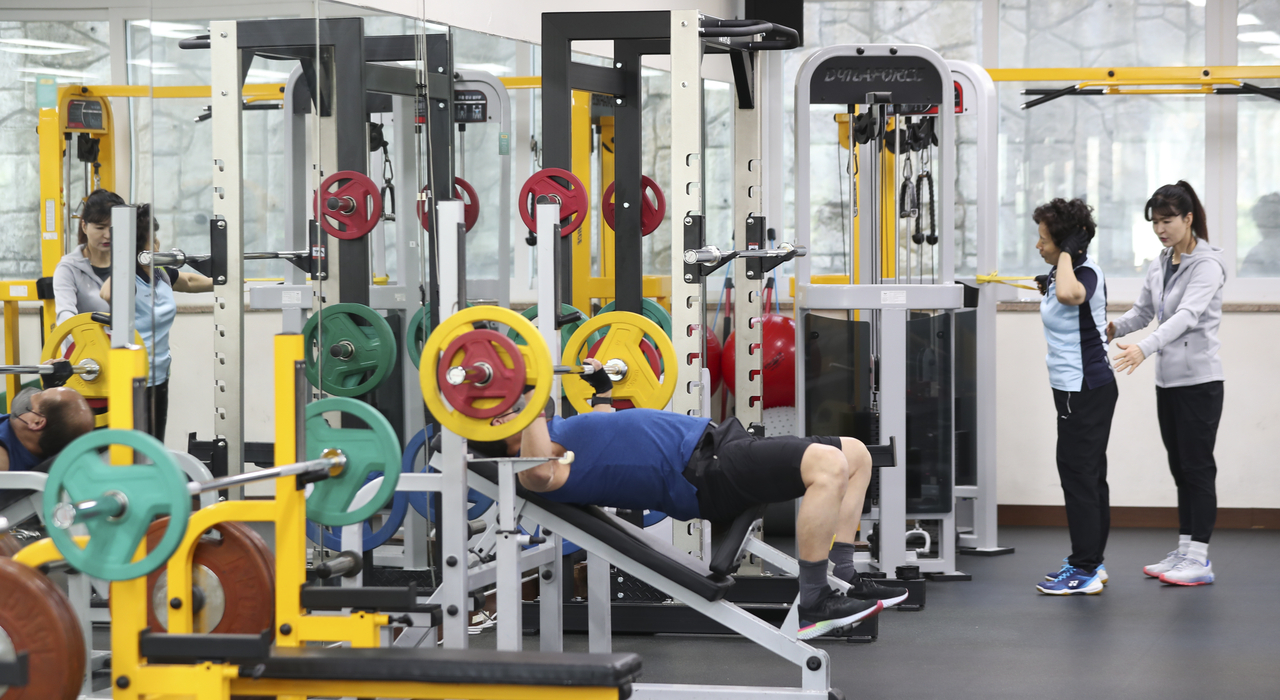
Gym workouts require no special skills or equipment to begin and are unaffected by the weather. The main recurring cost is the monthly membership fee.
Gym fees vary widely depending on the facility, location and registration period. This calculation uses 80,000 won per month as a baseline, which works out to 960,000 won a year. Basic gear such as workout clothes and shoes is estimated at about 100,000 won. Those who use gym-provided clothing or already own suitable shoes can reduce that initial outlay further.
For beginners, personal training (PT) is an additional expense. Working out without proper guidance on equipment use and form can reduce effectiveness or lead to injury. Spending the first few weeks with a certified trainer to learn correct technique is worthwhile — though how long you continue PT makes a significant difference to the total cost.
According to a 2022 survey by the Korea Consumer Education Center, the average price of a 10-session PT package was 604,000 won and a 20-session package averaged 1.12 million won. For someone starting out with a clear goal — body composition, weight loss — a reasonable scenario is three months of trainer-guided sessions to build proper form. At three sessions a week over three months, that is 39 sessions total; at 70,000 won per session, PT alone comes to 2.73 million won.
First-year gym costs therefore climb to about 3.79 million won — higher than running, badminton and even tennis. However, if intensive PT is concentrated in the first three months and the remainder of the year is spent training independently, annual costs from the second year onward drop to roughly 960,000 won in membership fees.
Badminton: shuttlecocks, not rackets, drive the ongoing costs
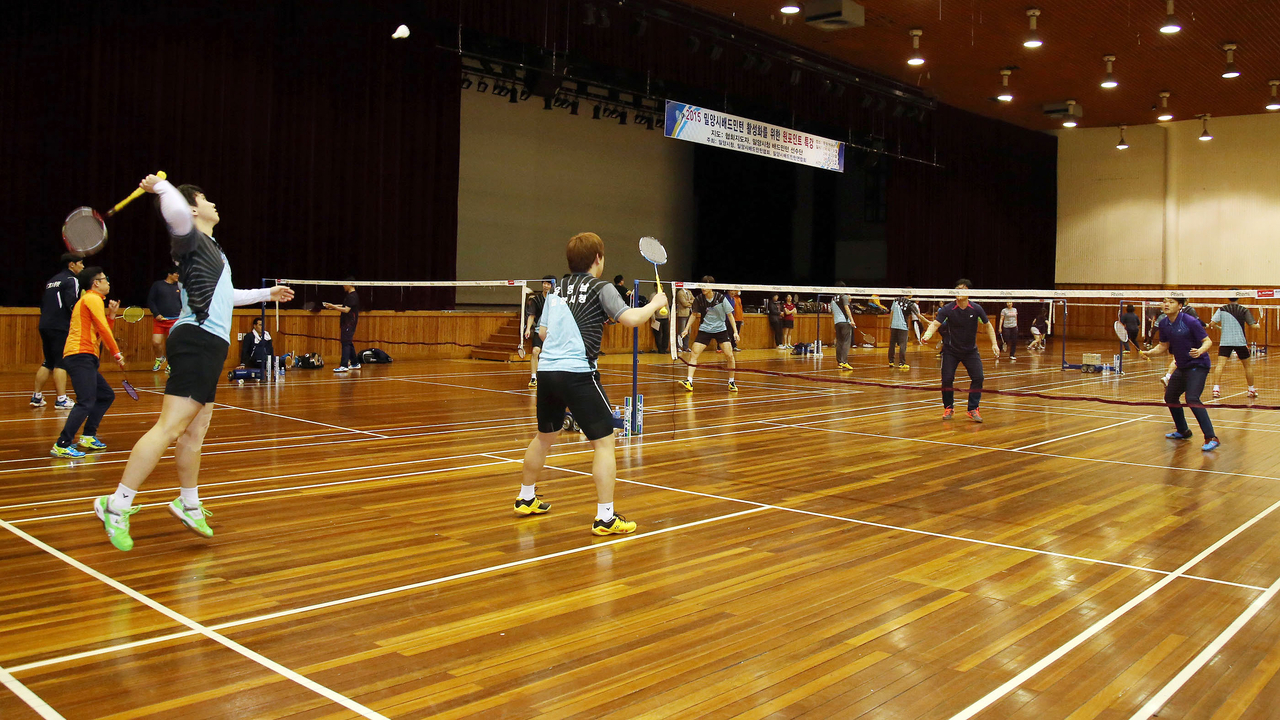
Badminton is a recreational sport that can be played indoors or even outdoors, and it has a large community of enthusiasts who enjoy the combination of solid exercise and partner play. Basic equipment is necessary, but there is no need to buy expensive gear from the outset. An entry-level racket, a pair of indoor court shoes and a bag are enough to get started.
Initial equipment costs are estimated at about 240,000 won. When choosing a racket, fit matters more than price — the key is finding one that suits your strength and swing. Dedicated indoor court shoes are also important; playing in regular sneakers risks slipping or straining the ankles.
In badminton, the spending does not stop once the gear is bought. Shuttlecocks are the primary consumable: they absorb repeated impacts during play, and once the feathers are damaged or the flight path changes, they need to be replaced. Racket strings lose tension or snap with repeated use and require periodic restringing. Grip tape wears down from sweat and friction and must be replaced regularly.
Court fees add to the total. This calculation combines public sports facility fees with consumables such as shuttlecocks and grip tape at an estimated 53,000 won per month, or 636,000 won a year. Adding the 240,000 won in initial equipment costs, first-year spending comes to about 880,000 won. From the second year onward, with no equipment purchase, the annual cost is about 640,000 won.
Costs can vary depending on where and with whom you play. Public facilities are relatively affordable, but private venues or lessons push spending higher. Joining a club may also bring membership dues and separate shuttlecock fees. This calculation excludes lesson fees and club dues.
Billiards: no cue required to start — personal gear is a separate matter
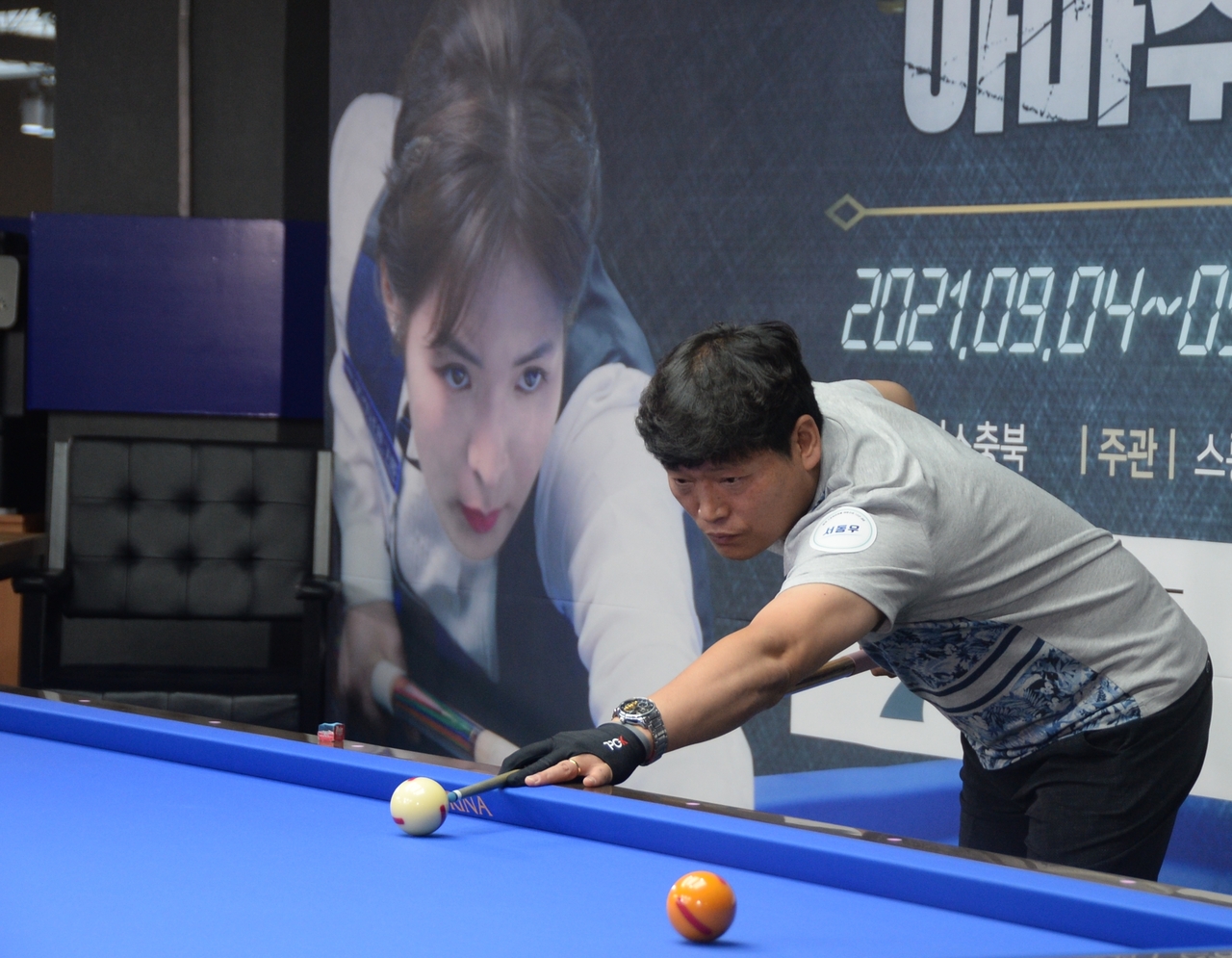
Billiards requires almost no equipment to start. House cues provided at the billiards hall mean you can play immediately without buying anything. No workout clothes or dedicated shoes are needed. The low entry cost — just showing up with a friend — is one of the sport's biggest draws.
That said, regular players tend to develop an interest in owning a personal cue. House cues vary in weight and condition from visit to visit, which can be a slight disadvantage. Having a cue matched to your preferred weight, length and grip helps build a consistent stroke. This calculation assumes the purchase of an entry-level personal cue at about 300,000 won.
Cue prices span a wide range. An entry-level cue costing a few hundred thousand won is perfectly adequate for a hobbyist, but as skills improve and interest in equipment grows, cues priced in the millions can start to look appealing. In practice, expensive cues are largely a matter of personal satisfaction and do little to accelerate skill development.
The main recurring cost in billiards is table time, not equipment. At one billiards hall in Chungmuro, the rate is 2,400 won per 10 minutes, or 14,400 won per hour. Splitting the cost evenly with a partner brings the per-person cost to 7,200 won per session. Playing twice a week — eight times a month — puts the monthly billiards bill at about 57,600 won.
That works out to about 691,200 won a year in table fees. Adding the 300,000 won cue purchase, total first-year costs come to about 990,000 won. From the second year onward, without the cue purchase, the annual cost drops to about 690,000 won. Those who stick with house cues can enjoy the sport for roughly 690,000 won a year from the very start.
Tennis: lessons, not rackets, are the real expense
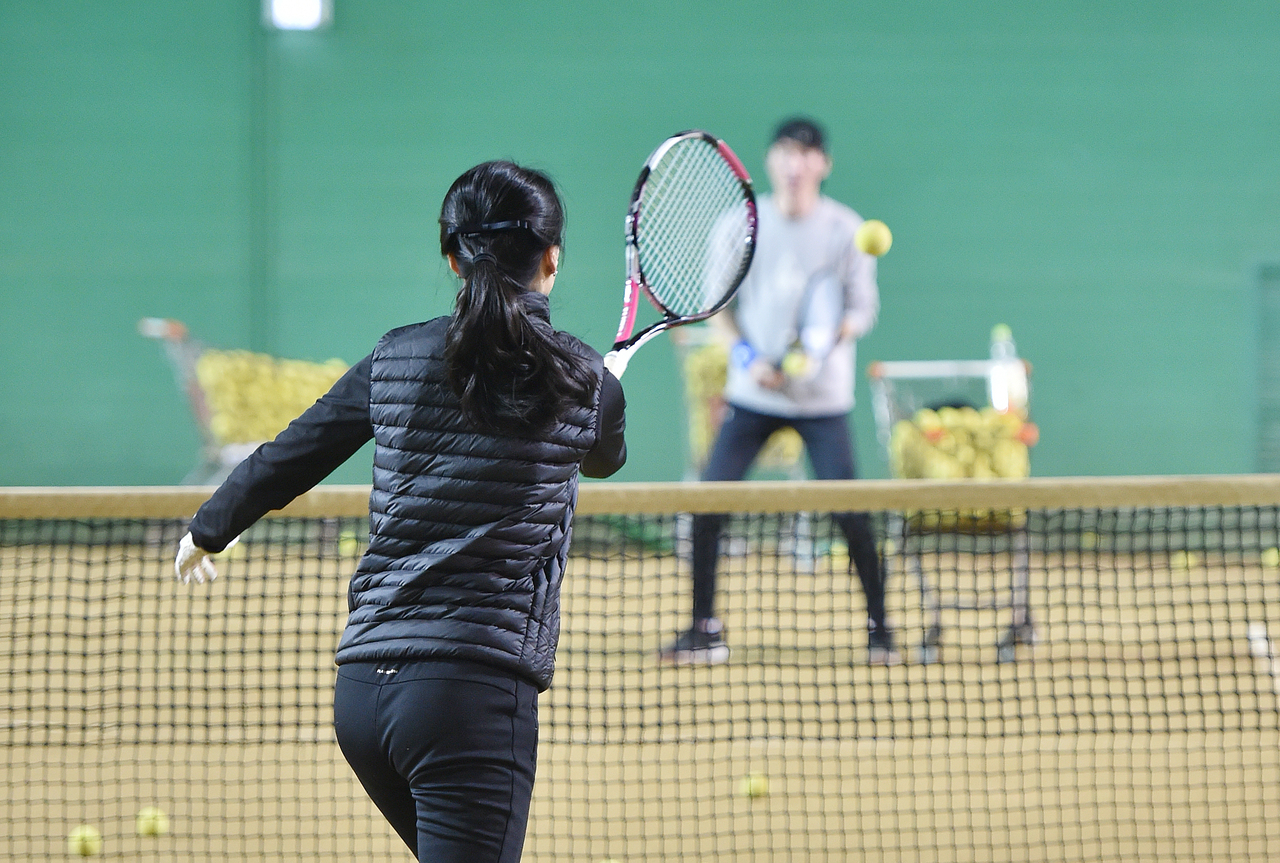
Tennis can be started with a single racket, but it is not an easy sport for beginners to learn on their own. Serves, groundstrokes and footwork all require instruction, making lessons and court practice essential. That is why lesson fees and court time — not equipment — form the core of ongoing spending.
Basic gear includes a racket, tennis shoes, workout clothes and a bag. Rackets differ in weight, head size and balance, and beginners are better off choosing one suited to their physique and swing rather than simply buying the most expensive option. Tennis involves frequent lateral movement and quick direction changes, so dedicated court shoes are also necessary. Initial equipment costs are estimated at about 300,000 won.
Lessons are the biggest single expense in tennis. This calculation assumes one lesson per week at 180,000 won a month. On top of that, one additional court session per week to practice what was learned in lessons is assumed, with the individual's share of court fees estimated at 18,000 won a month.
Combined, monthly spending comes to 198,000 won, or 2.38 million won a year. Adding the 300,000 won in initial equipment costs, first-year spending reaches about 2.68 million won. From the second year onward, even without the equipment purchase, about 2.38 million won is needed annually — considerably more than running, badminton or billiards.
As skills improve, additional costs can emerge. Racket strings need periodic replacement depending on usage and hitting intensity. Some players buy a second racket or add to their collection of shoes and clothing. Increasing lessons from once to twice a week, or booking better courts, naturally raises the bill. Joining a club for regular match play can bring membership fees and additional court costs.
Golf: from clubs to rounds, every outing costs serious money
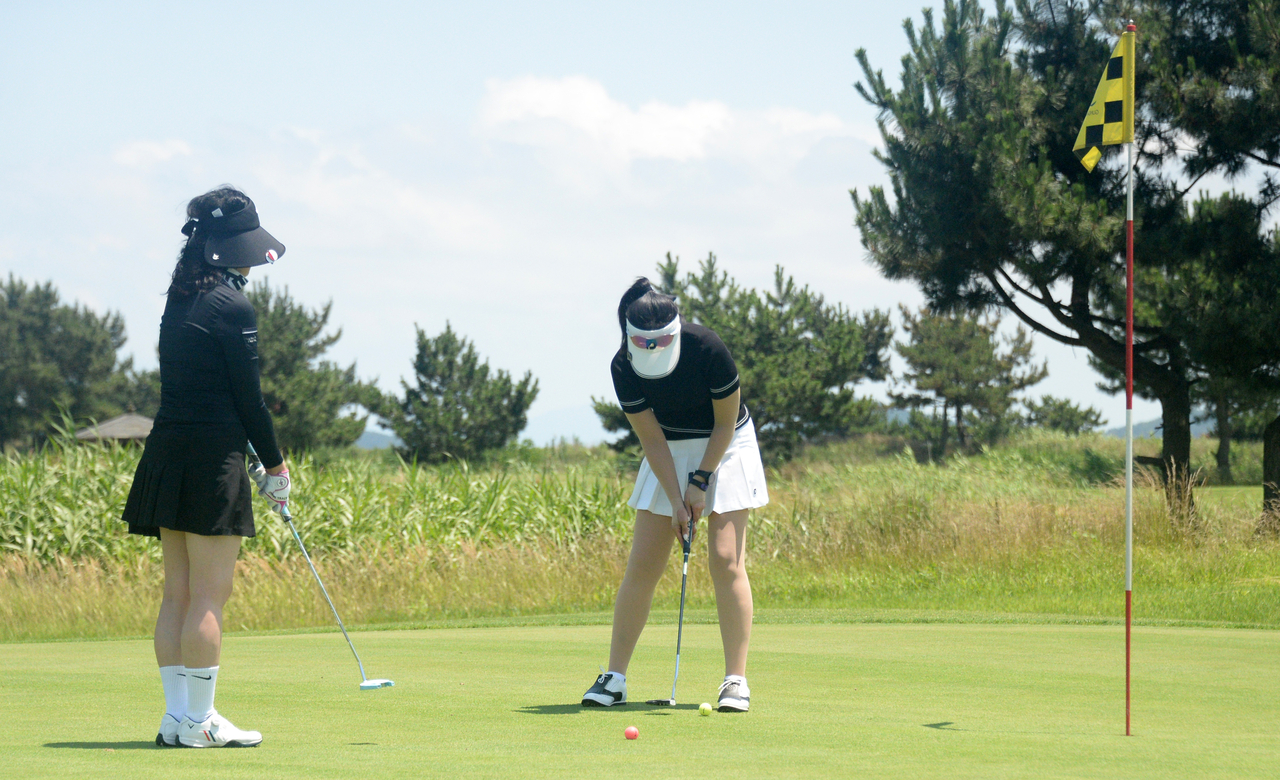
Golf is widely regarded as the most expensive of the six hobbies. Unlike other sports, the costs begin with the gear itself — clubs, a golf bag and golf shoes all require a meaningful upfront investment. On top of that come indoor driving range fees, lesson costs and the expense of playing an actual round. The gap between practicing at a range and heading out to a course is substantial.
Getting started in golf means assembling a set of clubs — driver, fairway woods, irons, wedges and a putter — along with a bag to carry them. Options range from beginner sets to custom combinations of individual clubs. This calculation puts the cost of clubs and a bag at about 1.8 million won. Golf shoes, clothing and gloves add another 350,000 won, bringing initial equipment costs to about 2.15 million won.
Having the gear does not mean you can head straight to a course. Building the fundamentals of a swing and putting stroke requires time at a driving range. Monthly range fees are estimated at 150,000 won. Adding one lesson per week at 176,000 won a month, range fees and lessons alone come to 326,000 won a month.
The biggest cost driver in golf is playing an actual round. The difference between swinging at a range and completing 18 holes on a real course is large — and the bill includes not just green fees but cart fees and caddie fees as well. This calculation assumes one round per month at a per-person cost of about 250,000 won, a simplified figure that reflects a casual hobbyist's monthly outing.
Adding it all up, monthly spending on range fees, lessons and one round comes to about 576,000 won, or 6.91 million won a year. Including the 2.15 million won in first-year equipment costs, total first-year spending reaches about 9.06 million won. From the second year onward, even without the equipment purchase, about 6.91 million won is needed annually.
The urge to upgrade gear is also strong in golf. Replacing a driver or iron set, buying a distance-measuring device, a golf watch or seasonal golf apparel all push spending higher.
Of course, not every golfer needs to play a round every month. Focusing on indoor driving ranges and screen golf can keep costs down. Playing fewer rounds or sourcing equipment secondhand are other ways to reduce spending. Golf is a hobby where the broader lifestyle of consumption surrounding the sport deserves as much consideration as the sport itself.
A healthy hobby still needs a budget
Comparing first-year and second-year-onward costs across the six sports reveals stark differences. Running can be started for 240,000 won, while gym workouts including PT reach 3.79 million won and tennis requires 2.68 million won. Golf tops the list at 9.06 million won in the first year.
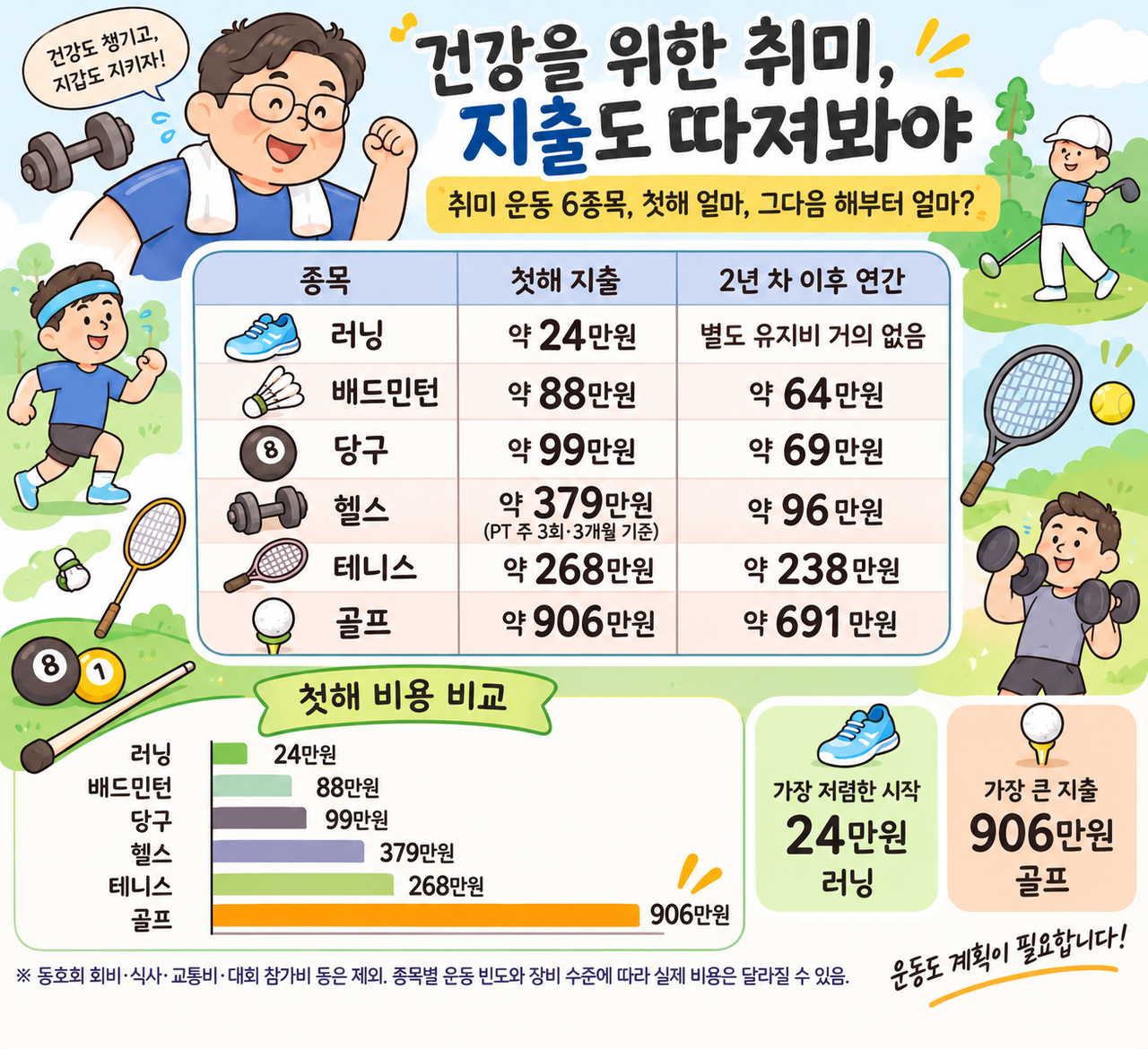
Actual spending varies depending on how often you exercise, which facilities you use, whether you take lessons and what level of equipment you buy. Sports like golf and tennis, where facility access and instruction are central, show the widest cost variation based on how they are pursued. Even running can end up costing far more than the initial estimate once race entries and gear purchases accumulate.
The key is to set a spending limit before you start. Rather than buying expensive equipment upfront or committing to long-term lessons, it is wiser to invest incrementally — gauging your fitness level and genuine interest as you go.
For Wang, exercise is no longer a simple leisure activity. What matters is finding the right sport and sticking with it. Start light, spend deliberately. Even a health-driven hobby needs its own budget and ground rules.
yjc@heraldcorp.com




