
Six urban rail operators urge government to enshrine national funding in law as aging population threatens to push annual losses past 3 trillion won
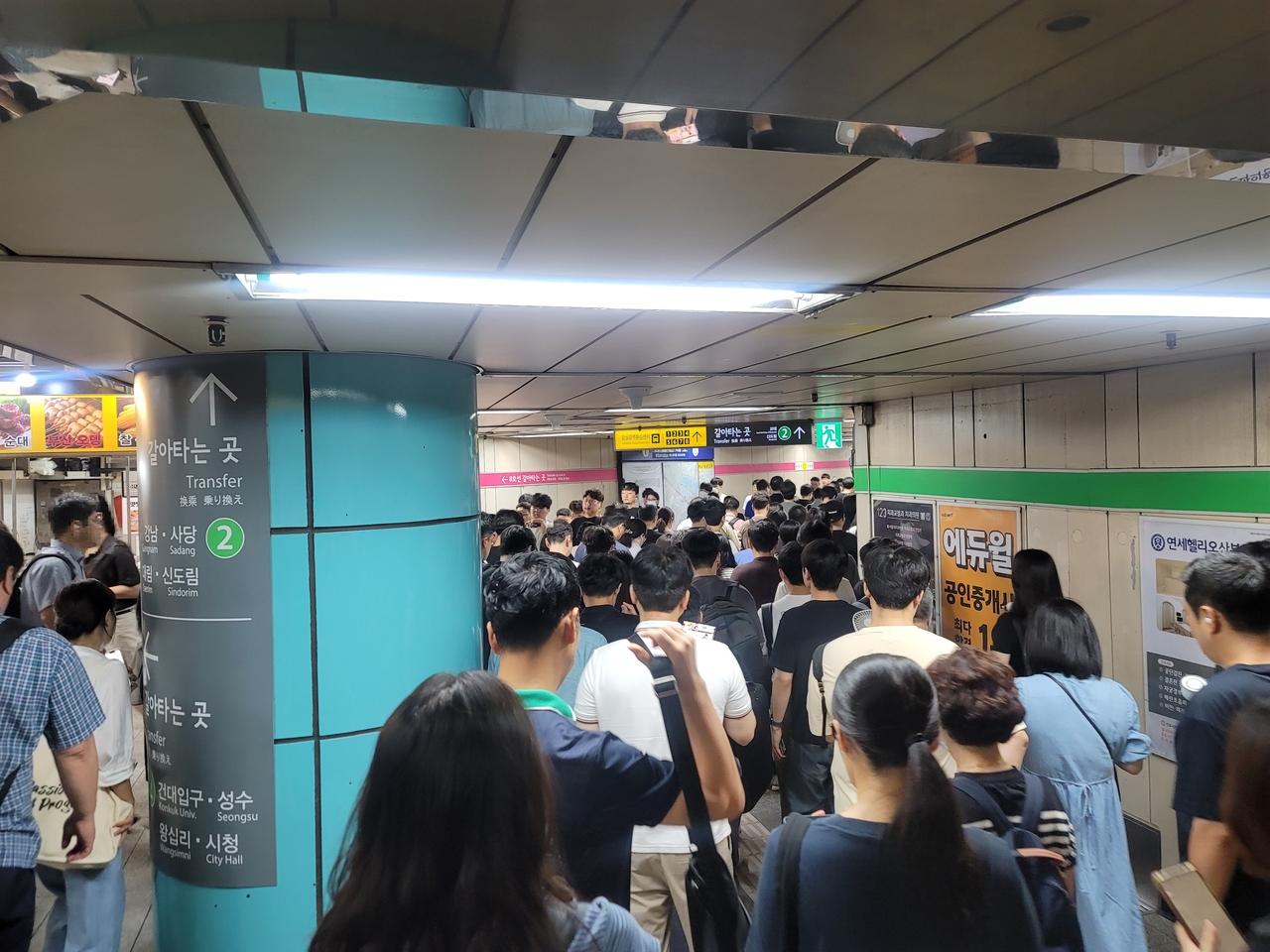
Six urban rail operators across South Korea are pressing the government to enshrine national funding for free-ride losses in law, after discussions on the issue advanced during the National Assembly's budget review process.
Seoul Metro said Thursday it sent official letters on behalf of the management and labor of all six urban rail operators to six government ministries — the Office for Government Policy Coordination, Ministry of Planning and Budget, Ministry of Interior and Safety, Ministry of Patriots and Veterans, Ministry of Health and Welfare, and Ministry of Land, Infrastructure and Transport — urging the legal codification of state support for free-ride losses and its inclusion in the national budget.
The move followed the National Assembly's Land, Infrastructure and Transport Committee approving an amendment to the Ministry of Land, Infrastructure and Transport's 2027 budget proposal that would add 576.8 billion won ($429 million) in compensation for urban rail free-ride losses.
Seoul Metro said that because the Assembly has now recognized the need for national funding to cover free-ride losses, the government must move swiftly to pass the relevant legislation and actually allocate the budget.
The committee approved the amendment as part of its preliminary review of the ministry's 2027 budget, adding 576.8 billion won to the public-service obligation compensation program. The figure was calculated by applying the 79.8 percent average reimbursement rate that Korea Railroad Corporation — known as Korail — receives for its own public-service obligation costs to the combined free-ride losses of the six urban rail operators.
Korail is reimbursed for free-ride losses with national funds under the Framework Act on Railroad Industry Development, but urban rail operators must absorb those losses themselves — an inequity that has long drawn criticism.
Several related bills are currently pending in the National Assembly, including three amendments to the Urban Railroad Act and amendments to the Framework Act on Railroad Industry Development, the Welfare of Older Persons Act, and the Act on Welfare of Persons with Disabilities. In November last year, a public petition signed by more than 50,000 people calling for the legal codification of national reimbursement for free-ride losses was also submitted to the Assembly.
In its letters, Seoul Metro asked the government to take a constructive approach to the pending legislation and to include funding for urban rail public-service obligation costs in budget proposals from 2027 onward. It also proposed that the specific cost-sharing ratio between the central government and local governments, along with the calculation and settlement standards, be worked out through consultations among the relevant agencies.
Free-ride losses are expected to place an ever-greater fiscal burden on urban rail operators as South Korea's population ages.
A research study on sustainable approaches to the urban rail free-ride system, completed last month, projected that the share of fare-free passengers across the six operators nationwide would rise from 21.4 percent in 2025 to 38.5 percent by 2050.
Over the same period, the combined net loss of the six operators is forecast to more than double, from 1.49 trillion won to 3.15 trillion won.
In 2025 alone, free-ride losses at the six operators reached 775.4 billion won, accounting for 52.1 percent of their total net loss — making fare-free travel the primary driver of the operators' deteriorating finances.
By region, the share of fare-free passengers is projected to exceed 50 percent in Daegu by 2040, in Busan by 2045, and in Gwangju by 2050 — meaning one in every two riders would travel free of charge.
At the same time, the social benefits generated by free rides for senior citizens were estimated at 650.6 billion won per year — comprising 338.6 billion won in health and care, 229.3 billion won in transportation and environmental benefits, and 82.7 billion won in regional economic activity.
Seoul Metro noted that while free rides generate savings in national health insurance, long-term care insurance, and other areas of public spending, the costs that make those savings possible are borne entirely by the urban rail operators.
A public awareness survey found that 41.7 percent of respondents identified the central government as the party responsible for funding free rides, while 31.9 percent named local governments — meaning 73.6 percent of respondents held either the central or local government accountable.
Han Yeong-hui, head of Seoul Metro's planning division, said the committee's decision to recognize the need for national support during the budget review process reflected the Assembly's deep understanding of the irrational structure in which local governments and operators have been left to shoulder costs arising from national policy. "Government support is not a bailout for operating deficits — it is fair compensation for a legally mandated public service," Han said. "That is why a legal basis and budget allocation must follow."
seouldream01@heraldcorp.com




