
Temple seeks both conservation zone and historical-cultural preservation zone status
Temple says designations needed to protect millennium-old practice environment from 39-story apartment project
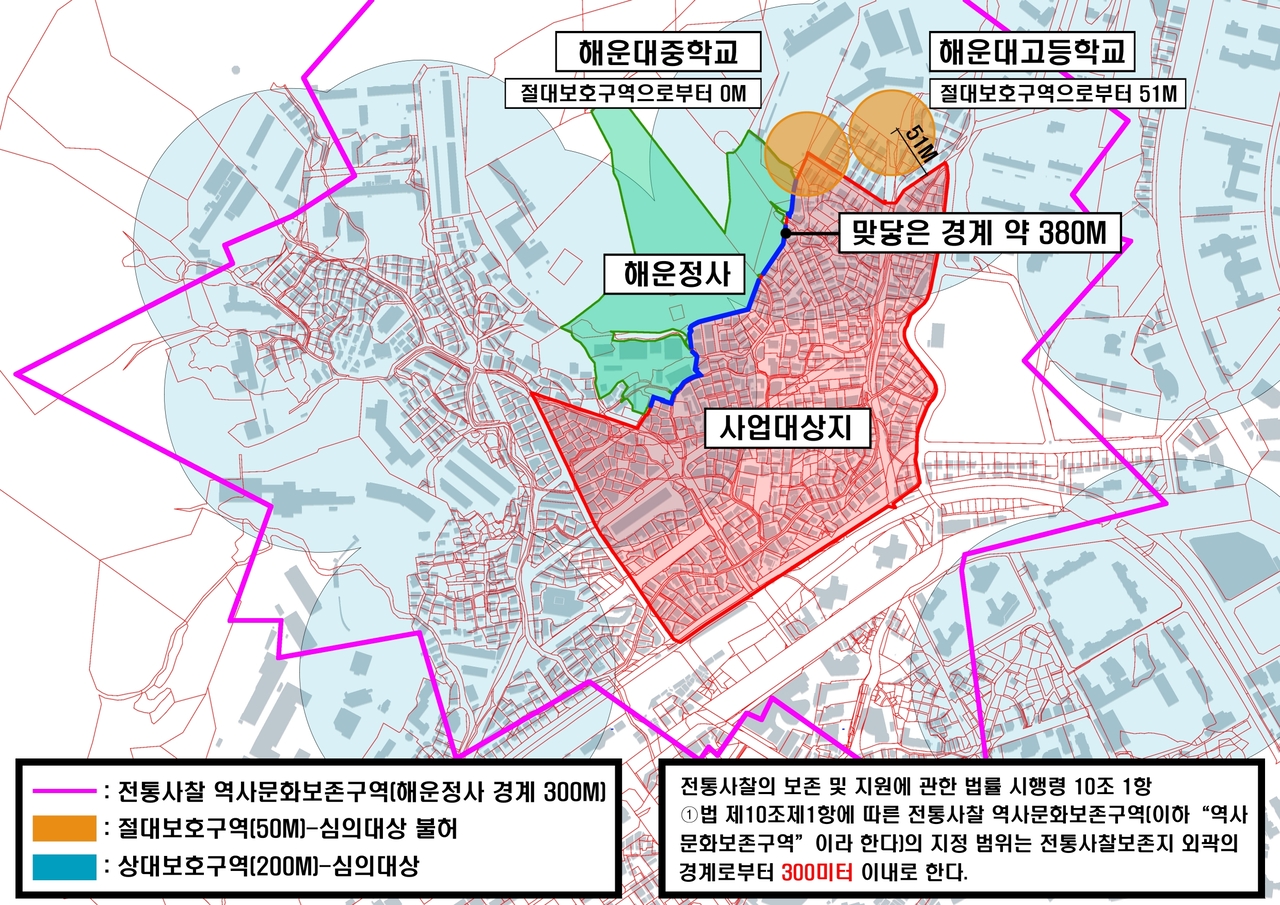
Haewon Jeongsa, a Jogye Order Buddhist temple in Udong, Haeundae-gu, Busan, said Friday it had submitted separate requests to the Busan city government on Wednesday and Thursday to have the site designated as a traditional temple conservation zone and a traditional temple historical and cultural preservation zone.
The filings are based on Articles 6 and 10 of the Act on the Conservation and Support of Traditional Temples, which govern the designation of conservation zones and restrictions on activities within them, as well as the designation of historical and cultural preservation zones. Haewon Jeongsa was registered as a traditional temple by Busan in 2015. Following the submissions, the city said it plans to convene a Traditional Temple Conservation Committee in the near future to review the requests.
If the committee approves both designations, the area within 300 meters of the outer boundary of the temple's conservation land — as stipulated under Article 10 of the enforcement decree of the act — would be designated a historical and cultural preservation zone. Under Article 10, Paragraph 4 of the same law, construction in that zone could be prohibited after committee review if the scale or use of a proposed structure is deemed incompatible with protecting the temple's practice environment or preserving its scenic surroundings. The ruling is expected to have significant repercussions for the nearby redevelopment project.
The temple said the designation requests were filed "to protect a millennium-old practice environment from the reckless development of a 39-story apartment complex." It added that Haeundae-gu and the Udong District 3 housing redevelopment association were pressing ahead with plans to build an apartment building — 6 below-ground floors and 39 above-ground floors — directly in front of the temple, placing it "in serious danger of destruction." The temple said it was "exercising its legitimate right to protect Haewon Jeongsa's historical and cultural environment and the right to religious practice enshrined in law."
The temple also accused the redevelopment association of misrepresenting the situation in recent newspaper advertisements, saying the association had portrayed past consultations held over the last decade as if they amounted to a "final decision" or "agreement." The temple said it had sought an amicable resolution but that no official meeting had ever been held, and that it had initiated formal procedures to set the record straight.
Haewon Jeongsa also took issue with Busan's handling of the temple's three-story stone pagoda, designated Busan Tangible Cultural Heritage No. 212. The temple said the city had classified the pagoda — which it argued is legally immovable real estate — as movable property, and had used that classification to lift the historical and cultural environment preservation designation around the temple. It further claimed that despite two requests from the court in ongoing litigation, Busan had yet to submit any response regarding the pagoda. "If Busan lifted the temple's preservation zone designation in accordance with the law, there is no reason to refuse to answer the court," the temple said.
kaf2002@heraldcorp.com




