
4 in 10 SK Ecoplant hi-tech workers on fixed-term contracts
Samsung C&T, SK Ecoplant combined backlog tops 66 trillion won
Overtime pay lures construction workers away from housing sites
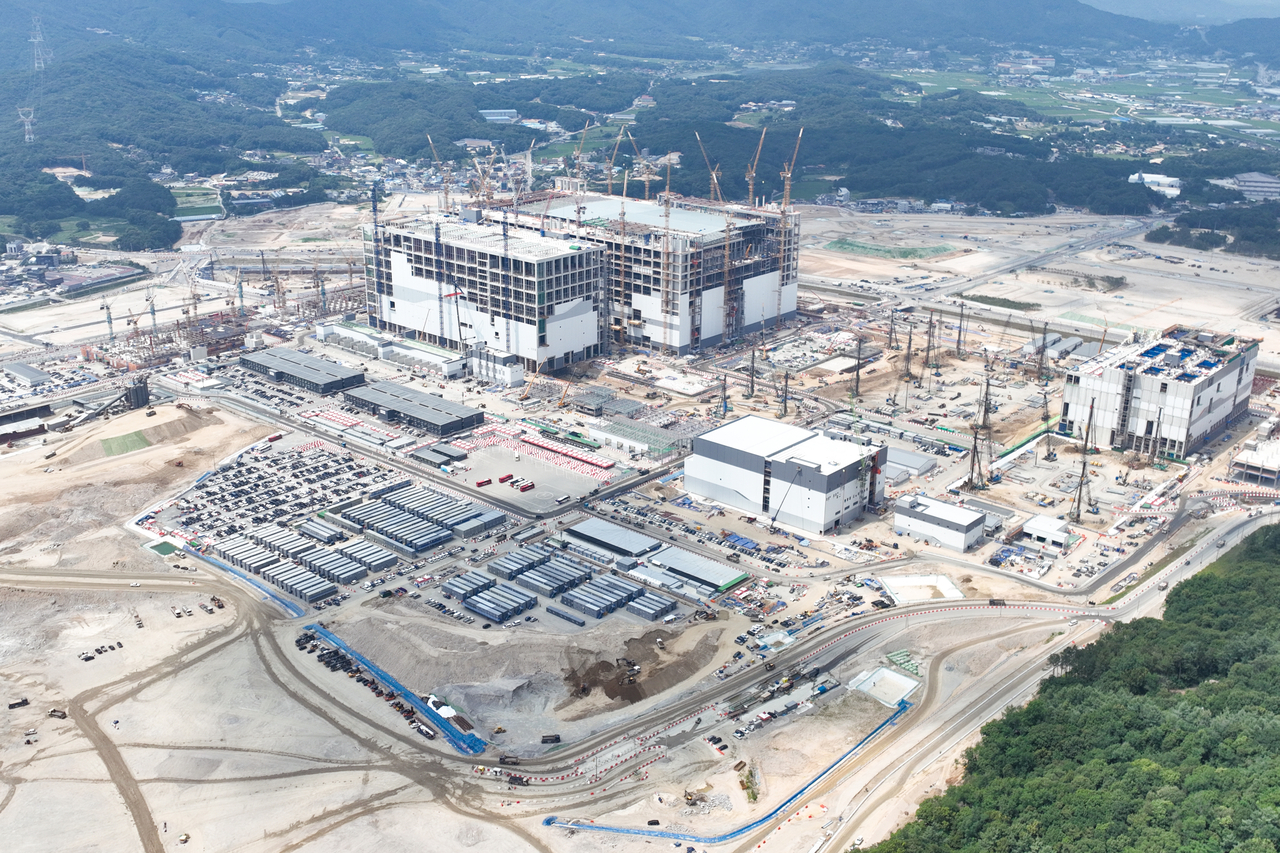
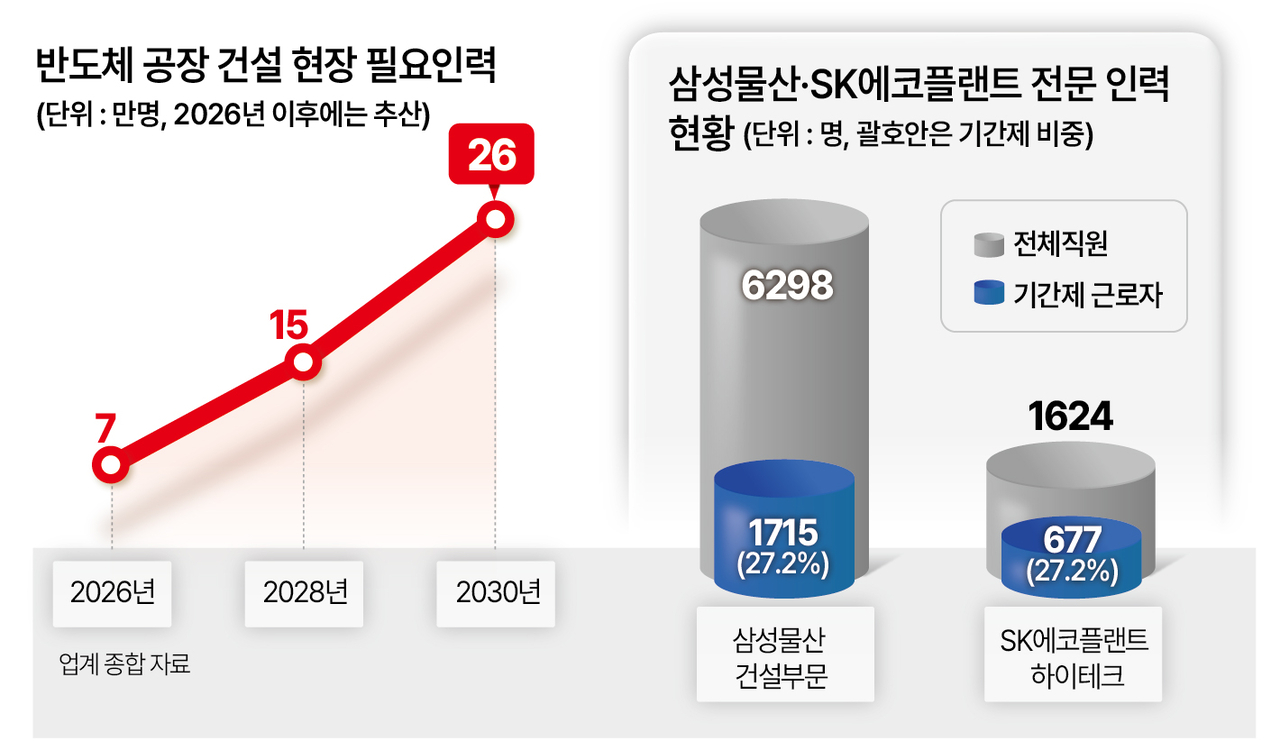
Surging demand for semiconductor factories and AI data centers is intensifying competition among construction companies to secure workers. The government projects that building chip factories will require more than 260,000 additional workers by 2030. Major builders including Samsung C&T and SK Ecoplant are expanding fixed-term hiring while also looking for ways to reduce turnover among existing staff. There are growing concerns that as workers flock to semiconductor construction sites, other sectors — housing and civil engineering in particular — could face labor shortages.
According to filings with the Financial Supervisory Service's DART system, the number of employees in SK Ecoplant's hi-tech division, which handles semiconductor factory and data center construction, rose 43.2 percent to 1,624 as of the end of September from 1,134 at the end of March. Fixed-term workers in the division rose 70.1 percent, from 398 to 677.
Fixed-term workers now account for 41.7 percent of the hi-tech division's workforce, exceeding the 36.1 percent share in the solutions division — which covers housing, architecture and infrastructure — and the company-wide average of 33.0 percent.
Samsung C&T is also expanding its construction workforce, primarily through fixed-term hires. As of the end of June, its construction division employed 6,298 people, up 470 from 5,828 at the end of last year. Over the same period, fixed-term workers rose 34.4 percent from 1,276 to 1,715, while the number of permanent employees edged up just 0.7 percent, from 4,552 to 4,583. The share of fixed-term workers climbed from 21.9 percent to 27.2 percent.
As of the end of September, the two companies' combined construction order backlog exceeded 66 trillion won ($49.1 billion) — 37.74 trillion won at Samsung C&T and 28.44 trillion won at SK Ecoplant. SK Ecoplant's backlog from six major projects commissioned by SK hynix — including the Yongin semiconductor cluster and the Cheongju M17 facility — stood at 12.82 trillion won, representing 45.1 percent of its total. Samsung C&T is also carrying out construction of the P4 and P5 semiconductor factories in Pyeongtaek as well as data center projects at home and abroad.
In the semiconductor construction industry, companies frequently hire experienced professionals with expertise in design and construction management on a project-by-project basis. Some workers build their careers by moving between semiconductor construction sites run by Samsung C&T, SK Ecoplant and other builders, rather than staying with a single employer for an extended period.
From a builder's perspective, investing time and money to train skilled workers carries the risk that those workers will eventually move to a competitor. At the same time, because order volumes and ground-breaking schedules fluctuate with conditions in the semiconductor industry, significantly expanding permanent headcount is also difficult.
SK Ecoplant is trying to encourage fixed-term workers to stay longer through improved training and compensation. "We are exploring and continuously implementing measures to support the long-term retention of non-permanent staff and enhance their project execution capabilities, including by offering incentives for extended service," a company official said.
Samsung C&T's construction division ties bonus rates to the performance of individual business units. "The hi-tech division's bonus payout rate is relatively higher than those of other divisions, and it could rise further depending on future results," a company official said.
The challenge extends beyond design and construction management staff: demand is also set to grow sharply for skilled tradespeople who handle piping, welding and duct installation on site. Many of these workers are employed by subcontractors or work on a daily-hire basis.
About 15,000 workers currently pass through Samsung Electronics' P5 construction site at its Pyeongtaek campus each day. That figure is expected to exceed 70,000 daily by the third quarter of 2028, when finishing work is projected to ramp up in earnest.
Industry sources say a similar pattern emerged when construction of Samsung Electronics' Pyeongtaek semiconductor factories previously accelerated — workers drifted from housing construction sites to chip factory sites. A slowdown in residential construction had reduced available work, while semiconductor sites offered relatively higher earnings through overtime and night shifts.
With the government simultaneously pushing to break ground on 1.5 million homes in the greater Seoul area and develop large-scale semiconductor industrial complexes over the next five years, competition for a limited construction workforce is expected to intensify further.
Lee Eun-hyung, a research fellow at the Korea Research Institute for Construction Policy, said compensation improvements can secure workers in the short term, but warned that housing construction workers could be drawn away to semiconductor sites, as happened in Pyeongtaek. "Since it is difficult to reliably forecast order volumes for semiconductor factories and data centers, project-based fixed-term hiring will likely expand further going forward," Lee said.
quq@heraldcorp.com




