134,616 workers fall short of minimum enrollment period due to employer premium delinquency
15,050 who have reached pension age cannot collect benefits
Workers must pay again to recover full credit for periods their employers skipped
Long-term delinquent premiums exceed 500 billion won; criminal referrals yield only 19% recovery rate
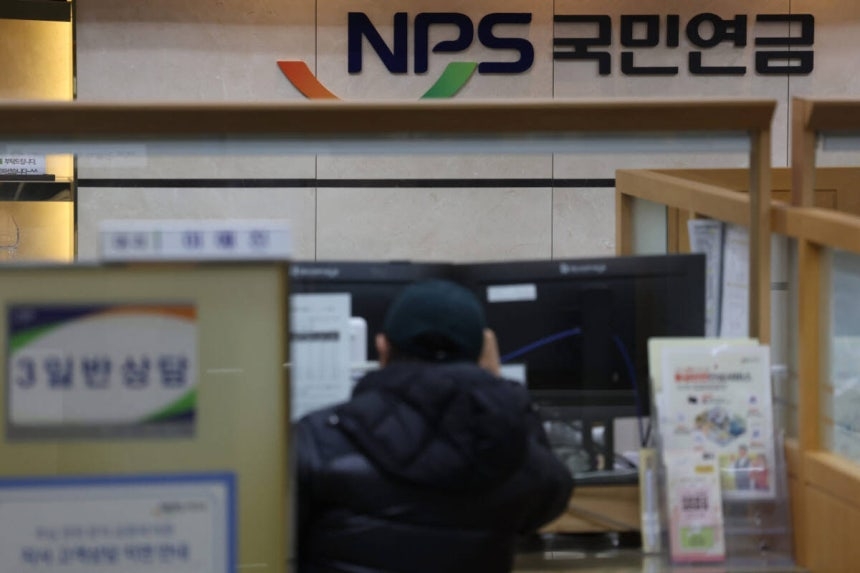
More than 134,000 workers face the loss of their national pension entitlements after employers withheld premiums from their wages but never remitted the money to the state insurer. Of those, more than 15,000 have already reached pension age yet cannot collect benefits because they fall short of the minimum enrollment requirement. Critics say the current system unfairly shifts the consequences of employer misconduct onto workers.
According to a written response the National Pension Service submitted to the office of Rep. So Byeong-hun of the National Assembly's Health and Welfare Committee, a total of 134,616 workers had not met the mandatory minimum enrollment period of 120 months — 10 years — as of September, due to premium delinquency by their employers.
Of that total, 119,566 (88.82 percent) have not yet reached pension age. The remaining 15,050 (11.18 percent) have already reached the eligible age and are immediately affected, unable to begin receiving their pension.
Workers who already paid forced to pay again as employers dodge responsibility
The core problem is that the national pension system, unlike other social insurance programs, penalizes workers for their employers' failure to remit premiums.
Under national health insurance, employment insurance and industrial accident compensation insurance, workers can still receive benefits if they can prove their employment, even when an employer has not paid premiums. The national pension operates differently: if an employer fails to pay, the corresponding period is in principle excluded from the worker's enrollment record.
Under current rules, the National Pension Service notifies workers when their employer falls into arrears. If it can confirm that premiums were deducted from the worker's wages, it credits half of the delinquent period toward the enrollment record. To recover the other half, the worker must apply for individual payment and cover the remaining premiums out of pocket.
In effect, workers who already had premiums deducted from their paychecks must pay again to protect their own pension rights. If the employer's business has closed or gone bankrupt — making forced collection impossible — and the worker cannot afford the additional payment, some or all of the delinquent period may never count toward their enrollment record.
Long-term arrears top 500 billion won; criminal referrals recover only 19%
Long-term national pension arrears are rising again. As of end-2024, total long-term delinquencies of 13 months or more across the four major social insurance programs reached 1.12 trillion won ($835 million), of which national pension arrears accounted for 488.8 billion won — 43.6 percent of the total. The number of delinquent workplaces stood at about 31,000.
National pension long-term arrears fell from 581.7 billion won in 2021 to 488.8 billion won by end-2024, but climbed back to 503.1 billion won as of June last year. One workplace went 17 years and nine months without paying 160 million won in premiums, while another accumulated more than 2.6 billion won in arrears in just two years and two months.
Sanctions against delinquent employers have also proven largely ineffective. Over the past decade, 855 cases of national pension delinquency were referred for criminal prosecution, involving 41.8 billion won in unpaid premiums. Of that amount, only 8.2 billion won was actually collected — a recovery rate of about 19 percent.
During the same period, 115.7 billion won in arrears was written off after collection efforts were closed, typically because a workplace had been shut for more than five years.
The National Pension Service said it is strengthening guidance on enrollment records and additional payment options, and is working with the National Health Insurance Service through a joint committee to press for collection of delinquent premiums. It is also in talks with the Ministry of Health and Welfare about lowering the threshold for publicly naming high-value or repeat delinquents — from the current standard of at least 20 million won in arrears for one year or more, to 10 million won or more.
On expanding relief measures for affected workers, the service said it would consult with the Ministry of Health and Welfare while weighing the fiscal impact on the pension system, fairness toward workers who have paid their premiums in full, and the risk of encouraging moral hazard among delinquent employers.
fact0514@heraldcorp.com