Housing portion of tax notices reaches 2.3 trillion won, up 35%
86% of taxable properties concentrated in Seoul, Gyeonggi Province and Incheon
Multi-home owners' tax notices total 967 billion won, up 60%
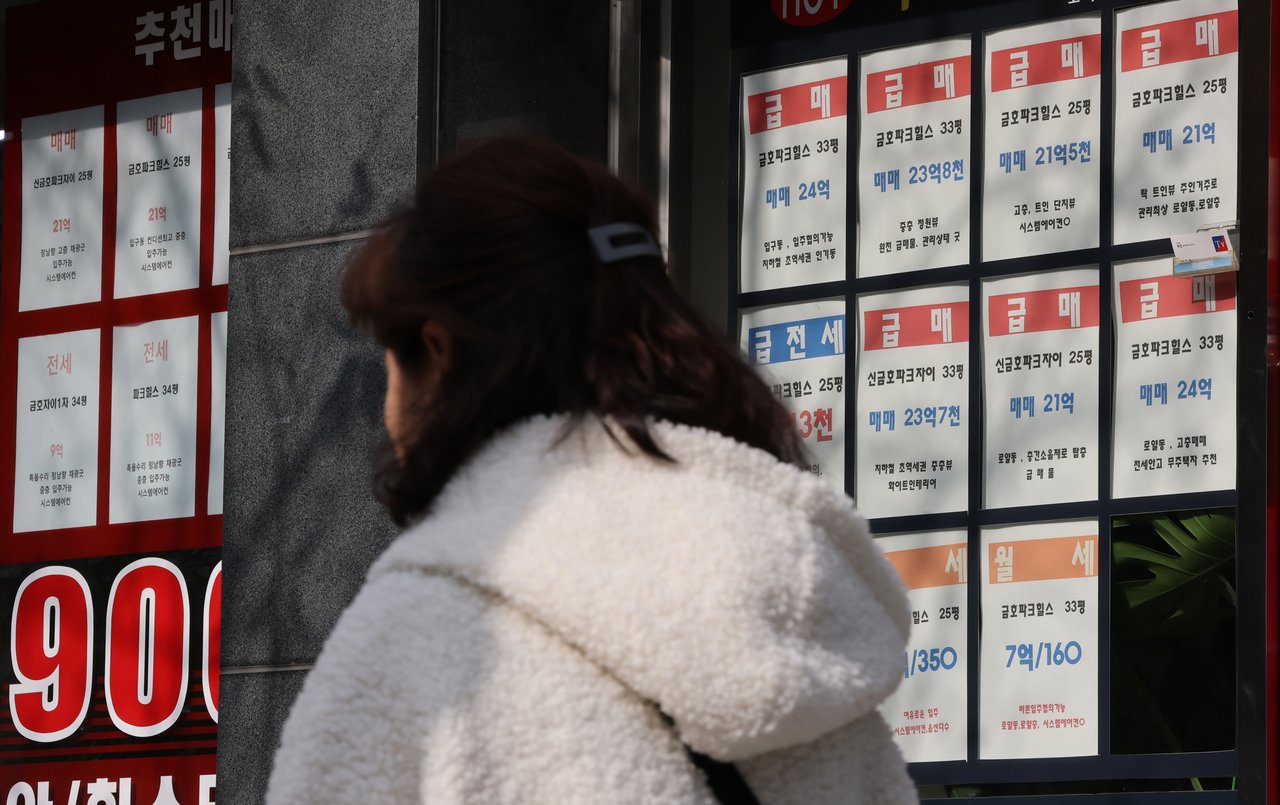
The number of people subject to the housing portion of the comprehensive real estate tax hit a four-year high this year, approaching 730,000, as rising home prices across Greater Seoul pushed up tax burdens. Single-home owners, in particular, faced their highest average tax bill since records began in 2017.
According to the Ministry of Economy and Finance's comprehensive real estate tax notices for 2026, released Thursday, 726,000 people received housing-portion tax notices this year — an increase of 187,000, or 34.5 percent, from a year earlier. That figure represents about 4.5 percent of all individual homeowners nationwide, which stood at 16.306 million last year.
The total housing-portion tax notified reached 2.3 trillion won ($1.71 billion), up 600 billion won, or 35.3 percent, from last year. Both the number of taxpayers and the total amount were the highest since 2022, when 1.195 million people received notices totaling 3.3 trillion won.
The number of people subject to the housing-portion tax stood at 517,000 in 2019 before swelling to 1.195 million in 2022. Policy changes — including a reduction in the fair market value ratio — brought that figure down to around 410,000 in 2023, but it has been climbing again since.
Rising real estate prices are the main driver of the increased tax burden this year. Officially assessed prices for apartment complexes nationwide rose 9.1 percent from a year earlier, with Seoul posting an 18.6 percent gain and Gyeonggi Province rising 6.4 percent.
"There were no major changes to the comprehensive real estate tax system this year," the Ministry of Economy and Finance said. "The increase stems from market factors."
Seoul recorded the sharpest regional increase. The number of Seoul residents receiving housing-portion tax notices rose 131,000, or 40.1 percent, to 459,000 — the highest growth rate among all 17 cities and provinces nationwide. Gyeonggi Province followed with 155,000 notices, up 36.8 percent from a year earlier.
Seoul accounted for 63.2 percent of all housing-portion tax notices nationwide. Including Gyeonggi Province and Incheon, the Greater Seoul area's share reached 86.3 percent.
Among homeowner categories, single-home owners saw the steepest rise in their tax burden. The number of single-home owner notices jumped 80,000, or 53.0 percent, to 231,000 this year, while the total tax notified surged 118.0 percent to 366 billion won.
Multi-home owners receiving notices numbered 438,000, up 32.8 percent from a year earlier, with their combined tax bill reaching 967 billion won — a 60.1 percent increase.
The average housing-portion tax per individual came to 1.99 million won, up 24.1 percent from 1.61 million won a year earlier and the highest level since 2021, when the average reached 3.65 million won.
Single-home owners faced an average notice of 1.59 million won, up 472,000 won, or 42.4 percent, in a single year. That surpassed the 1.53 million won recorded in 2021, when home prices were also sharply elevated, setting a new high since records began in 2017.
By contrast, the number of corporations receiving housing-portion tax notices fell 2.5 percent from a year earlier to 58,000. The ministry noted that many corporations apply for exemptions — such as exclusions from combined assessment — after receiving their notices, meaning the final number of corporate taxpayers and the total amount assessed will likely be lower than the notified figures.
For the land portion of the tax, 113,000 people received notices totaling 3.7 trillion won, each up 3.4 percent from a year earlier.
Combined, the total number of comprehensive real estate tax notices — covering both housing and land — reached 817,000, with a total assessed amount of 6 trillion won. Compared with last year, the number of taxpayers rose 30.0 percent and the total amount increased 13.7 percent.
If home prices continue to rise, the number of taxpayers and total tax assessed under the comprehensive real estate tax could increase again next year. However, the government said it is pursuing an expansion of the basic deduction for single-home owners as part of a tax reform package currently under consideration.
The deadline to pay this year's comprehensive real estate tax notices is Dec. 15.
y2k@heraldcorp.com