Conglomerate internal transactions near one-third of GDP
Payment deadline cuts for subcontractors to be finalized soon
Franchise association registration system to launch next month
Korea Fair Trade Commission Chairman Joo Byung-ki said Thursday that the practice of family members inheriting management control "must now be abolished" and that "the era of octopus-arm expansion — stretching into sectors with no connection to or competitiveness in a conglomerate's core business — must come to an end."
To promote coexistence between large and small businesses, Joo announced plans to raise the ceiling on fines for technology theft from 2 billion won ($1.49 million) to 10 billion won, and said the commission would soon finalize specific measures to shorten subcontract payment deadlines.
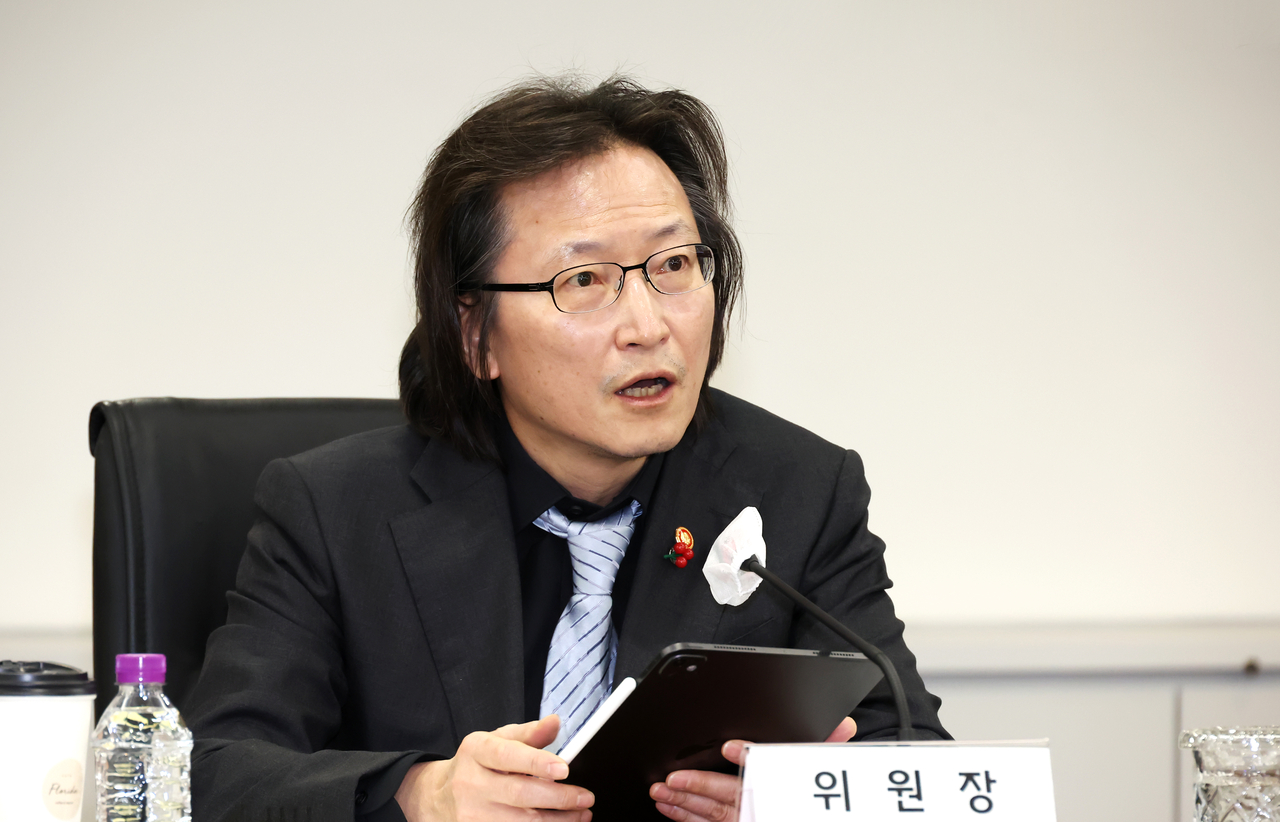
Joo made the remarks Thursday at a field communication meeting held at the Korea Federation of SMEs in Yeouido, Seoul, attended by Korea Federation of SMEs Chairman Kim Ki-moon, heads of SME industry associations and cooperative directors.
"Despite a recovery in growth momentum, our economy is trapped in a structural dilemma where the warmth of that recovery is not spreading across the broader national economy," Joo said. "The structural problem is that large companies in our key export industries — and the chaebol conglomerates they belong to — are monopolizing the fruits of growth."
Joo said conglomerate sales account for nearly 90 percent of GDP, and that internal transactions within those groups represent close to one-third of GDP. "That leaves very little room for sound small and medium-sized enterprises to grow," Joo said.
Joo added that South Korea's globally recognized companies in semiconductors, information and communications technology, automobiles, electronics and shipbuilding are "the collective achievement of the entire nation working together through a difficult history of economic development." Joo called on chaebol groups to "tear down the small fence of the conglomerate and take on the constructive task of building up the national economy's supply chain."
Joo also called for changes in management practices and business structures. "A rational management culture must take root — one where capable managers make decisions based on expertise and take responsibility for the results," Joo said. "Restructuring assets within a business group around core operations is the only way to sustain the competitiveness of a flagship business."
"When the territory that affiliates have monopolized opens up to the market, capable small and medium-sized enterprises gain more opportunities to collaborate and grow," Joo said. "Only by building a healthy domestic supply chain can the national economy mature into one strong enough to navigate the turbulent storms of a rapidly changing global economic order."
The Fair Trade Commission said it views the widening gap between large and small businesses as a structural obstacle to innovation and sustained growth, and plans to strengthen institutional reforms and law enforcement to root out unfair trade practices.
"We will introduce innovative systems to eradicate all manner of unfair trade practices, actively check the market power of the strong, and do everything in our power to protect the rights of the weak," Joo said. "The commission will focus all its capabilities on creating a market environment where large and small businesses can thrive together."
The commission also plans to tighten sanctions against technology theft. "We are applying a zero-tolerance principle to technology theft, and plan to strengthen law enforcement — including raising the current fine ceiling fivefold, from 2 billion won to 10 billion won," Joo said.
Starting in September next year, the commission will be required to submit materials to courts to help small businesses more easily prove damages in technology-theft compensation lawsuits. Joo said that reducing the evidentiary burden on victimized small businesses, combined with the fivefold punitive damages system in effect since 2024, would significantly deter technology theft and ensure adequate redress.
The commission is also pushing to shorten subcontract payment deadlines to ease liquidity pressures on small businesses. "We are discussing specific measures to shorten subcontract payment deadlines with relevant ministries and will finalize a concrete plan soon," Joo said. The commission had earlier significantly narrowed the scope of exemptions from mandatory payment guarantees for construction subcontracts, and in August expanded the subcontract price-linkage system to cover major energy costs including fuel and electricity.
The commission is also moving to improve trading conditions in the franchise and retail sectors. Starting next month, a franchise association registration system will be introduced, and franchise headquarters will be required to consult with registered franchisee associations. From October next year, large retailers' payment deadlines to small suppliers will be shortened from 60 days to 35 days to ease cash-flow difficulties.
Korea Federation of SMEs Chairman Kim Ki-moon said that as the economy enters a recovery phase, it is important that the benefits reach small businesses on the ground, and called on the Fair Trade Commission to pay close attention and provide active support in creating a trading environment where small businesses are fairly compensated for their work.
SME representatives at the meeting called for swift legislative amendments — including exempting joint SME negotiations from cartel regulations — as well as expanded incentives for companies that excel in subcontract price-linkage, and the creation of a fund using collected fines to compensate victims of unfair trade practices.
y2k@heraldcorp.com