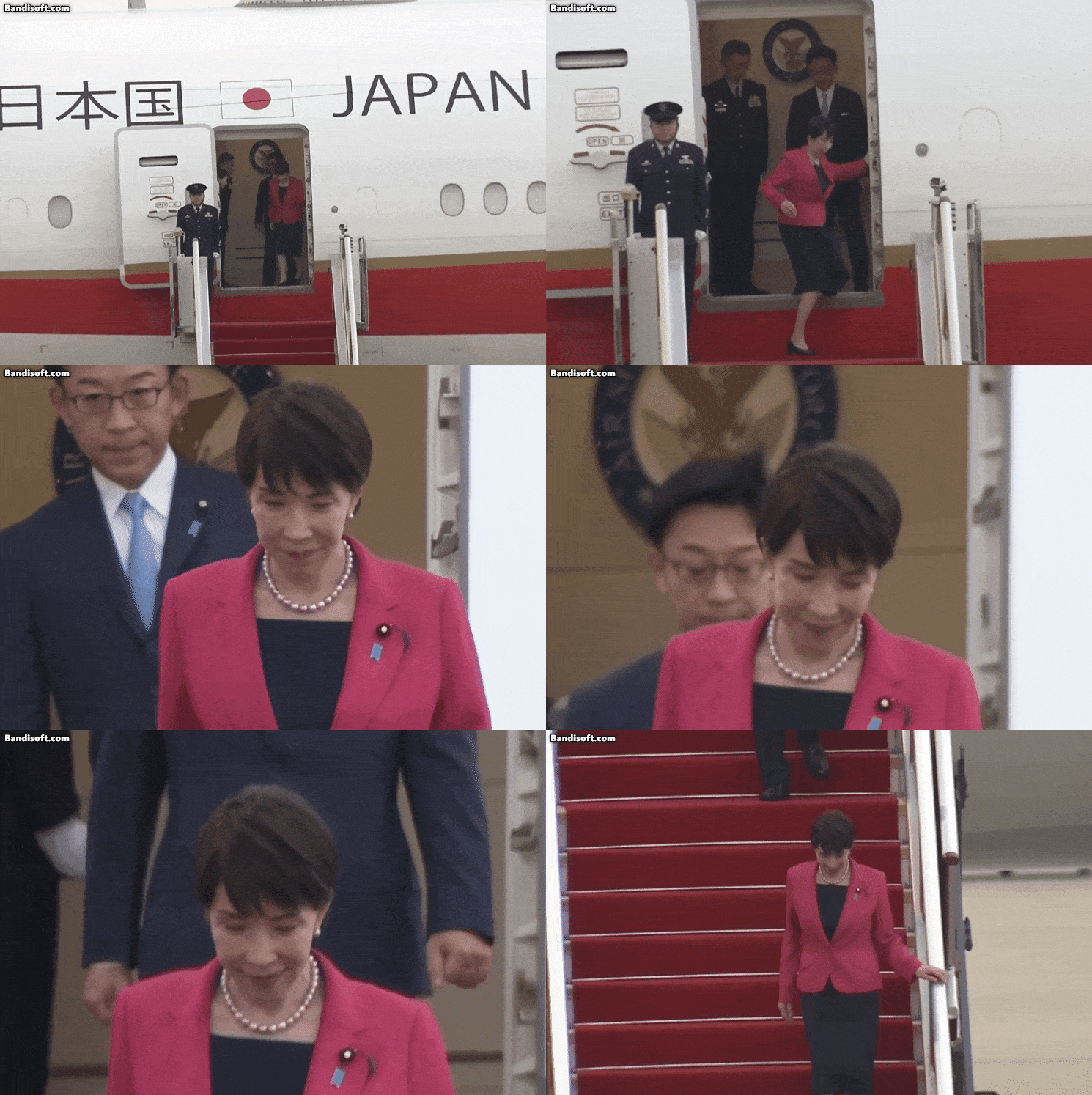
Japanese officials are claiming that China deliberately snubbed Prime Minister Sanae Takaichi when she traveled to Shenzhen last week for the Asia-Pacific Economic Cooperation summit.
According to The New York Times on Wednesday (local time), China rolled out lavish ceremonial welcomes for other visiting leaders, but when Takaichi arrived there was no welcoming crowd and no red carpet. Japanese officials have characterized the treatment as deliberate "discriminatory protocol" intended to diminish the prime minister's standing.
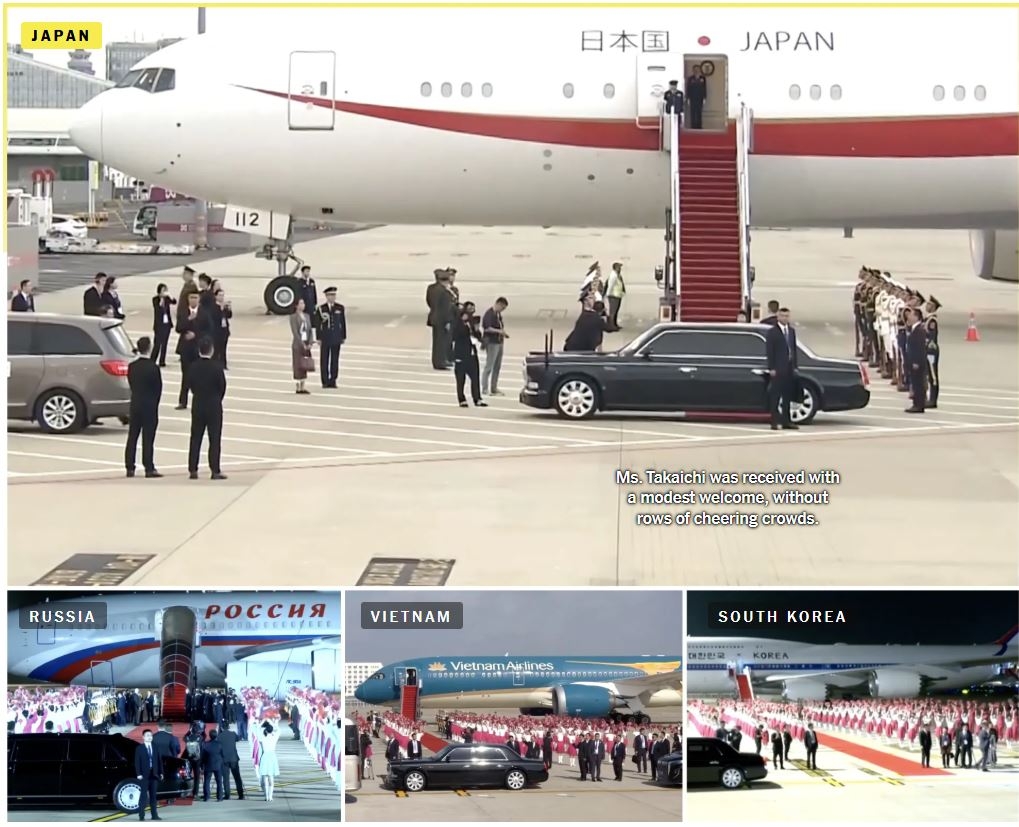
Other leaders received a markedly different reception. When US President Donald Trump, South Korean President Lee Jae Myung and Vietnamese leader Luong Cuong landed, the tarmac was lined with cheering crowds and dancers, and bouquets of flowers and long stretches of red carpet had been laid out.
When Trump arrived, Chinese President Xi Jinping came to the airport in person and embraced him — the first time Xi had gone to an airport to receive a foreign dignitary since taking power.
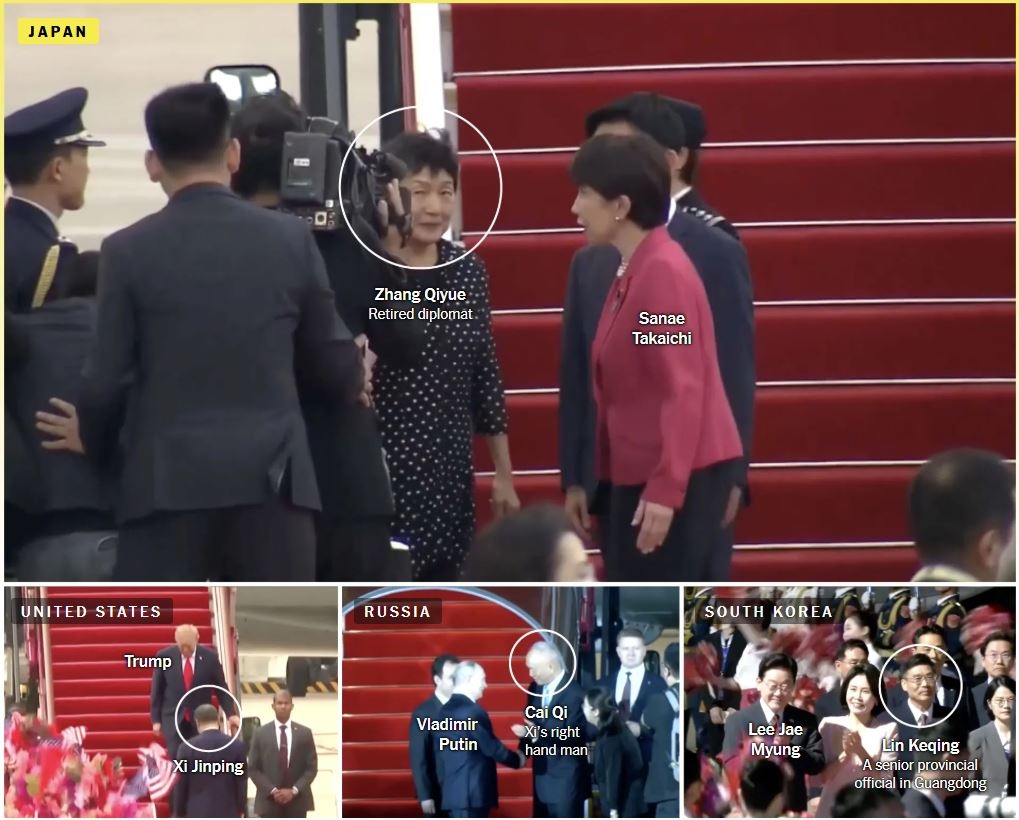
Russian President Vladimir Putin was greeted by Cai Qi, secretary of the Secretariat of the Chinese Communist Party's Central Committee, one of the most influential figures in China's top leadership and a close confidant of Xi. President Lee was received by a senior Guangdong provincial official. China is well known for choreographing even the smallest details at major summits.
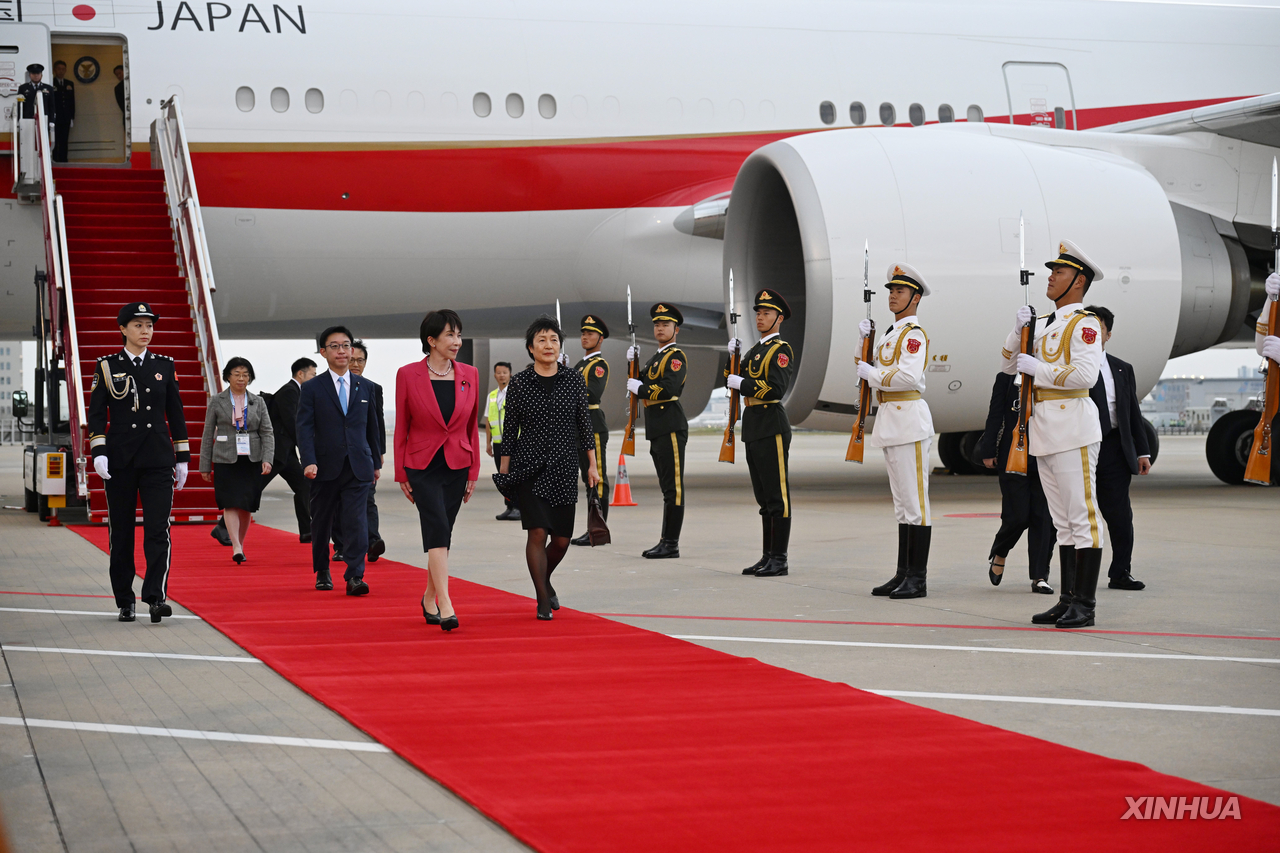
Takaichi received none of that. There was no welcoming crowd, no cheers, no dance performance and no red carpet. The official sent to meet her on the tarmac was Zhang Zhiyue, a relatively low-ranking former Chinese ambassador to Greece.
Takaichi then immediately encountered a physical obstacle: a roughly 16-inch (40.6-centimeter) gap between the aircraft door and the mobile staircase. Appearing flustered, she gripped the door frame and made her way slowly down the steps.
Takaichi has disclosed that she suffers from rheumatoid arthritis and has artificial joints in her legs. Observers in Japan noted that the staircase gap could have posed a genuine safety risk to the prime minister.
Akio Takahara, a visiting professor at Tokyo Woman's Christian University who studies Chinese politics, said the reception showed that "some people in China wanted to send a message to Prime Minister Takaichi that they do not like her and do not welcome her visit."
"China-Japan relations are somewhat similar to US-Europe relations. Both sides have a psychological complex about the other," Takahara said. "Even though China is objectively larger and stronger than Japan, it still does not have enough confidence to overcome that complex."
The controversy has emerged amid a sharp deterioration in China-Japan relations. Beijing has been at odds with Tokyo since Takaichi said last year that Japan might need to intervene militarily if China attacked Taiwan. China regards Taiwan, which governs itself under a democratic system, as part of its own territory.
At a recent press conference in Beijing, Chinese Ministry of Foreign Affairs spokesperson Guo Jiakun shrugged off questions about the sparse welcome given to Takaichi. "As the host country, China made appropriate protocol arrangements for all participants in accordance with international practice," he said.
mokiya@heraldcorp.com