Signage overhaul named outstanding proactive-administration case; transfer times cut 40%
Ten stations upgraded so far, with expansion to 25 stations planned for the second half of this year
Signs repositioned at wheelchair-user eye level; wayfinding confusion drops by more than half
Full network rollout targeted by 2027
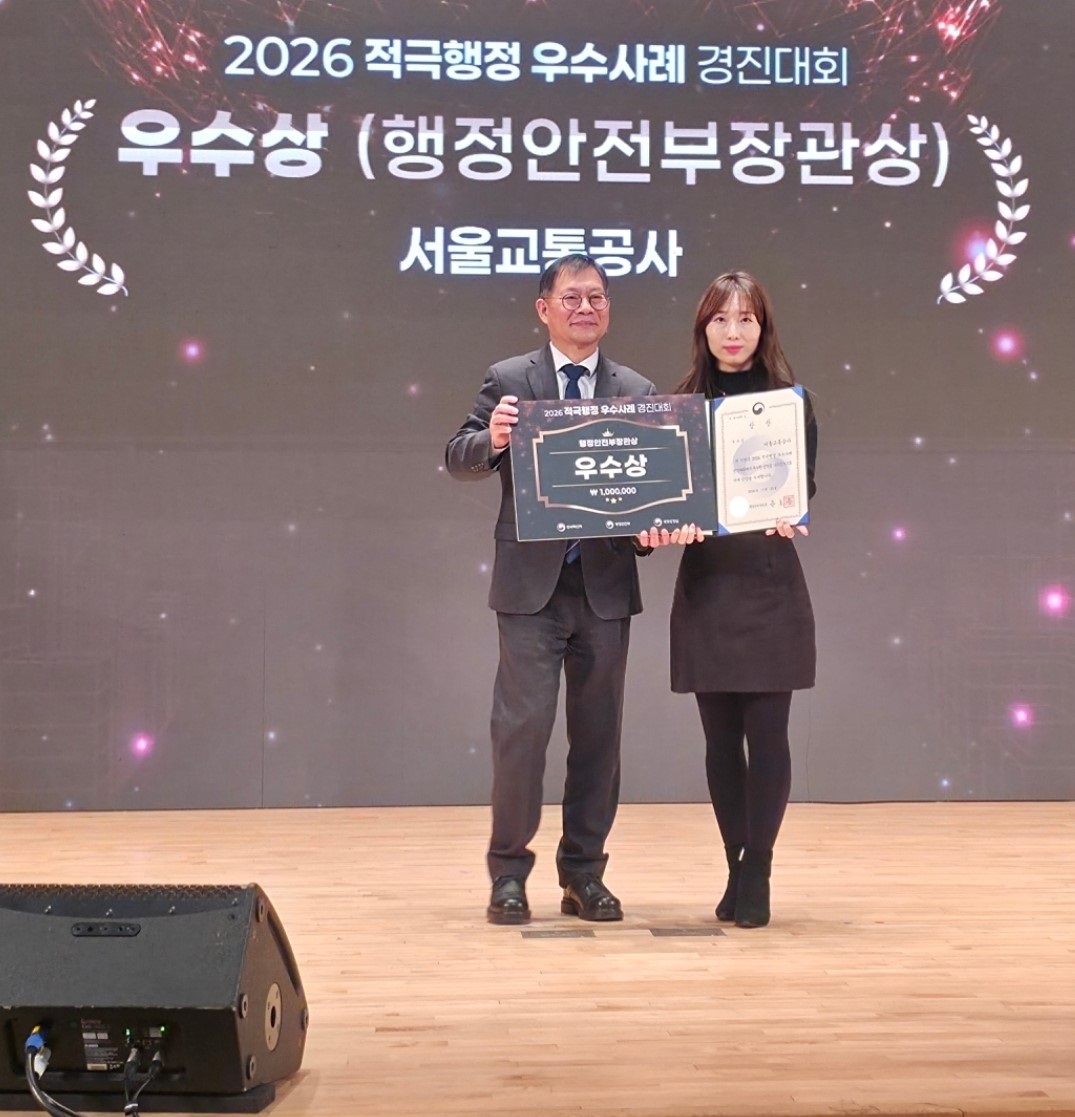
Seoul Metro has won a ministerial award from the Ministry of Interior and Safety for a signage improvement project designed to make subway transfers easier for passengers with mobility challenges. The initiative, which redesigned in-station guidance systems from the user's perspective, cut actual transfer times by roughly 40 percent.
Seoul Metro announced Thursday that its "Signage Improvement Project for Everyone's Subway" received the excellence award — the Ministry of Interior and Safety minister's award — in the local public institution category at the 2026 Proactive Administration Outstanding Cases Competition, jointly organized by the Ministry of Interior and Safety, the Ministry of Personnel Management and the Office for Government Policy Coordination.
A total of 257 cases were reviewed for the competition, and 27 were selected as outstanding examples — 18 from local governments and nine from local public institutions.
The project overhauled in-station signage systems to improve mobility for passengers who struggle to navigate complex subway stations, including wheelchair users, those traveling with strollers and elderly riders.
Existing stations had inconsistent signage designs and display formats depending on when they were built and which line they served, making it difficult for passengers to identify transfer routes. Seoul Metro identified inconveniences that arose during the actual movement of mobility-impaired passengers, incorporated user feedback, enlarged signs and added pictogram strips for mobility-impaired riders to improve readability.
Particular attention was paid to the eye level of wheelchair users — approximately 120 to 130 centimeters — with signs repositioned so that the information needed during transfers can be grasped at a glance.
The project produced measurable reductions in travel time. Observations of 15 mobility-impaired passengers before and after the improvements showed that average transfer times on complex interchange sections fell from 16 minutes and 3 seconds to 9 minutes and 37 seconds — a reduction of 6 minutes and 26 seconds, or roughly 40 percent.
The average number of wayfinding confusion incidents per person during transit also dropped from 8.3 to 3.6, a decrease of 4.7 instances. A survey of wheelchair users returned positive assessments on both navigational accuracy and the resolution of inconveniences.
Seoul Metro partnered with the Seoul Metropolitan Government, Hyundai Rotem and the nonprofit Muui, signing an MOU in April 2025. Using 900 million won ($670,000) in social contribution funds from Hyundai Rotem, the company is rolling out the signage improvements in phases through 2027.
Upgrades began at City Hall Station in January and have since been completed at 10 stations, including Seoul Station, Express Bus Terminal Station, Samgakji Station, Konkuk University Station, Gyodae Station, Nowon Station, Yeonsinnae Station, Cheonho Station and Cheonggu Station. Seoul Metro plans to expand the project to 25 stations in the second half of this year and apply the improved signage to every station it operates by 2027.
Ma Hae-geun, head of Seoul Metro's operations division, said the award carries significant meaning because it reflects an effort to examine the subway environment through the eyes of mobility-impaired passengers and achieve tangible improvements through public-private cooperation. "We will continue to refine our user-centered guidance systems so that all citizens can use the subway easily and conveniently," Ma said.
seouldream01@heraldcorp.com