
With a background spanning Samsung Group, three terms on the district council, a senior National Assembly aide role and private business, Kim brings deep organizational experience to the district office; he says a leader's job is to create an environment where staff want to work
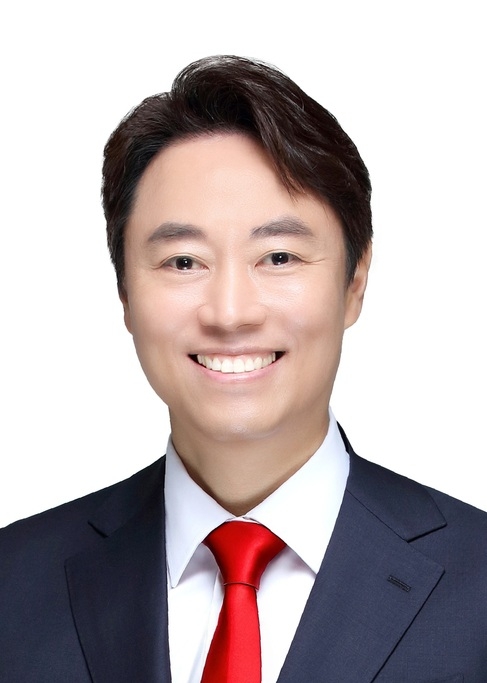
Yongsan-gu District Mayor Kim Kyung-dae is drawing attention inside and outside the district office for a leadership style centered on organizational management.
Among the district mayors elected in Seoul's ninth round of local elections, Kim is relatively young, yet observers say his experience — entering Samsung Group through its open recruitment process, serving three terms on the Yongsan-gu District Council, working as a senior aide to a National Assembly member and running his own business — gives him an unusually deep grasp of both local issues and organizational management.
What stands out in particular is his effort to respect and look after the more than 1,200 staff at the district office, with a focus on organizational stability and boosting employee morale.
Since taking office, Kim has invested considerable effort in communicating not only with senior officials but also with rank-and-file employees. Staff at the district office have responded positively to what they describe as a district mayor who pays attention to their well-being and working conditions.
Kim has worked to strengthen internal communication by creating relaxed settings where senior officials can speak freely with him.
"I have made a point of holding informal gatherings with all division and section chiefs as well as dong administrators," he said. "I want to help make sure employees do not find their work a burden."
Kim's management philosophy holds that real administrative results ultimately come from the staff working on the ground. "In my experience leading organizations, I think the most important thing a leader can do is create an atmosphere where employees feel motivated to work," he said.
Another notable aspect of Kim's leadership is his clear stance on the role of his secretariat and close associates.
Since taking office, he has reportedly instructed secretariat staff not to use their proximity to him to lord it over other employees. His reasoning is that if people around the district mayor exercise excessive influence within the organization, the trust and stability of the administrative structure can be undermined.
Kim also turned down requests to appoint a policy adviser. "There were requests for me to appoint someone as a policy adviser, but I declined," he said.
Underlying that decision is a conviction that it is not desirable for close associates or separately appointed support staff to exercise the district mayor's authority in effect over the existing administrative organization.
The stance contrasts with some other autonomous districts, where the appointment of policy advisory staff has sparked internal friction and controversy.
Analysts say Kim's experience running organizations in the private sector and in the community is shaping how he leads the district administration — putting into practice the principle that respecting staff, maintaining clear lines of authority and responsibility, and providing a stable working environment are what matter most for organizational performance.
Senior officials at the district office have also spoken positively of a district mayor who prioritizes staff welfare and organizational stability. "With a district mayor like this, I feel I could give everything I have," one senior official said.
The leadership of an elected local government head is not determined by age or career alone. How much a leader respects staff and supports the organization in doing its job is equally important. Kim's approach to running Yongsan-gu ultimately shows that voluntary participation and trust among members — not the authority of the leader — can be the true driving force of good governance.
seouldream01@heraldcorp.com




