
Protective antibody rate in sows drops 31.7 percentage points in a year
Six regions, including Sejong, North Chungcheong Province and South Gyeongsang Province, fall below 10%
Animal quarantine agency urges vaccination and tighter biosecurity
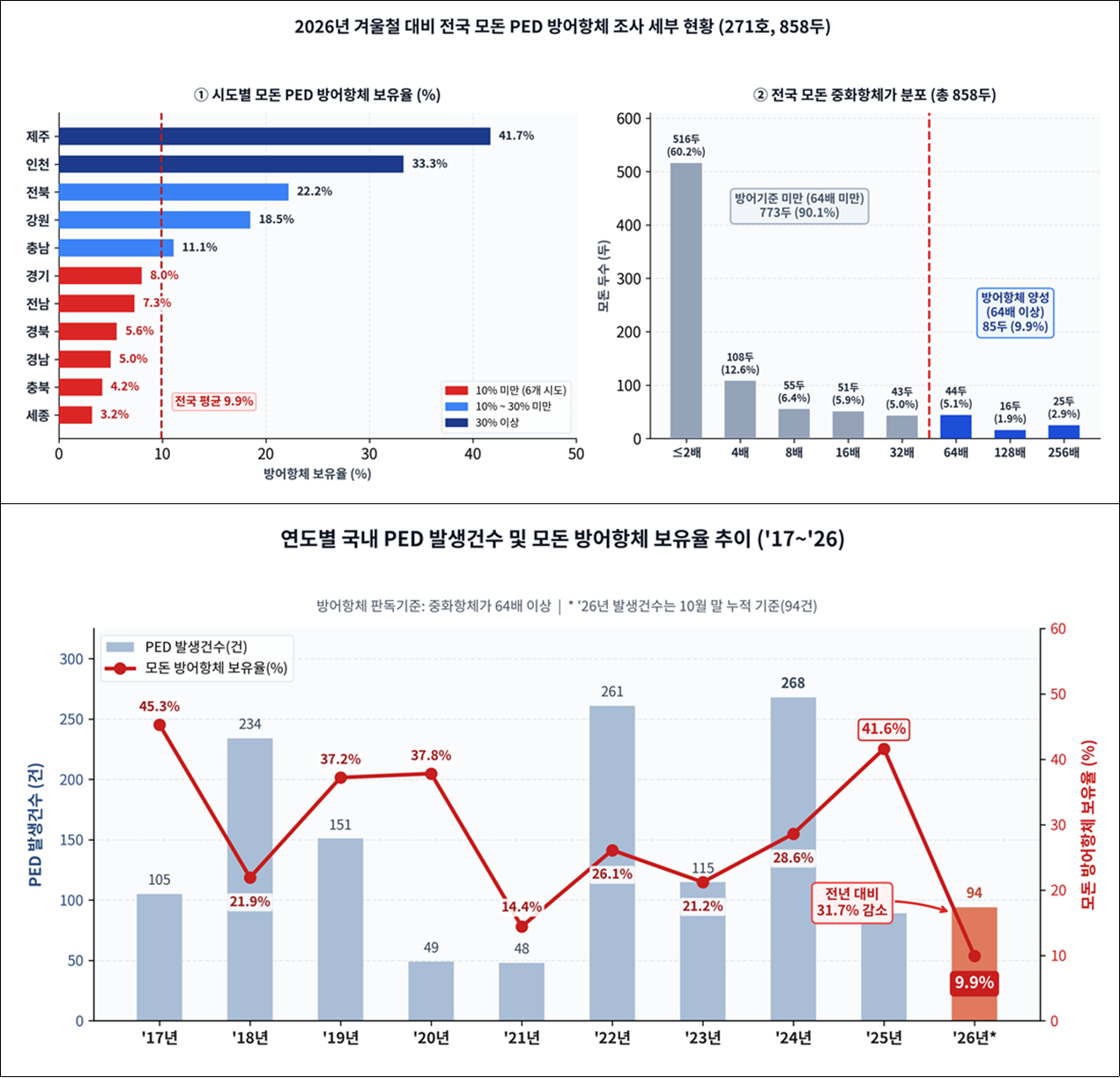
Concerns are growing over the winter spread of porcine epidemic diarrhea (PED), a disease that causes high mortality in piglets. The protective antibody rate among sows at pig farms nationwide tumbled from 41.6 percent last year to 9.9 percent this year, meaning nine out of every 10 sows surveyed lacked sufficient antibody levels to defend against the disease.
The Animal and Plant Quarantine Agency said a survey conducted from August to September at 271 pig farms across the country found that only 85 of 858 sows tested met the protective threshold. The national average protective antibody rate of 9.9 percent represents a drop of 31.7 percentage points from the previous year.
PED is a viral infectious disease that causes vomiting and severe diarrhea in pigs. It is particularly dangerous for nursing piglets, in whom it can trigger severe dehydration and death. Since a new variant of the virus entered the country in 2013, outbreaks have concentrated between November and April each year. The disease is currently classified as a Class 3 livestock infectious disease and is managed primarily through voluntary vaccination and biosecurity measures by individual farms.
By region, protective antibody rates were low across all mainland areas except Jeju, which recorded 41.7 percent. Six regions fell below 10 percent, indicating a relatively higher risk of outbreak: Sejong at 3.2 percent, North Chungcheong Province at 4.2 percent, South Gyeongsang Province at 5.0 percent, North Gyeongsang Province at 5.6 percent, South Jeolla Province at 7.3 percent, and Gyeonggi Province at 8.0 percent.
The protective antibody rate among sows closely correlates with the scale of PED outbreaks. When the winter 2023 sow antibody rate was limited to 21.2 percent, 268 PED cases were reported nationwide in 2024. Last year, when the rate stood at 41.6 percent, the number of cases fell to 89.
The agency shared the survey results with livestock quarantine agencies and producer organizations nationwide on Nov. 4 and issued a PED outbreak caution advisory on Nov. 9. It also forwarded farm-level antibody test results to local livestock quarantine agencies, directing them to focus management efforts on farms with low protective antibody rates.
To prevent PED losses, sows should be vaccinated before farrowing so that piglets receive sufficient protective antibodies through colostrum. Farms must also follow biosecurity protocols to block viral entry through feces — including disinfecting vehicles and personnel entering the farm, restricting outside visitors, maintaining hygiene inside and outside pig houses, and quarantining newly introduced animals.
Jung Seung-gyo, acting head of the Animal and Plant Quarantine Agency, said the situation was serious, with this year's sow PED protective antibody rate significantly lower than in previous years, raising concerns about farm losses over the winter. "We urge pig farmers to pay close attention to timely vaccination to boost sow immunity and to strict farm biosecurity," Jung said.
adastra@heraldcorp.com




