
Soybean cultivation area grows, but consumption lags behind
GMO full-labeling rules seen as opening for premium domestic oil
Industry seeks to shed cheap-cooking-oil image
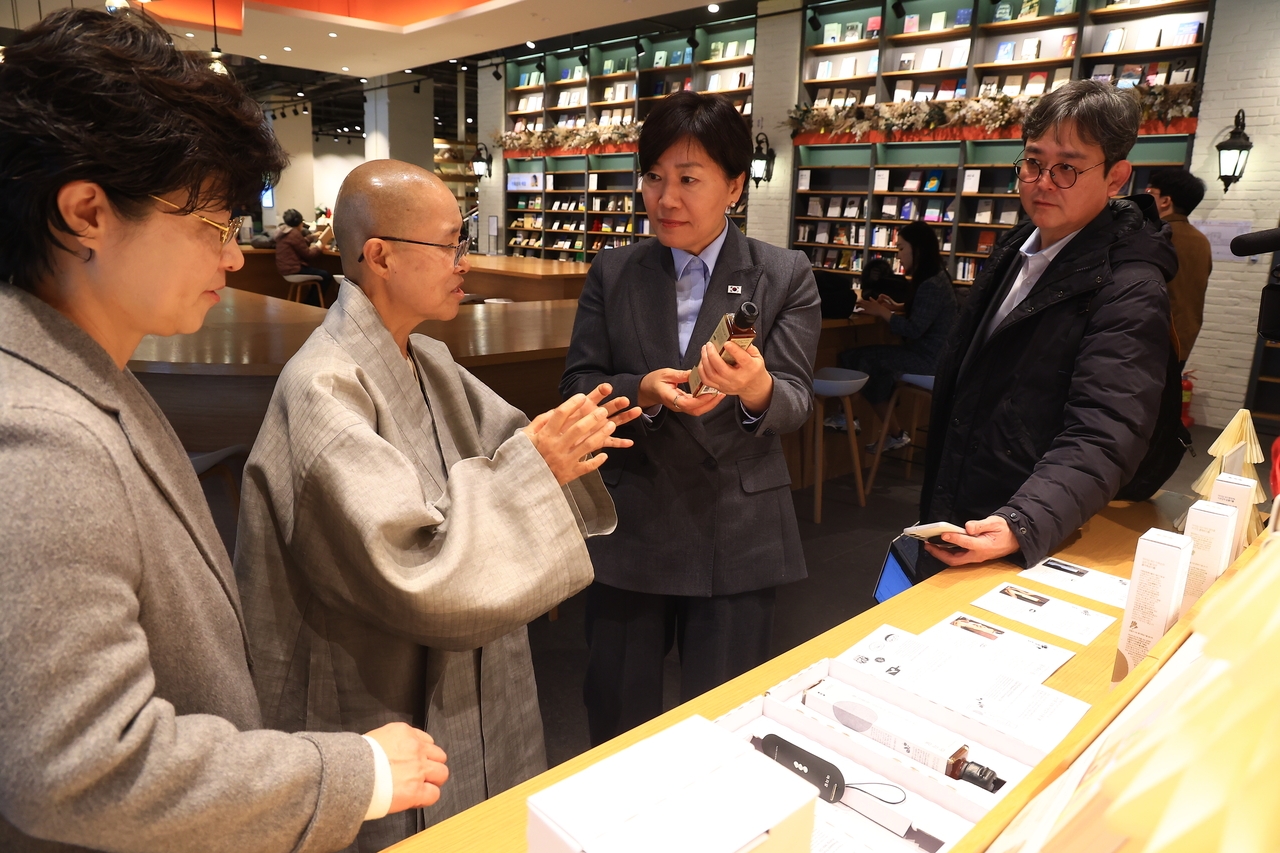
More farmers are switching from rice to soybeans, but domestic consumption has failed to keep pace with rising production, making new market outlets an urgent challenge. The government plans to use the introduction of a full mandatory labeling system for genetically modified organisms (GMO) as an opportunity to expand the domestic soybean oil market and improve consumer awareness.
Agriculture Minister Song Mi-ryeong met Wednesday at Cafe Comma in Yeouido, Seoul, with temple food expert Buddhist monk Seonjae, Hong Seong-mi, head of Majidham, and culinary researcher Lee Mi-gyeong to discuss ways to boost consumption of domestically grown soybeans.
According to the Ministry of Agriculture, Food and Rural Affairs, Song said at the gathering that while soybean cultivation areas had grown after the government encouraged farmers to shift from rice, high prices for domestic soybeans meant consumption had not kept up with production. "Consumption needs to rise to a certain level for it to benefit farmers and protect our agricultural products," Song said.
The tea gathering also explored ways to reposition soybean oil — long perceived as a cheap cooking oil — as a premium ingredient.
Majidham sells cold-pressed soybean oil made from domestic soybeans, along with flavored oils using Korean ingredients such as zanthoxylum and aralia shoots. Since launching its products on Sept. 7, the company has expanded its retail network to major department stores and home shopping channels. The domestic soybean oil is priced at 33,000 won ($25) for 200 milliliters.
Hong said that while regular soybean oil is considered difficult to differentiate from other cooking oils, zanthoxylum oil and aralia oil have strong potential to compete with olive oil.
The gathering also took up the question of how to use byproducts left over after pressing soybean oil. Song noted that soybean meal generated during the oil-making process is a protein-rich raw material. Majidham is working with specialists to explore ways to use soybean meal as a food ingredient, Hong said.
Participants also raised the idea of turning domestic soybean oil consumption into a cultural trend to attract younger consumers.
Seonjae said people needed to change their perception of soybeans. "Because we have eaten cheap soybean oil so easily for so long, people ask why it should be expensive," the monk said. "That mindset needs to change."
Song agreed that taste was key to winning over younger consumers. "When you consume this, it's — how shall I put it — it's the cool thing to do," Song said.
Song said sustainable growth in domestic soybean consumption would require building an industrial ecosystem in which not only farmers but also processors and retailers could earn fair economic returns.
"I will work actively to expand the soybean oil market, which can open a new path for domestic soybeans," Song added.
adastra@heraldcorp.com




