
Running through Feb. 8 at Gwanglim Arts Center
A reimagined 'A Tale of Two Cities' takes the Seoul stage
'Asia opened a door from the ashes'
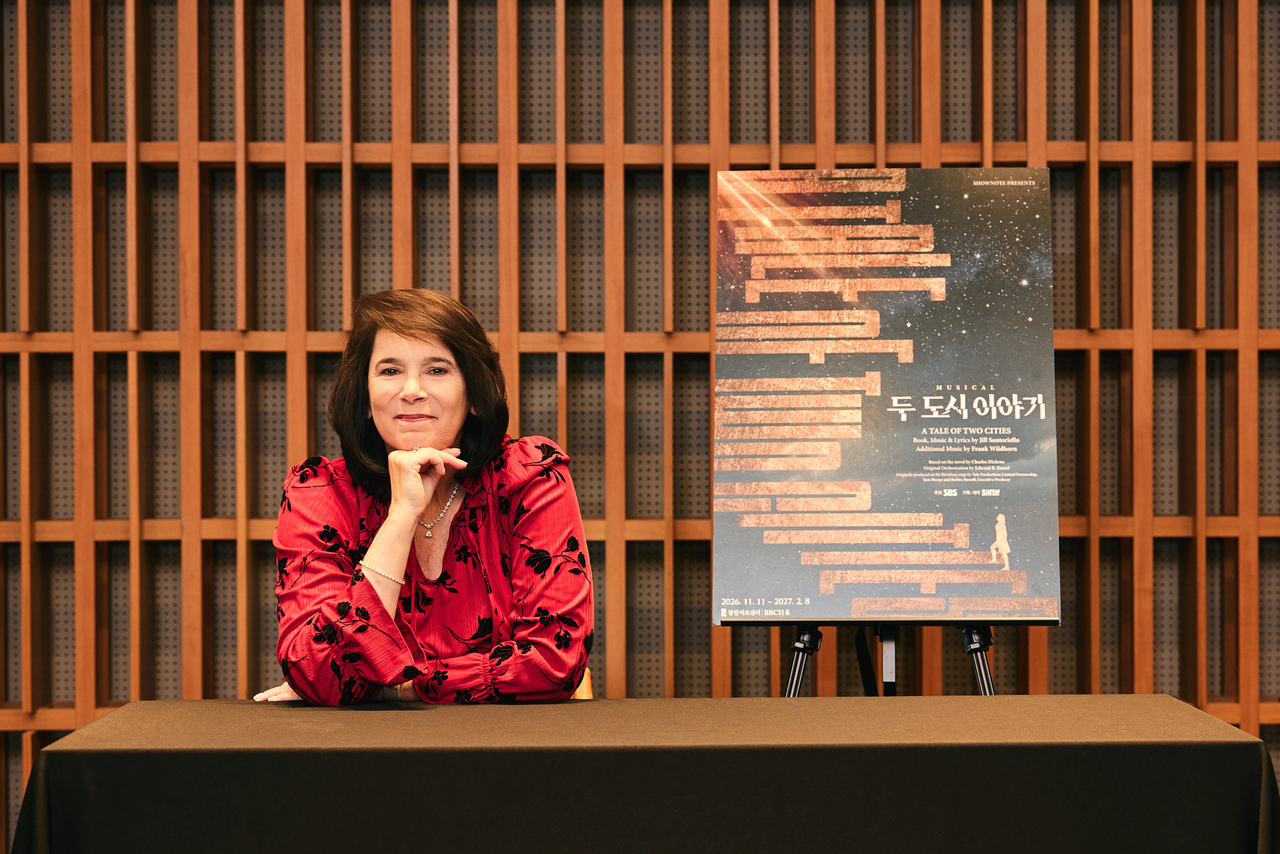
"I thought there was nothing left. And then, from those ashes, two beautiful productions opened in Asia, one after another, year after year."
The musical "A Tale of Two Cities" barely lasted two months on Broadway. It opened at the Al Hirschfeld Theatre in New York in September 2008 and closed that November — an unusually swift exit in a market built around open-ended runs. The first city to bring it back to the stage was Seoul, which mounted the Korean premiere in 2012. Now, 12 years later, the show has returned to Korean stages.
Jill Santoriello, who wrote the book, music and lyrics, recently visited Korea and said the worst thing that ever happened to her had turned into the best. It was her first trip back since the Korean premiere 14 years ago.
Based on Charles Dickens' novel of the same name, "A Tale of Two Cities" — running through Feb. 8 at the BBCH Hall of Gwanglim Arts Center — is set in Paris and London during the French Revolution. It tells the story of cynical lawyer Sydney Carton, who gives his life for the woman he loves, Lucie Manette, and her husband Charles Darnay.
A fully reimagined production — and a Broadway comeback in sight
Santoriello's voice still carried a heaviness when she recalled the Broadway closing. "My heart was broken and I was devastated," she said. "The run was so short that I had no reason to believe the show had a future beyond Broadway."
The turnaround had already begun in the audience on opening night. As hope faded on Broadway, the Asian market came calling. Representatives from Japan's Toho expressed interest in a local production after seeing the very first performance, and around the same time a Korean producer recognized the show's worth. The Korean premiere ended up beating the Japanese production by a year.
The Korean run was not without its own turbulence. During the third season in 2014, unpaid actor fees and staff wages led to a performance being canceled just 15 minutes before curtain, and the season closed early. It was, as it happened, the only season Santoriello never saw. "I honestly don't know what the reaction was like or why it happened," she said.
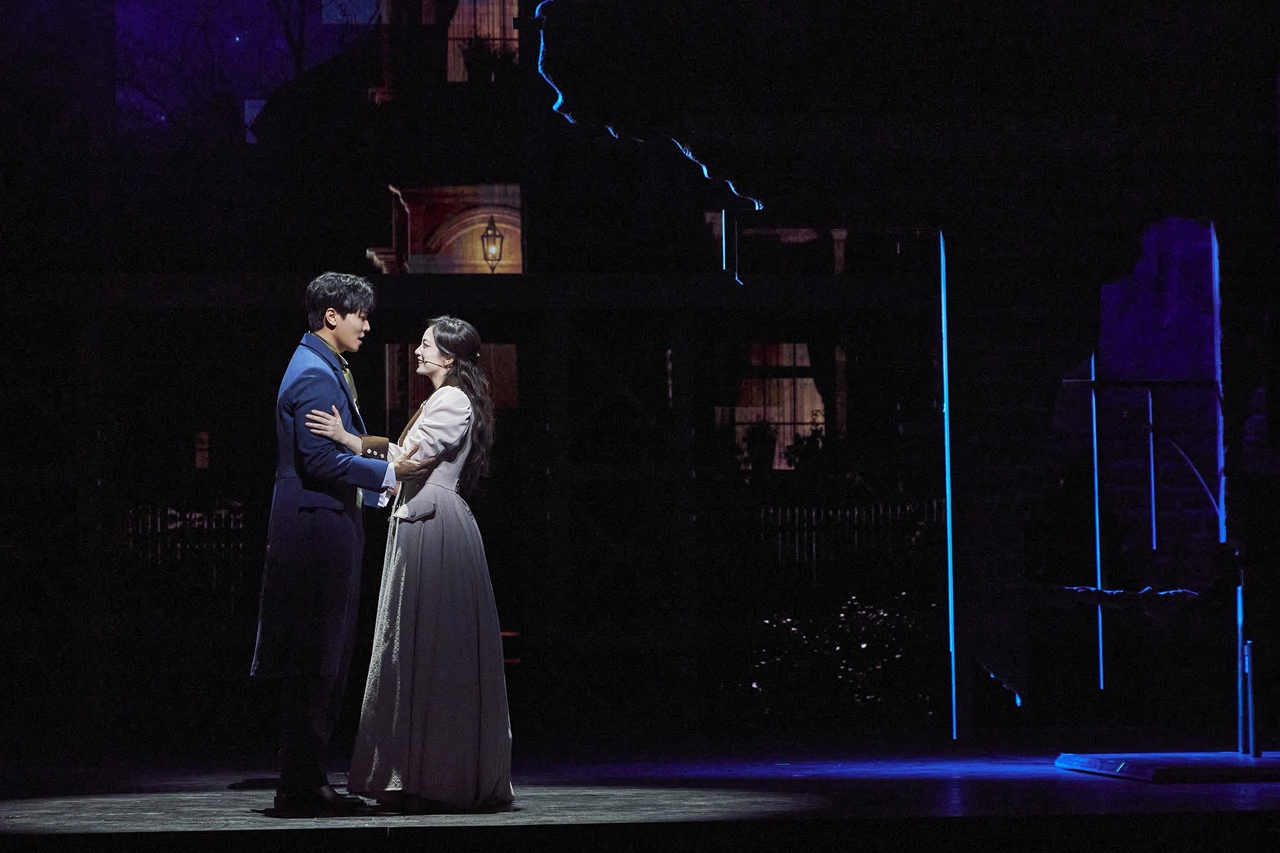
This time, the production systematically addressed what had gone wrong — on Broadway and in earlier Korean seasons. Leading Korean production company Shownote rebuilt the show from the ground up, reworking the script and redesigning the sets, costumes and lighting. "I told them, tell me what you need to succeed with Korean audiences and I'll give you whatever you want," Santoriello said. She sees the entire creative process as a reflection of how much the Korean musical market has grown and changed over the past 14 years.
"The earlier Korean production was essentially a replica of Broadway. It used the Broadway sets and costumes — and as far as I know, even the wigs came from Broadway. This time everything is new: the sets, the lighting, the costumes, the design. It's truly fantastic. They completely reimagined the piece."
The biggest change Santoriello singled out is the use of video projection. Rendering the backgrounds through projection gave the stage depth and freed the actors to move. "It looks like there are far more sets than are actually on stage, and yet the actors move around completely freely," she said.
The projection design also solved a core weakness of the original Broadway production. Physical sets that had to be shifted around the stage were replaced with projected imagery. Moving those sets had required so many stagehands that the task fell to the actors themselves. "One of the big problems with the original production was the physical sets — they were very restrictive, and they were enormously expensive," Santoriello recalled. She is now in talks with Broadway producers about the possibility of reviving "A Tale of Two Cities" there. After seeing the current Seoul production, she said she wants to find out whether the Shownote production could be brought to Broadway. "It's much closer to the Broadway show I imagined than the actual Broadway show was," she said.
Music is another area of change. The production includes three new songs, two of which feature melodies by Frank Wildhorn — the composer beloved by Korean audiences for "Jekyll & Hyde" and "Dracula" — with lyrics by Santoriello. One of them, "I'll Die for Love," accompanies the scene in which a resolute Sydney is left alone in his prison cell.
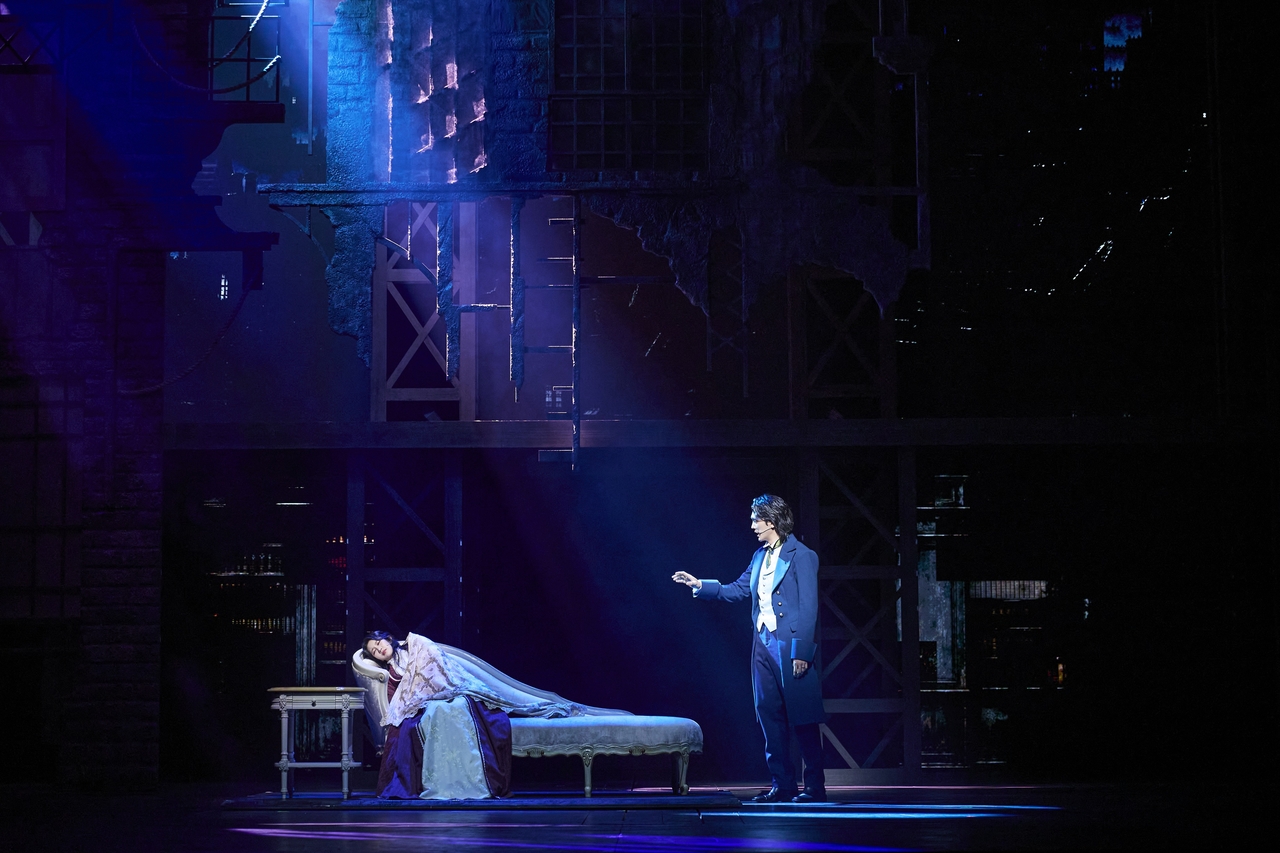
Wildhorn had written a melody for that same moment for a PBS concert filmed in England in 2009, but it was ultimately never used. This time, Wildhorn — working from Hawaii — and Santoriello — in Florida — exchanged emails until the song was finished. "I kept thinking, why didn't we put a song there from the beginning?" she said. "That moment always deserved to be sung."
The role of Sydney Carton is played by Shin Sung-rok and Kai, among others. Kai played Charles Darnay in the 2012 Korean premiere. "Charles is a wonderful role with a lot to sing, but Sydney is the lead — and Kai is extraordinary in it," Santoriello said. She added that 14 years ago she felt Korean performers were the best singers in the world, and that opinion has not changed.
A musical 20 years in the making — 'Broadway is an old boys' club'
Santoriello first encountered the story at the age of 12. The memory of that night remains vivid. She wept through it without fully understanding what she was watching.
"It was 2 in the morning. I snuck out of my room to watch the 1935 MGM film 'A Tale of Two Cities.' I was that strange child who would creep downstairs to the room with the television and watch movies very quietly in the middle of the night."
The story never left her, and it eventually became a musical. She had tried writing her first musical around age 14 or 15, based on "Wuthering Heights," but her oppa and fellow Broadway actor Alex Santoriello told her there was no one and nothing in it worth saving. She turned back to "A Tale of Two Cities" at 16. It was, in effect, her first real musical — and it sat in a drawer for years afterward.
Santoriello studied journalism in college — she did not feel confident enough to pursue music formally, and she did not want to worry her parents with an arts degree of uncertain financial return. After graduating, she entered show business answering phones at a talent agency. She commuted for two years from her parents' home in New Jersey to New York before finally sitting down with them. "The pay was terrible, so I was living with my parents. I told them I wanted to quit and try writing a musical," she said. "They surprised me by saying yes right away. The condition was that I finish in three months — and I actually completed the first draft and all the songs in exactly three months."
But getting it in front of the world took far longer. "Finding a producer willing to put it on stage took nearly 20 years after that," Santoriello said.
Broadway, when she finally reached it, was not welcoming to women creators. "In 2008, some reviews actually contained sexist language targeting the fact that a woman had done this," she said. "Broadway has always been a kind of old boys' club." Word even spread that her brother — who shares her surname — was her husband, and that he had bought the production to indulge her vanity. Today, she believes things have improved considerably over the past 20 years.
She is among the rare women on Broadway to serve as sole author of a show's book, music and lyrics. "In the past, one person doing all three was almost treated as a taboo — it simply wasn't done," she said. "But Broadway has been changing over the last 10 years. Shows like 'Hadestown,' where a woman writes the entire piece, are emerging."
Broadway posted record-high sales last season (2025-2026), yet admissions fell from 11.75 million to 11.23 million. The revenue increase was driven by sharply higher ticket prices, while the drop in admissions reflects a decline in international tourists. "Americans have called Broadway a 'wonderful invalid' for decades and centuries — always on the verge of dying," Santoriello said. "But right now it's making more money than ever. As long as original, wonderful new shows keep coming — shows like 'Maybe Happy Ending' — Broadway will be just fine." "Maybe Happy Ending" is a Korean original musical by writer Park Chun-hoo and composer Will Aronson that won six Tony Awards last year.
"A Tale of Two Cities" is ultimately a story about love and sacrifice. Standing before the guillotine, Sydney Carton willingly dies under another man's name so that the person he loves can be happy. Dickens wrote that ending in 1859, and for more than 160 years it has stood as the very definition of noble self-sacrifice. Some may find it old-fashioned — but not Santoriello, who calls herself an old-fashioned romantic.
"Clichés are clichés for a reason. Because they're true, and because they're experiences people have actually lived."
shee@heraldcorp.com




