
Martha Argerich and Charles Dutoit, 67 years on
First joint Korea appearance with KBS Symphony Orchestra
The 1959 premiere work, heard again in Seoul in 2026
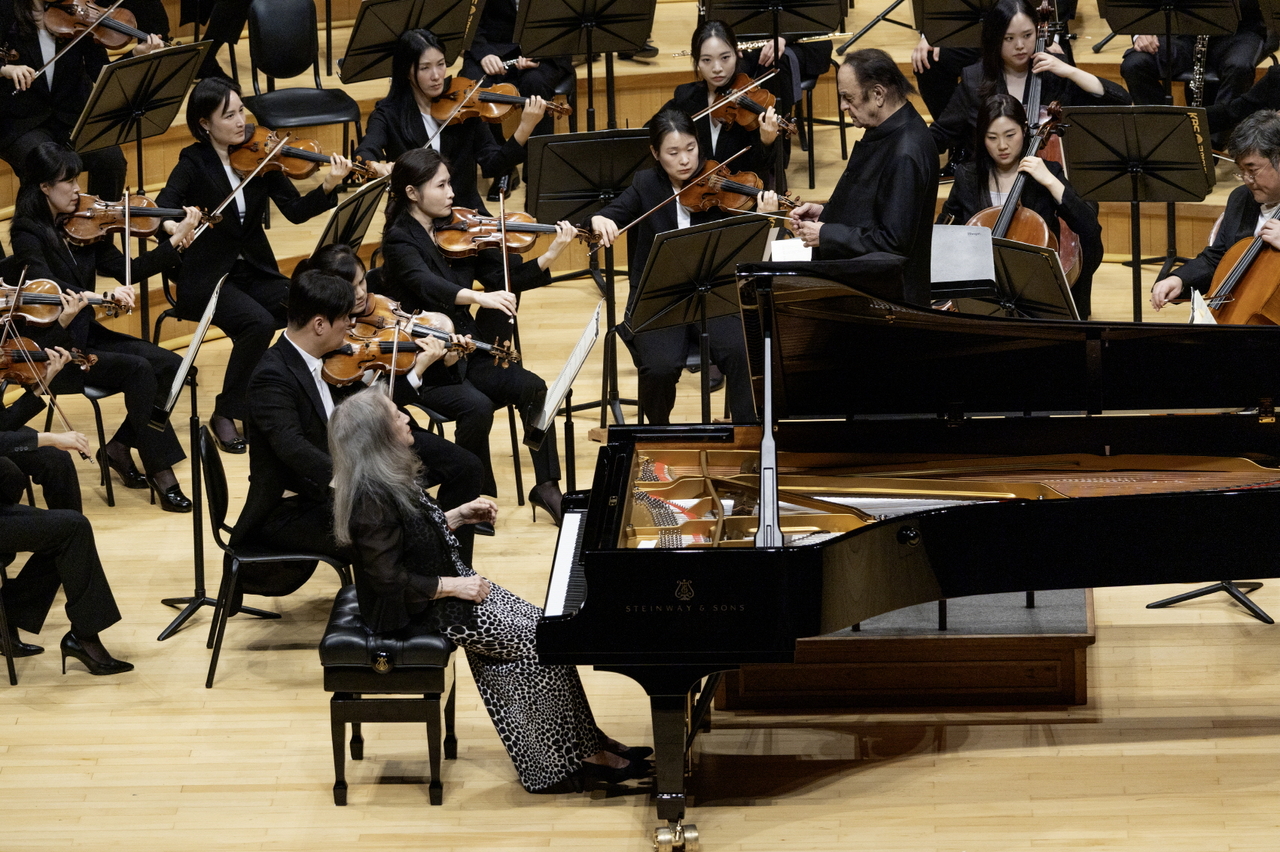
Martha Argerich, 85, brought her hands down on the black and white keys with a sharp, percussive snap. With every joint loose and unguarded, her fingers swept across the keyboard like a feather duster, gliding from one end to the other in a single, liquid glissando that rolled and scattered into the hall. With each pass, the black heels that peeked beneath her wide-legged, polka-dotted trousers hovered over the left pedal, tapping out the rhythm as if deciding whether to press it. The notes — plain-spoken and elastic — bounced lightly into the air.
Argerich's piano rarely settled in one place. It pushed through the current without rest, yet never seemed hurried; it wandered freely, yet every note kept its shape. Beside her, Charles Dutoit, 90, was in no rush. His baton traced small, precise arcs rather than sweeping gestures, delivering brief signals one by one to the winds, piccolo and trumpet. When the piano surged ahead, he opened space for the orchestra to follow; when the woodwinds and strings entered, he peeled away layers of sound to let them through. The two played like people who have known each other for a very long time — an old conversation in which each senses the other's next breath before the sentence is finished, and shapes the perfect answer in reply.
The Ravel that had first brought them together on the same stage 67 years ago was reborn across the span of time. The performances on Saturday and Sunday at Lotte Concert Hall in Songpa-gu, Seoul — billed as "Charles Dutoit & Martha Argerich with KBS Symphony Orchestra" — marked the first time the two masters had shared a Korean stage. Closing out the concert hall's 10th-anniversary series, the event was also Argerich's first return to Korea since 2019, seven years ago.
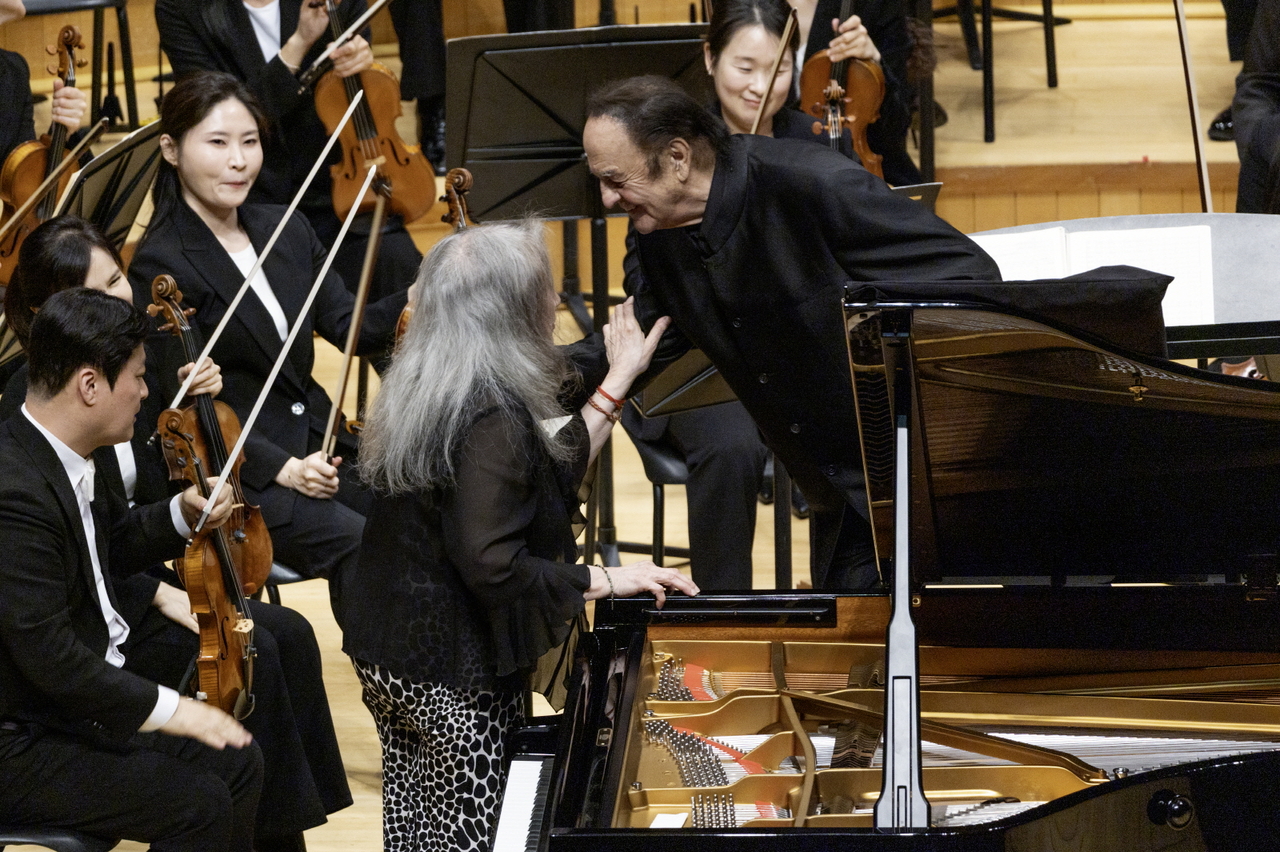
The work they performed together was Maurice Ravel's Piano Concerto in G major — the very piece that had placed them side by side for the first time 67 years earlier, in January 1959 in Lausanne, Switzerland, when a 23-year-old Dutoit was taking his first steps as a professional conductor and an 18-year-old Argerich sat beside him as soloist. The two married in 1969 and had a daughter, Annie, the following year, but went their separate ways after roughly four years together. Argerich, a self-described night creature, and Dutoit, who prized a regular daily routine, rarely shared the same rhythm of life. In a 2016 interview with Swiss public broadcaster Swissinfo, Dutoit recalled that on the day their divorce ruling came through, the two went to a film and had dinner together to "celebrate." Their marriage was brief, but their partnership on stage stretched well beyond half a century. In 1997 they recorded the concerto with the Montreal Symphony Orchestra, and in 2000 they shared a Grammy Award for their recordings of the Prokofiev and Bartok concertos.
The first movement opened with a single crack of a whip slicing the air. The "Allegramente" — bright and lively, driven by the two-step momentum of cut time — seized the audience at once. The piccolo whistled the first Basque folk-like theme with crystalline clarity while the piano sent up a spray of arpeggios, alternating black and white keys in a shimmer of sound. Behind each note that swept down the keyboard, the long years the two had built together seemed to layer and accumulate.
Ravel composed the work by weaving together the blues and syncopation he had heard in jazz clubs during an American tour in 1928 with folk melodies inherited from his Basque mother. Rather than the overflowing emotion of Romanticism, the concerto prizes the classical balance of Mozart and Saint-Saëns, and the precise interplay of rhythm and timbre.
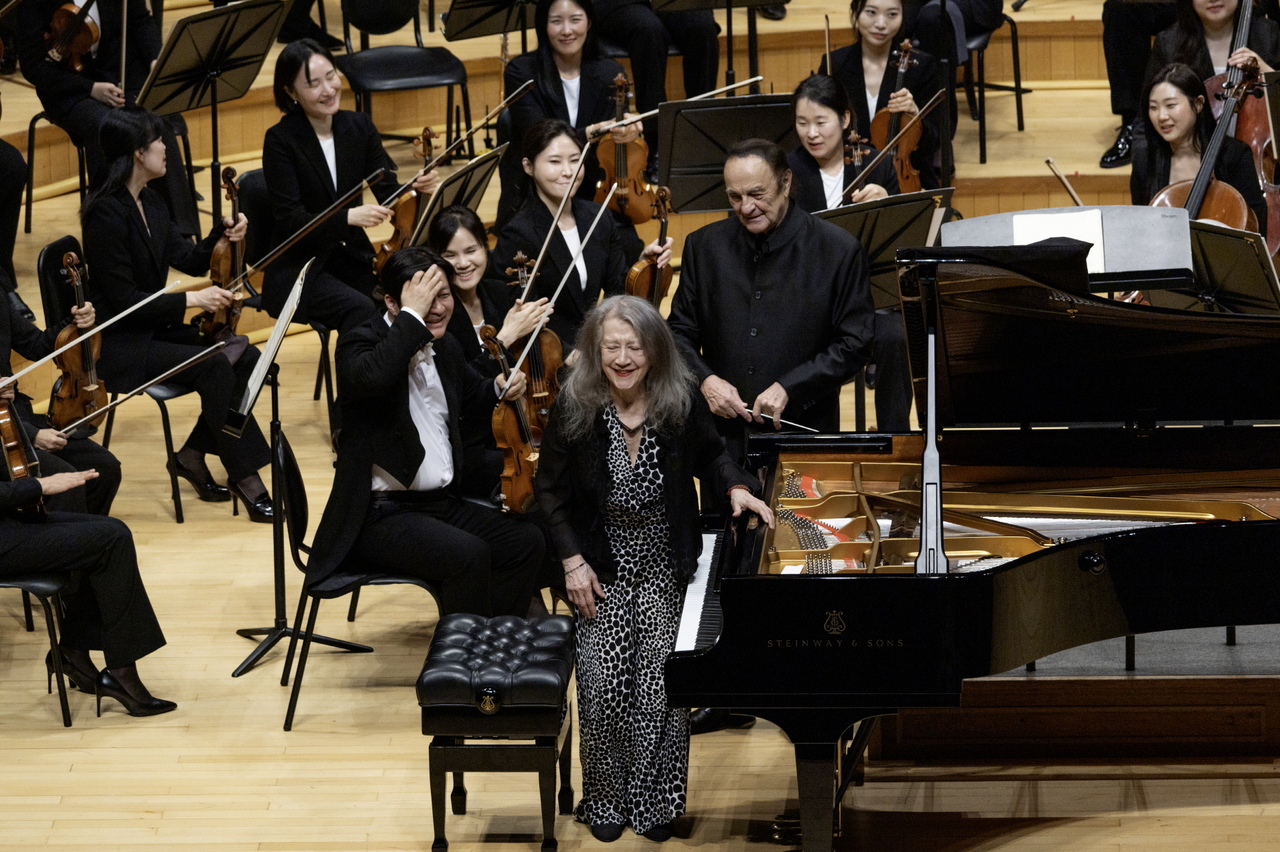
Argerich's piano dissolved into the orchestra as if it were simply one more instrument in the ensemble, yet its sound remained precise and at ease, keeping the rhythm alive. The strings and piano walked in step, then suddenly the jazz syncopation kicked in, nudging the beat sideways. In the more relaxed passages, she caressed the Spanish ornaments and the half-step-dropping blues harmonies with supple ease. Through all the buoyant rhythms, her posture never collapsed — nor did she sit rigid and locked, like an obsessive perfectionist. She simply sat comfortably, moving her hands with the light touch of someone brushing dust from an old sofa. Her face at the keyboard was as calm as a languid spring afternoon. When the cadenza arrived near the end of the movement, a melody rose through the fine, trembling silver trills as clearly as a duet.
In the second movement, with the orchestra hushed, inner language became notes. Of this movement — in which the piano alone carries more than 30 bars — Ravel confessed: "I worked over it bar by bar. It nearly killed me." Marked "Adagio assai," the score is written in 3/4 time, but the left hand sways gently like a waltz in groups of three while the right hand draws an endlessly long melody above it, conjuring a sense of weightless suspension.
Argerich's piano was at once a fond recollection of certain days and a quiet, unadorned self-confession — emotion neither suppressed nor embellished. In place of the volcanic heat and dazzling velocity of her younger years, the 85-year-old's hands lingered in the silences between notes. She pressed a key and waited until the sound had fully dissolved into the air of the hall before moving to the next. There was no straining to inflate the lyricism. She simply drew her inner song up, plainly and steadily. As the flute took over the melody and the English horn quietly repeated the opening theme, the orchestra receded into the background. Argerich scattered transparent high ornaments like a fine drizzle and faded gently into the stillness. The orchestra under Dutoit held that quiet to the very end, never covering the piano's lingering resonance.
The mood shifted entirely in the third movement, a "Presto" lasting under four minutes. Four chords kicked the door open; the same four chords closed it. In between, over a nimble 2/4 rhythm and with the pedal used sparingly, Argerich's hands hammered the keys with a dry, clean precision — typewriter-like, without a wasted note. When the E-flat clarinet and trombone traded witty jazz-band riffs, Argerich moved freely between improvisation and structure, keeping the music alive.
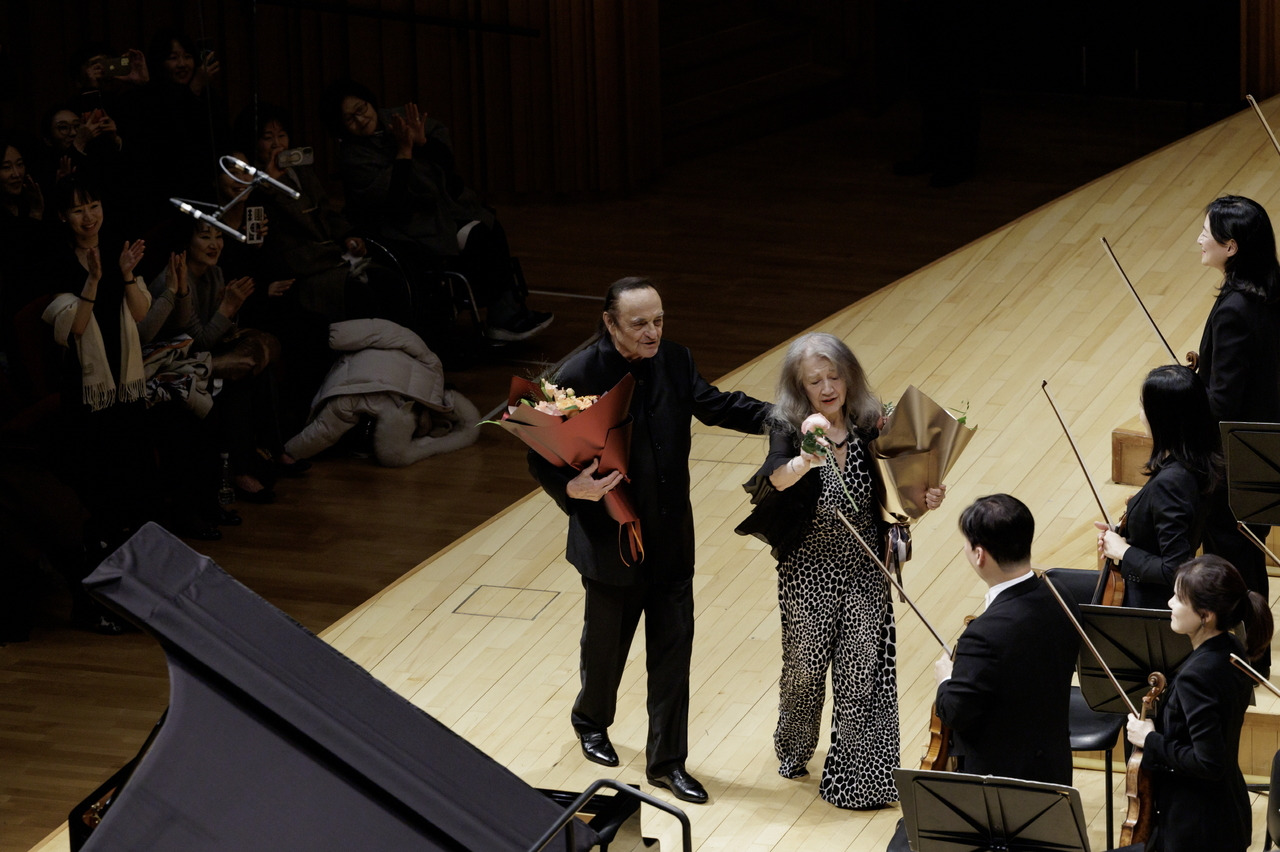
When the final chord fell, the audience erupted in applause. Dutoit walked over to Argerich and kissed her lightly on the forehead; the two took each other's hands and walked off stage together. Called back for repeated curtain calls, Argerich offered the Gavotte from Bach's English Suite as an encore. With the brilliant colors of Ravel washed cleanly away, the neat, measured steps of the Baroque dance carried all her enduring elegance and wit.
The two who first met in Lausanne have now crossed 85 and 90 years of life. They opened the same score, but the Ravel that filled a Seoul night was no mere echo of 67 years ago. A piano that had traded the fire and heat of youth for space and reflection; a conductor who wrapped that free-breathing music in transparent equilibrium. With a light and unassuming touch, the two masters proved that an old score can still sing something new.
From Seoul, the pair travel to NHK Hall in Tokyo, where they will perform the same concerto with the NHK Symphony Orchestra on Saturday and Sunday. Argerich is scheduled to return to Korea next June with the Mannheim Philharmonic for Beethoven's Piano Concerto No. 2.
shee@heraldcorp.com




