
Korea Environment Corporation holds circular economy workshop in Lima
Seoul proposes phased expansion of plastic recycling obligations, eyes Latin American market entry for domestic firms
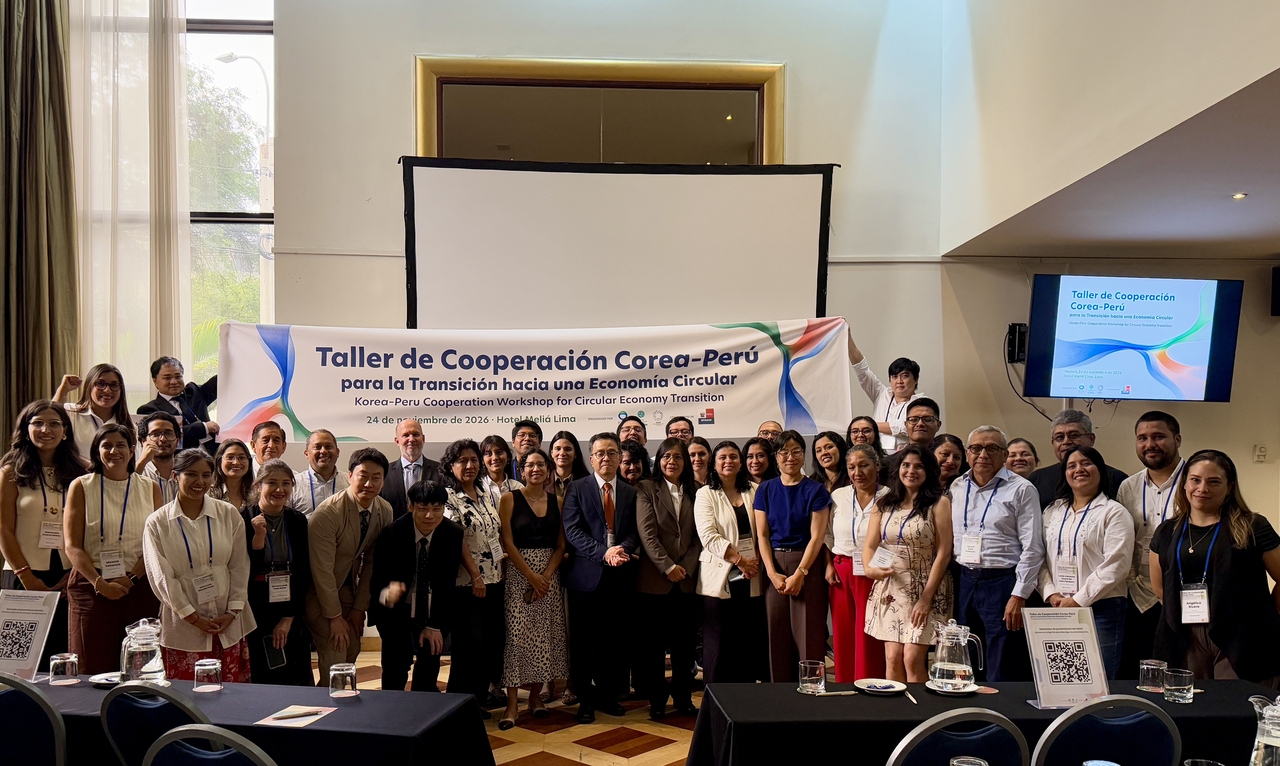
The Korea Environment Corporation, an agency under the Ministry of Climate, Environment and Energy, held the Korea-Peru Circular Economy Transition Cooperation Workshop in Lima, Peru, on Tuesday (local time).
About 100 officials from Peru's government, industry and academia attended the workshop to discuss ways to expand the extended producer responsibility (EPR) regime and advance the transition to a circular economy. EPR is a system that requires manufacturers of products or packaging to meet mandatory recycling targets.
Peru currently operates the regime for waste electrical and electronic equipment and waste tires, and is exploring whether to extend it to plastic packaging.
Drawing on research analyzing Peru's policy environment and industrial conditions, the Korea Environment Corporation proposed a phased expansion of EPR to cover plastic packaging, along with improvements to recycling collection and sorting facilities and stronger verification of recycling performance data.
The corporation also introduced its Allbaro system, a digital platform that tracks waste from generation through transport to final disposal, sharing South Korea's experience in waste traceability and recycling performance management.
The day before the workshop, on Monday (local time), the corporation held a policy cooperation meeting with Peru's Ministry of Environment (MINAM) to discuss ways to expand the EPR regime.
Going forward, the corporation plans to use its overseas plastic circular economy support project to match domestic companies' technologies with the needs of Peru's recycling industry, helping South Korean firms enter the Latin American market and identifying opportunities for joint ventures with local institutions and businesses.
"Through this workshop, we were able to confirm the strong interest among Peruvian stakeholders in South Korea's resource circulation policies and experience operating the EPR system," said Moon Gap-saeng, the Korea Environment Corporation's director of resource circulation. "We will continue to build on the corporation's accumulated EPR expertise and waste management know-how to support Peru's transition to a circular economy, and expand practical cooperation that leads to South Korean recycling companies entering the Latin American market."
thlee@heraldcorp.com




