
Vice chair of population strategy committee visits Hongseong facility
Central, local government cooperation urged to expand public postpartum care support
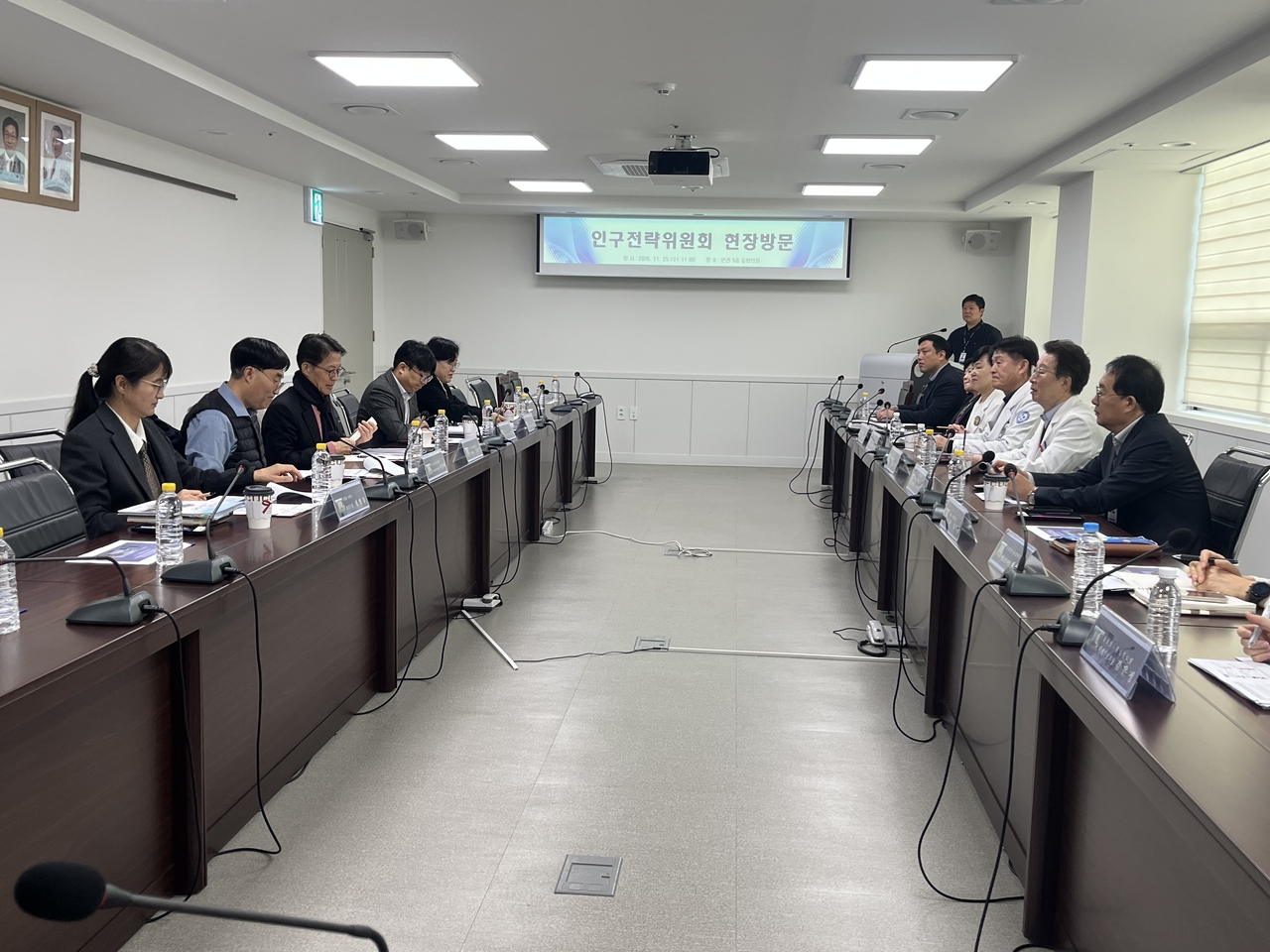
The Population Strategy Committee held a meeting Wednesday at Hongseong Public Postpartum Care Center in Hongseong-gun, South Chungcheong Province, reviewing a hospital-linked public postpartum care model and gathering opinions from staff at the facility.
The visit was organized to assess how local public postpartum care centers are helping reduce the financial burden on families after childbirth, and to explore ways to expand support so that mothers and newborns can access safe, high-quality postpartum care services.
There are currently 31 public postpartum care centers across the country, accounting for no more than 6 percent of all postpartum care facilities combined — public and private. Six cities and provinces, including Busan, Daegu, Incheon, Gwangju, Daejeon and Sejong, have no public postpartum care centers, highlighting the need to build up public postpartum care infrastructure to close the service gap between regions.
Hongseong Public Postpartum Care Center was the first public postpartum care center established in South Chungcheong Province. Developed as a model of integrated care linking Hongseong Medical Center with a public postpartum facility, it provides seamless support from pregnancy and childbirth through postnatal recovery. The center received a commendation from the Ministry of Health and Welfare on Expectant Mothers' Day in 2026.
Vice Chair Kim praised Hongseong Public Postpartum Care Center as an exemplary model for providing support from delivery through postpartum recovery in partnership with a local public hospital, and encouraged staff for their work on behalf of mothers and newborns.
"Expanding public postpartum care centers is necessary to improve childbirth and child-rearing conditions in local communities and to ease the financial burden on mothers," Kim said. "Improving the working conditions and treatment of staff is also essential to delivering high-quality postpartum care."
Kim added that the government would work actively to expand national-level support for the establishment and operation of public postpartum care centers, rather than leaving the responsibility solely to local governments.
Meanwhile, population trend data released Wednesday by the Ministry of Statistics showed that 25,100 babies were born in September 2026, a 12.2 percent increase from the same month a year earlier — marking 27 consecutive months of growth. The total fertility rate for September also rose to 0.95, up 0.10 from a year ago, continuing an improving trend in birth indicators.
To sustain the positive momentum in birth indicators, the government plans to expand public postpartum care infrastructure, including building more public postpartum care centers, and to broaden policy support for the health of mothers and newborns.
thlee@heraldcorp.com




