
Next-generation wireless tech performance confirmed; standardization cooperation to continue
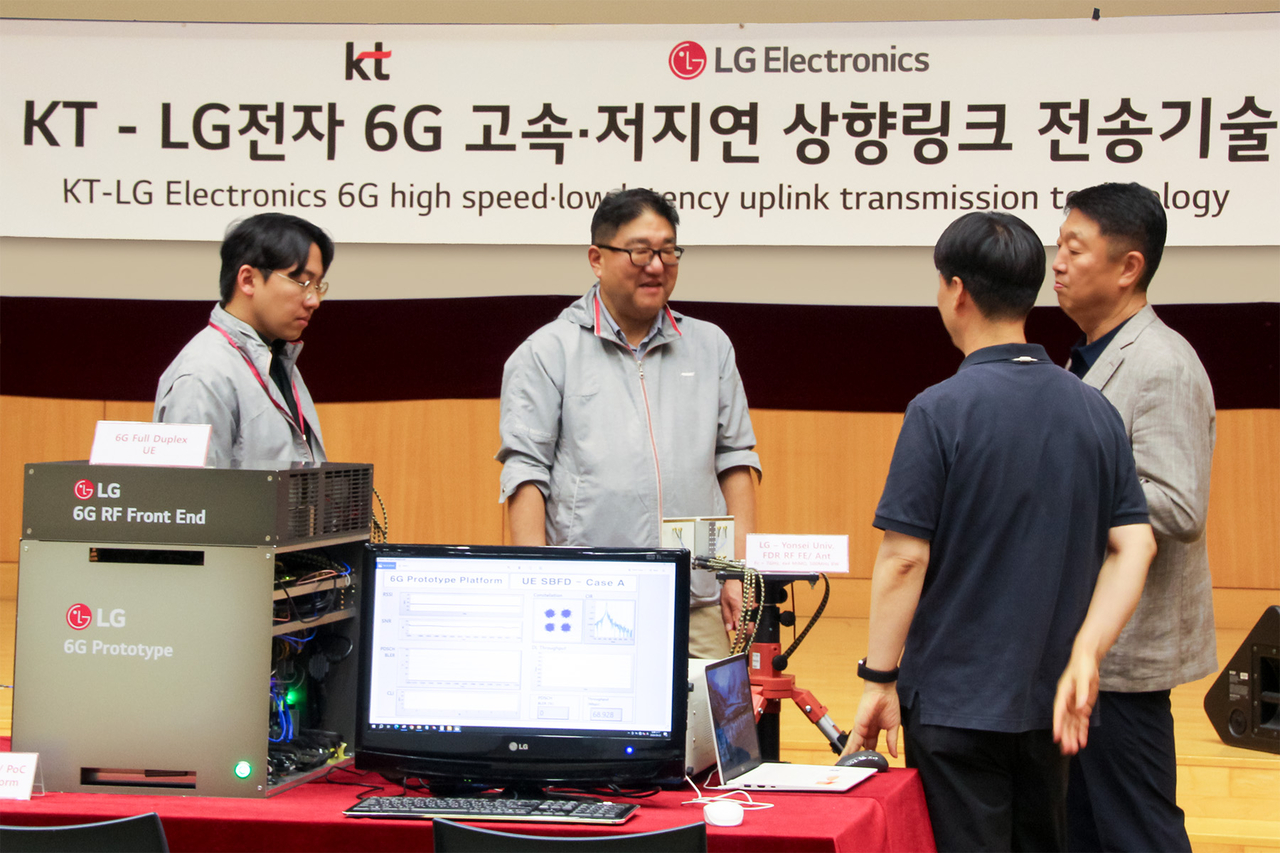
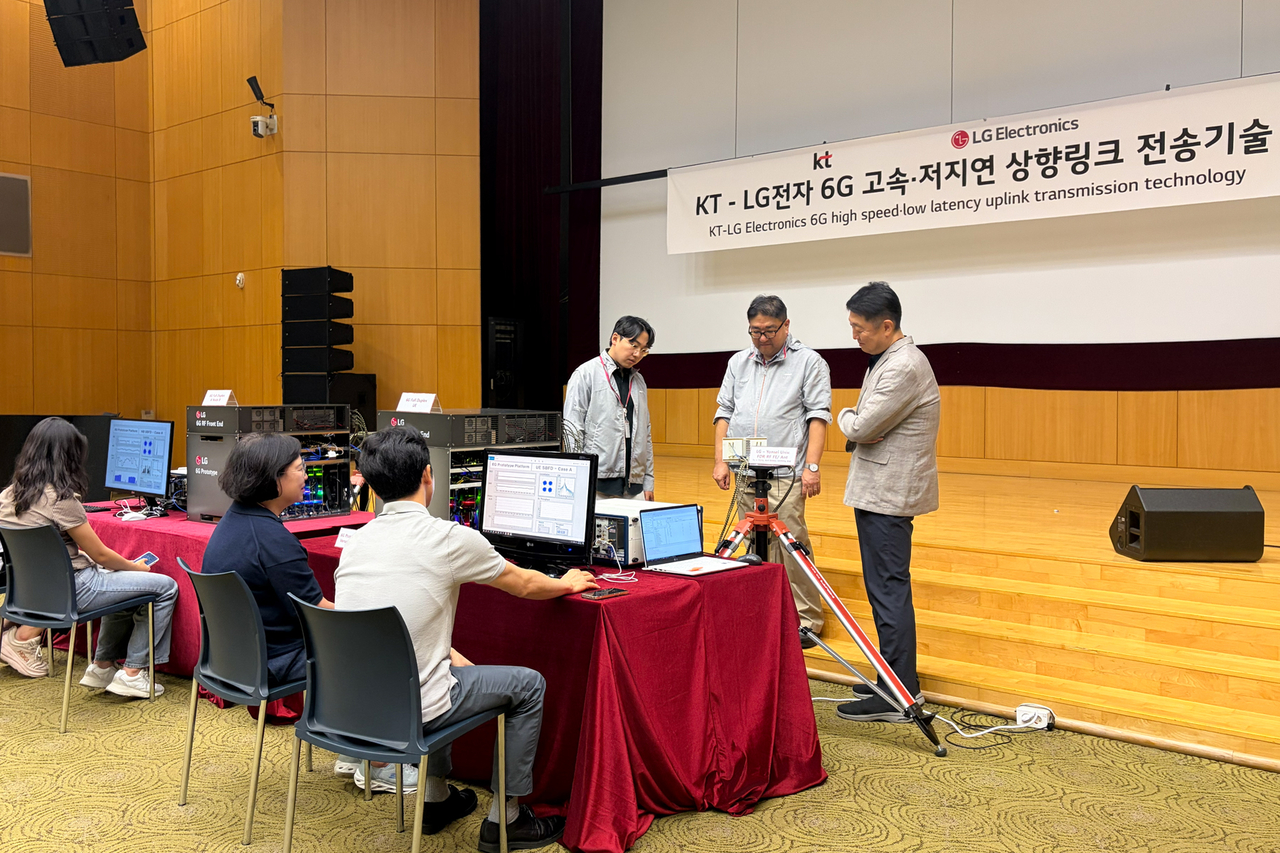
KT Corp and LG Electronics have jointly verified the performance of key candidate technologies for sixth-generation mobile communications (6G) — technologies designed to handle the massive data transmission demands generated by AI robots, self-driving cars and similar devices.
KT Corp announced Wednesday that tests of two next-generation wireless technologies, SBFD and SSFD, conducted with LG Electronics showed data upload capacity increases of 2.9 times and 4.9 times, respectively, compared with existing 5G.
Current 5G networks primarily use time-division duplexing (TDD), which allocates time slots within a single frequency band for both downloading and uploading data. Because demand for downloading — such as streaming video — is high, the system dedicates relatively more time to downloads.
In the AI era, however, upload demand is expected to surge. Robots, self-driving cars and other AI-enabled devices must transmit video and audio data they collect to networks in real time.
The challenge with existing 5G is that increasing upload time reduces download time, and download signals from nearby base stations can interfere with upload signals.
SBFD, the technology the two companies verified, maintains existing download time while redirecting a portion of the frequency previously used for downloads to uploads. By separating download and upload frequencies, it can reduce signal interference between base stations.
SSFD takes the approach a step further, simultaneously transmitting upload data on frequencies already in use for downloads to improve spectrum efficiency. Tests showed that compared with the conventional 5G TDD method, upload capacity increased approximately 2.9 times with SBFD and approximately 4.9 times with SSFD.
KT Corp and LG Electronics expect both technologies to become core 6G technologies for physical AI services — including robots, humanoid robots and self-driving cars. The two companies plan to continue developing the technologies and cooperating on international standardization.
Je Young-ho, head of the C&M Standards Research Laboratory at LG Electronics' Chief Technology Officer division, said the technologies "are expected to be actively utilized as key technologies addressing the need to reduce upload latency and increase capacity driven by the expansion of physical AI linked to robots, humanoid robots and self-driving cars."
Lee Jong-sik, head of KT Corp's Future Network Lab in the Network Division, said upload performance is expected to become a core competitive advantage for wireless networks as the volume of data transmitted from various devices to networks grows in the AI era. "We will proactively secure next-generation wireless core technologies to provide customers with stable AI services," Lee said.
Meanwhile, KT Corp announced Friday that it had, together with LG Electronics, implemented a quantum direct communication (QSDC) system and successfully transmitted and restored image and text data. The two companies converted 1,024-bit image data into quantum signals, transmitted them and restored the original.
woo@heraldcorp.com




