
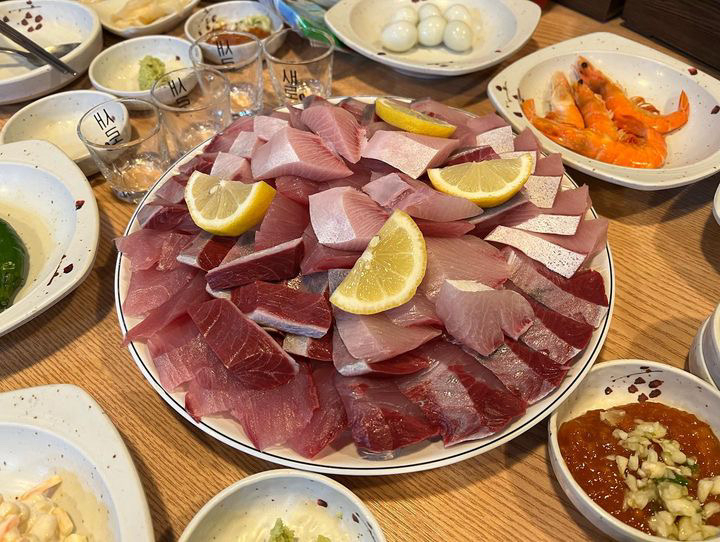
"Yellowtail — I heard they're catching a lot more of it these days … "
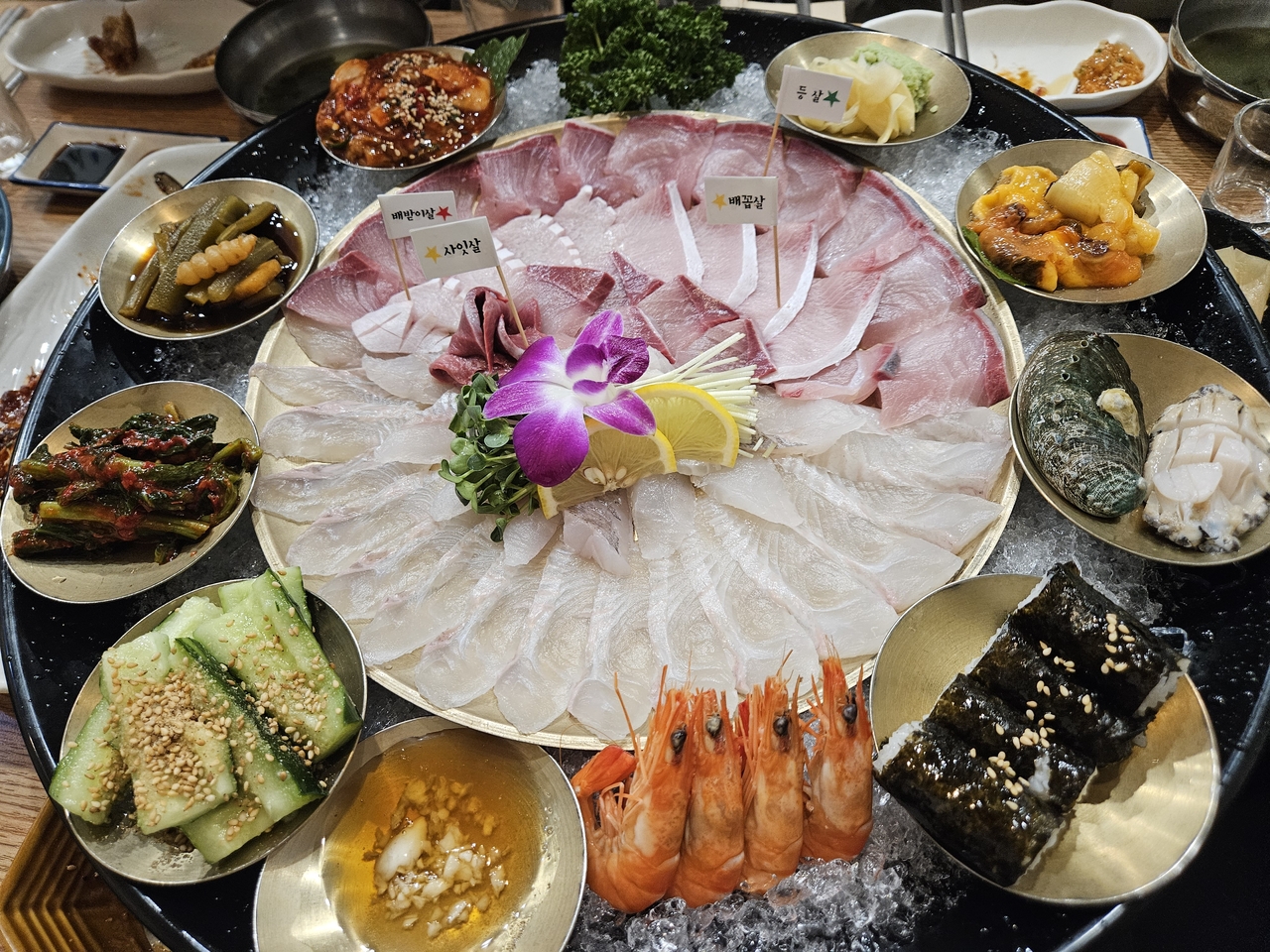
Yellowtail is a beloved winter delicacy, its rich, savory flavor earning it a firm place as the season's signature fish.
But a glance at the price tag draws a sigh. With good reason: the cost of yellowtail has risen more than fourfold in a decade.
The fish is widely understood to be more abundant than it once was. So why has the price gone up instead of down?
The answer is simple: demand has surged while supply swings wildly from year to year. Domestic yellowtail catches peaked in 2023 and have fallen for two consecutive years since.
Climate change is the underlying driver. Yellowtail prefer warm water, and as seas warmed, catches initially climbed — but Korean waters have now grown so hot that even yellowtail are struggling to survive.
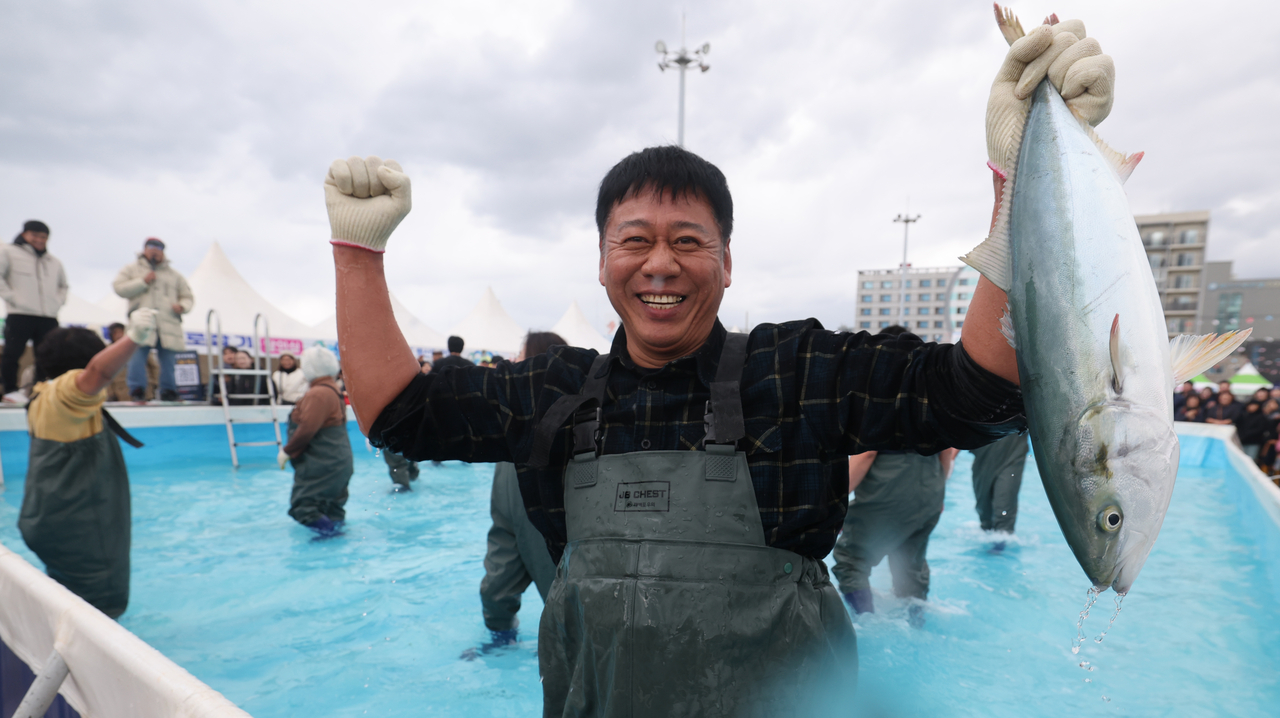
In years when summer sea temperatures approach 30 degrees Celsius, catches drop and farmed yellowtail die en masse. Japanese imports, which had helped fill the gap, have become more expensive for the same reason.
The problem is that the ocean will only keep getting warmer — and with it, the price of what some are calling "gold fish" will keep climbing.
Yellowtail once thrived as seas warmed — now the heat is too much
An analysis of Noryangjin Fish Market wholesale auction data over the past decade (2016–2026) shows that the average auction price of yellowtail this month (Nov. 1–24) reached 20,072 won ($15) per kilogram — more than four times the 4,870 won recorded in the same period of 2016.
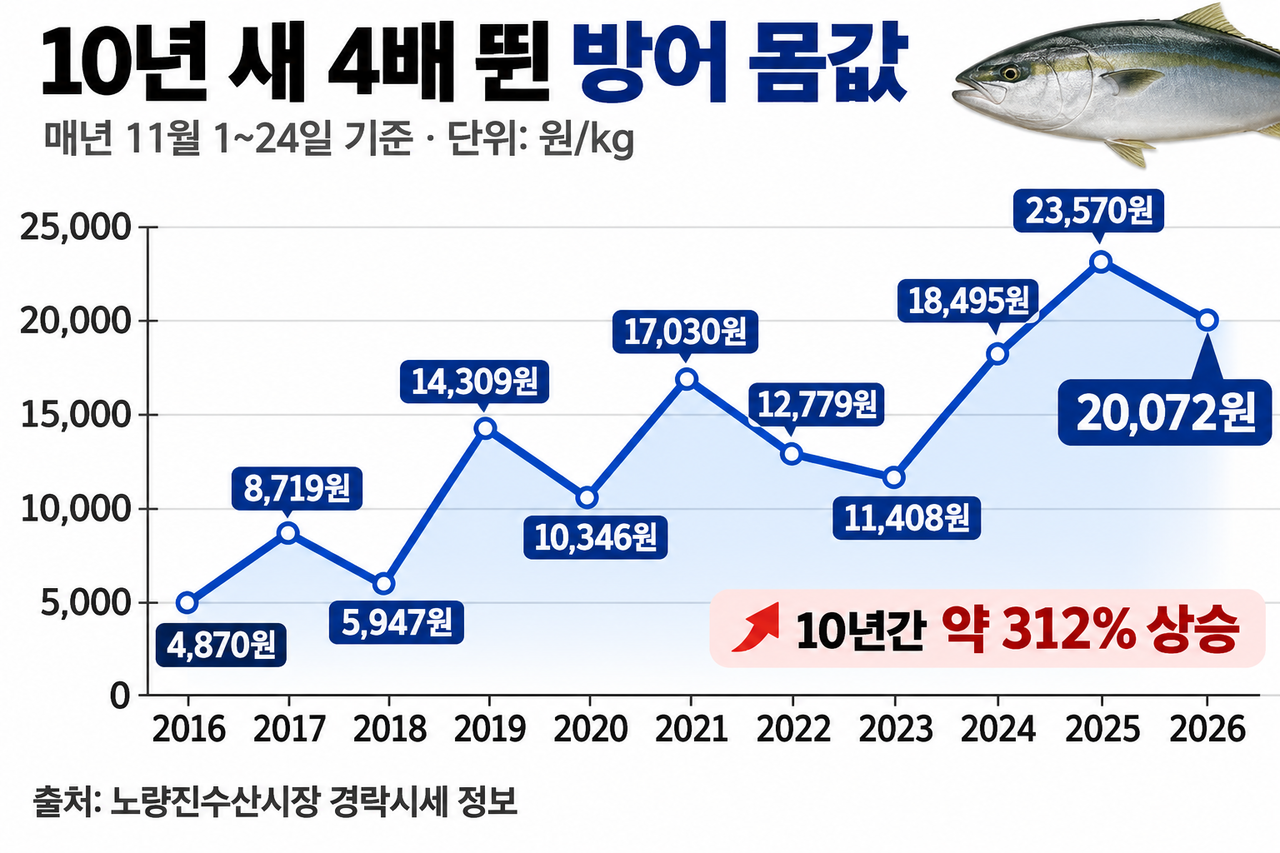
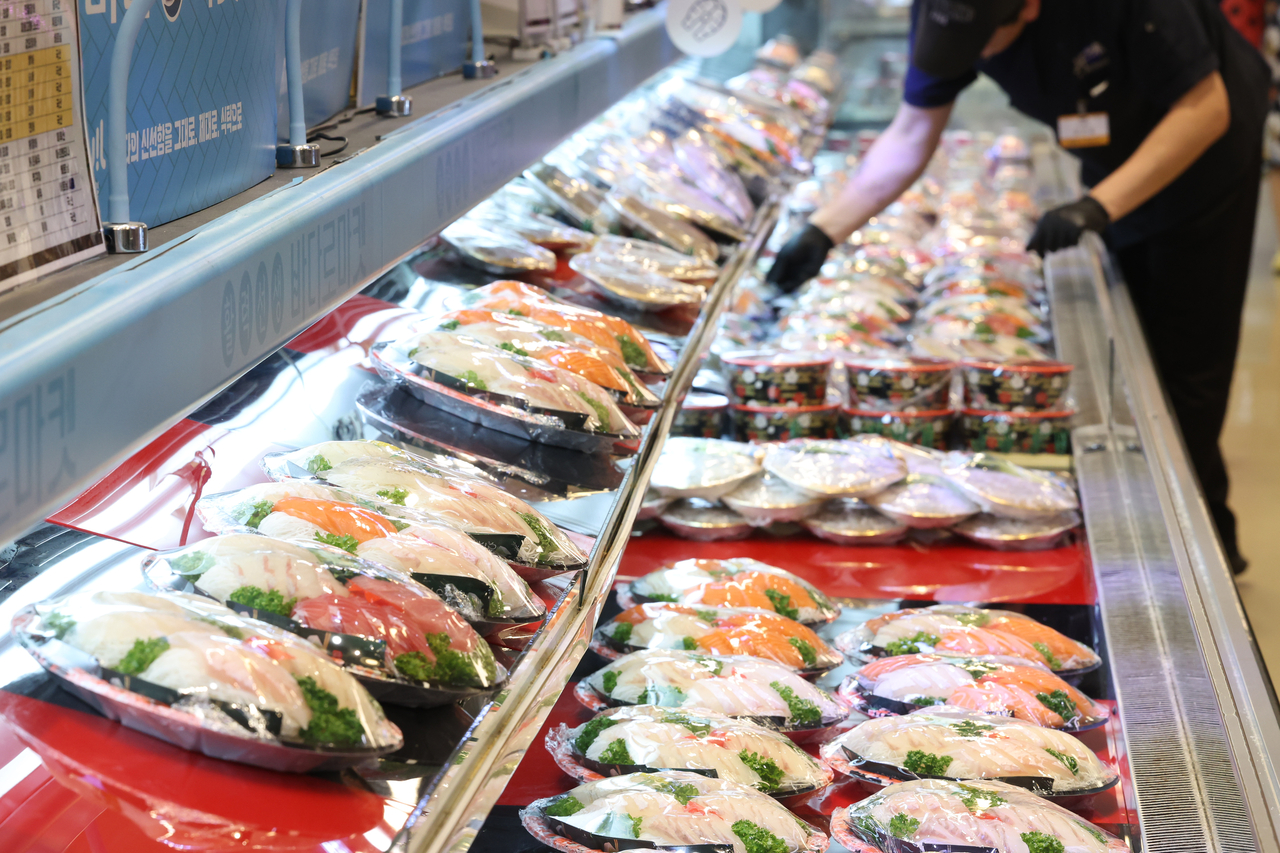
The auction price is the wholesale rate at which fish are sold at market and serves as the benchmark for what consumers pay at raw-fish restaurants.
Prices have fluctuated from year to year, but the upward trend is unmistakable. From 2016 to 2018, yellowtail auction prices hovered between 4,000 and 8,000 won per kilogram. They crossed the 10,000-won mark in 2019 and have hovered around 20,000 won since 2024.
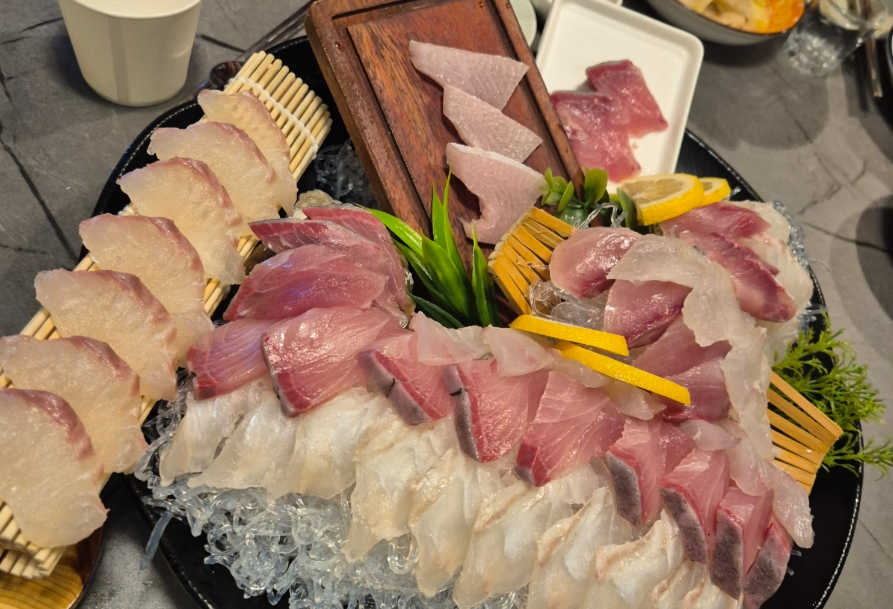
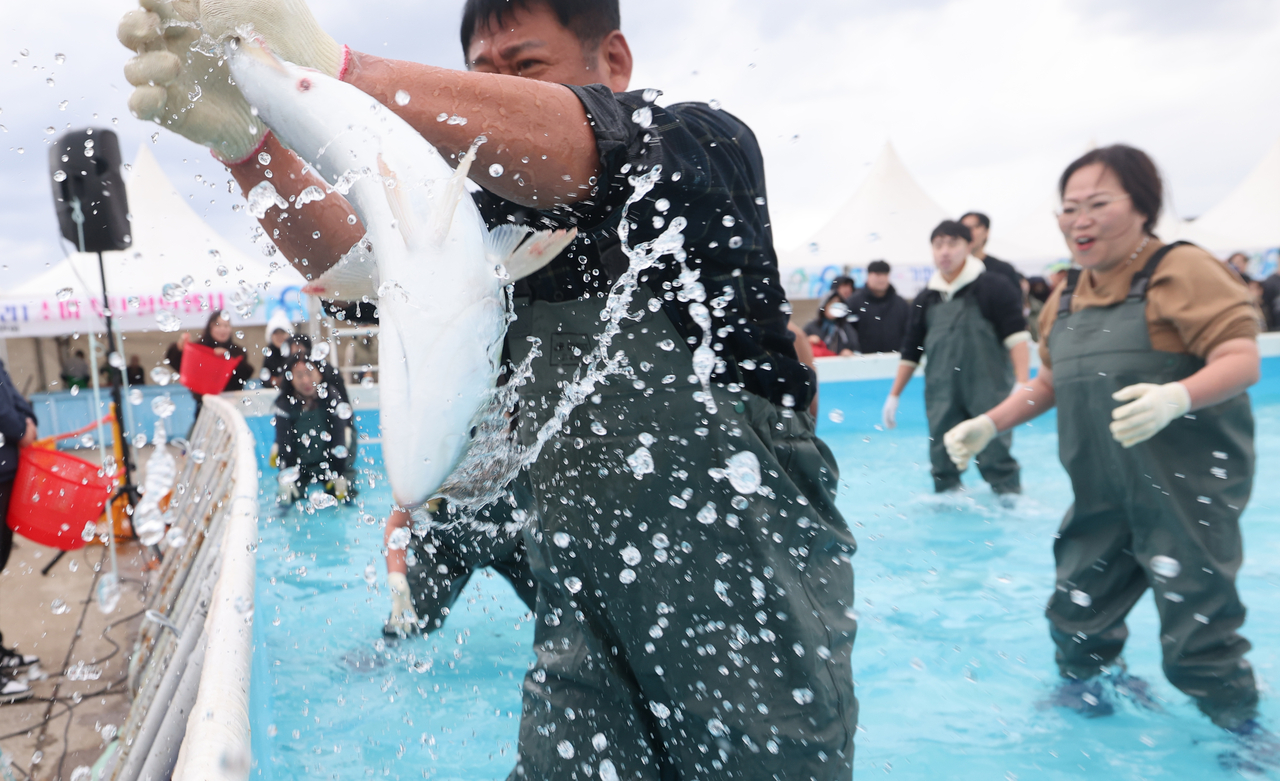
Yellowtail is widely regarded as a species that has actually benefited from climate change, catching more than ever before. As a warm-current fish that follows warmer water, it has expanded its range from Jeju and the southern coast all the way up to the northern East Sea.
Catches have grown substantially. According to the Ministry of Statistics, domestic coastal yellowtail output nearly doubled in just three years, rising from 13,051 tons in 2020 to 25,372 tons in 2023. That is why yellowtail earned the label of a "climate-beneficiary species."
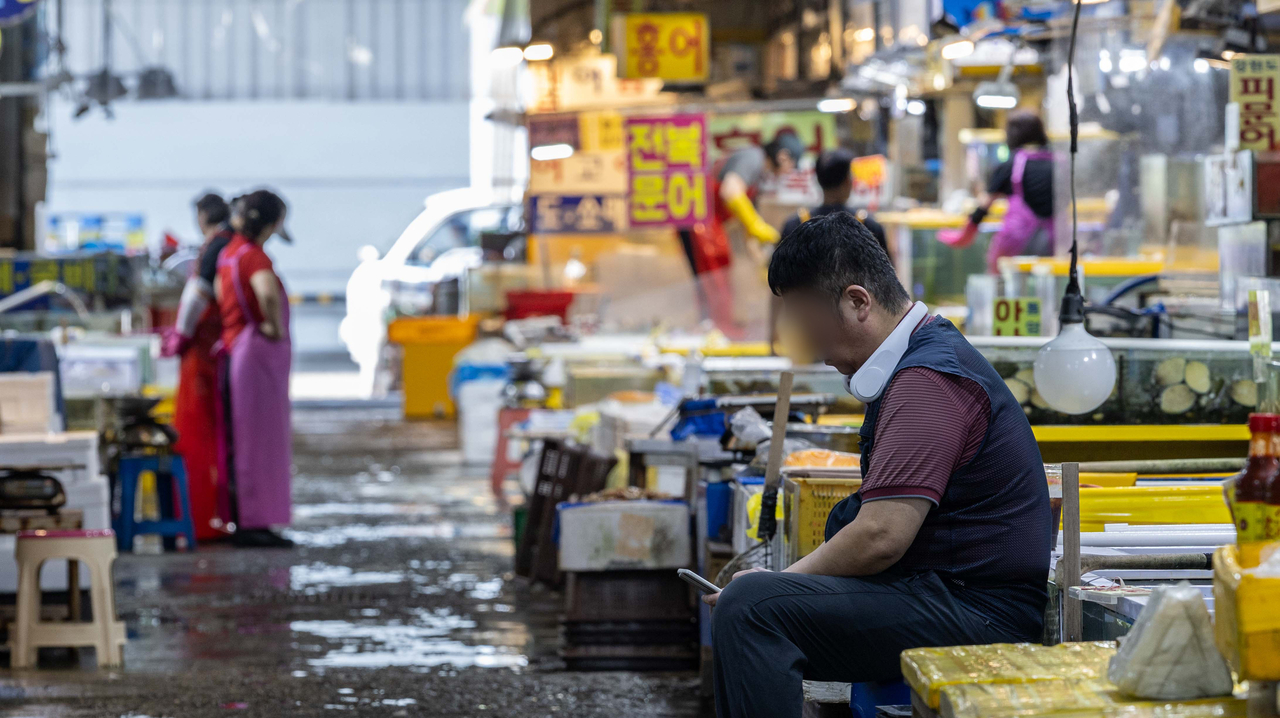
So why, despite larger catches, has the price risen? First, demand has grown sharply. Over the past decade, the volume of yellowtail auctioned at Noryangjin has increased by about 60 percent — but the total transaction value has grown more than sixfold. Prices have risen far faster than supply.
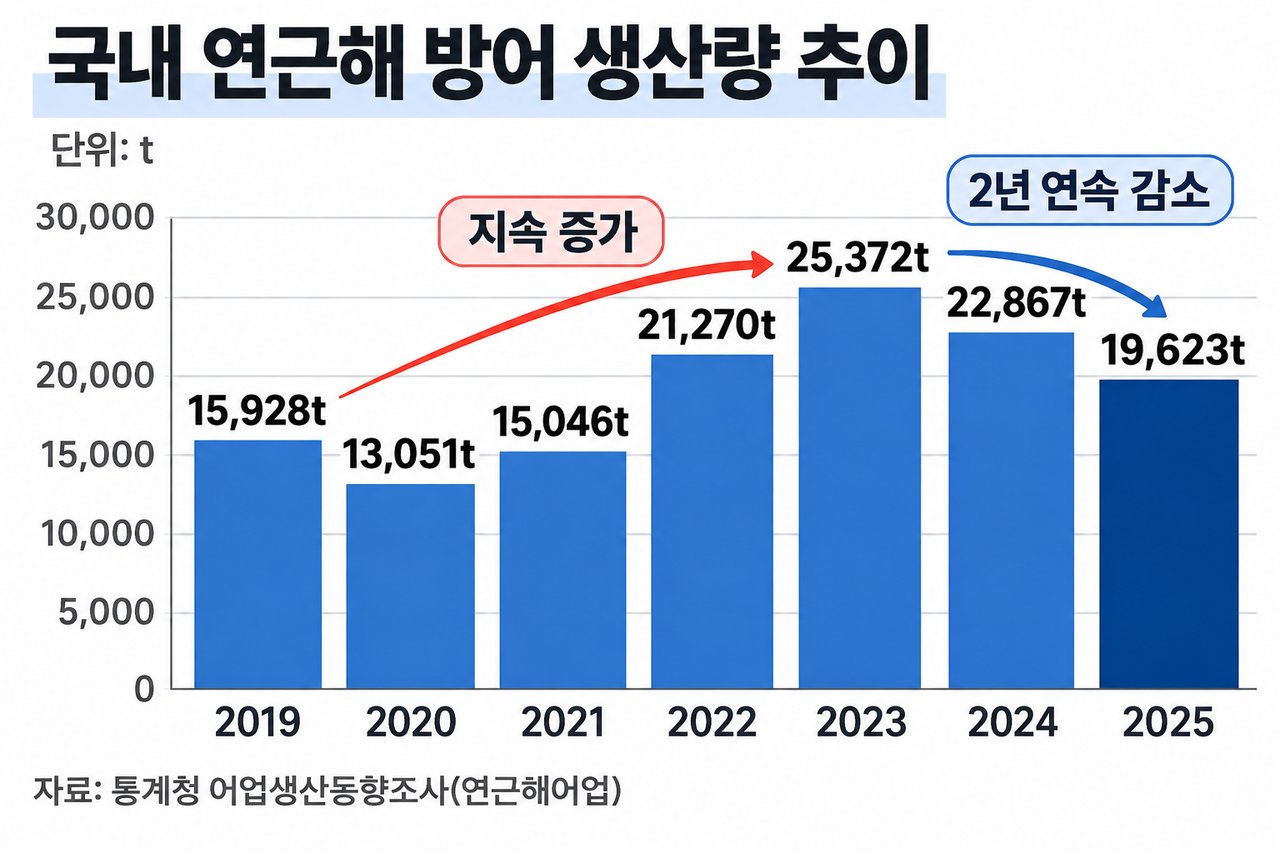
The bigger problem is that supply has become increasingly erratic. After hitting a record high in 2023, domestic coastal yellowtail output fell for two consecutive years, reaching just 19,623 tons last year. In 2024, when extreme high water temperatures struck, catches dropped so sharply that the farm-gate price of yellowtail soared 61 percent in a single year.
To keep up with rising demand, output would need to grow consistently — but it has done the opposite. The reason is straightforward: the sea has simply become too hot.
Korean waters in particular are warming at an alarming pace. According to the National Institute of Fisheries Science, sea temperatures around the Korean Peninsula rose 1.6 degrees Celsius between 1968 and 2025 — more than double the global average increase of 0.76 degrees over the same period.
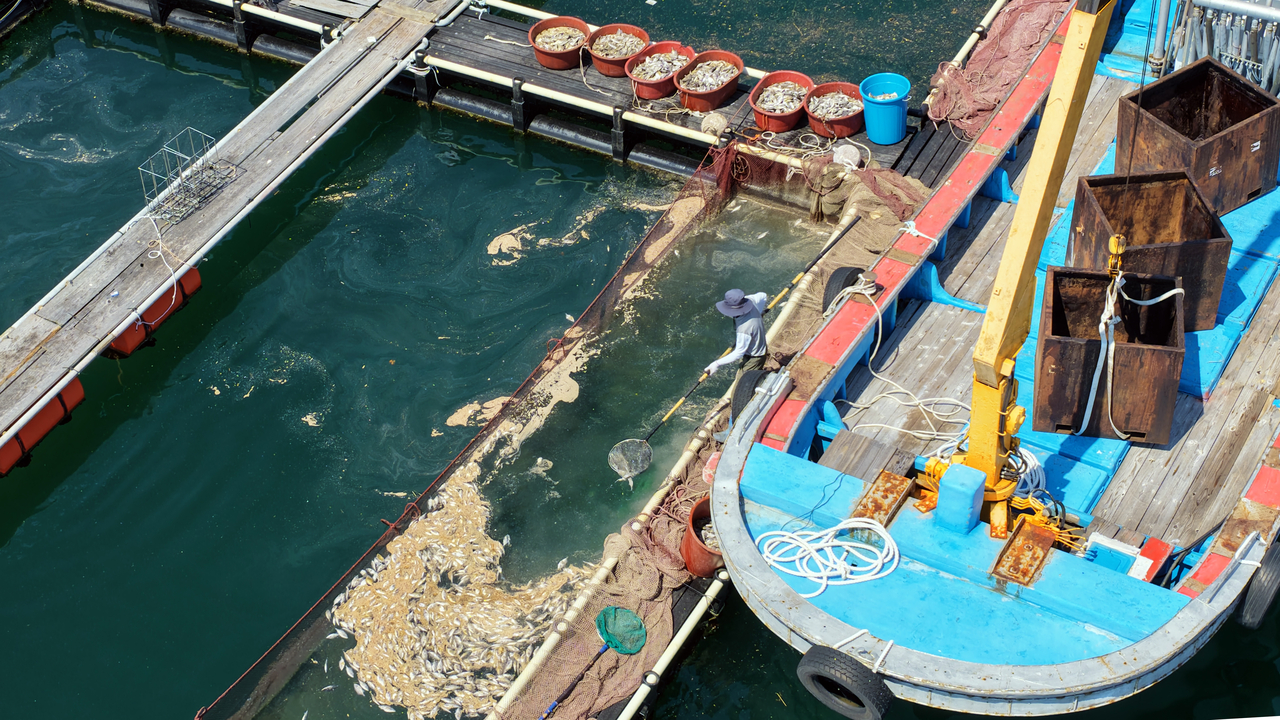
Even yellowtail, which prefer warm water, have a thermal limit. According to the National Institute of Fisheries Science, the optimal water temperature for raising yellowtail is 22 to 26 degrees Celsius. When temperatures exceed 30 degrees, mass die-offs can occur.
Yet the period of dangerously hot seas is growing longer. According to the Ministry of Oceans and Fisheries, the number of days under high-water-temperature advisories at fish farms stretched from 57 days in 2023 to 71 days in 2024 and 85 days last year — a new record.
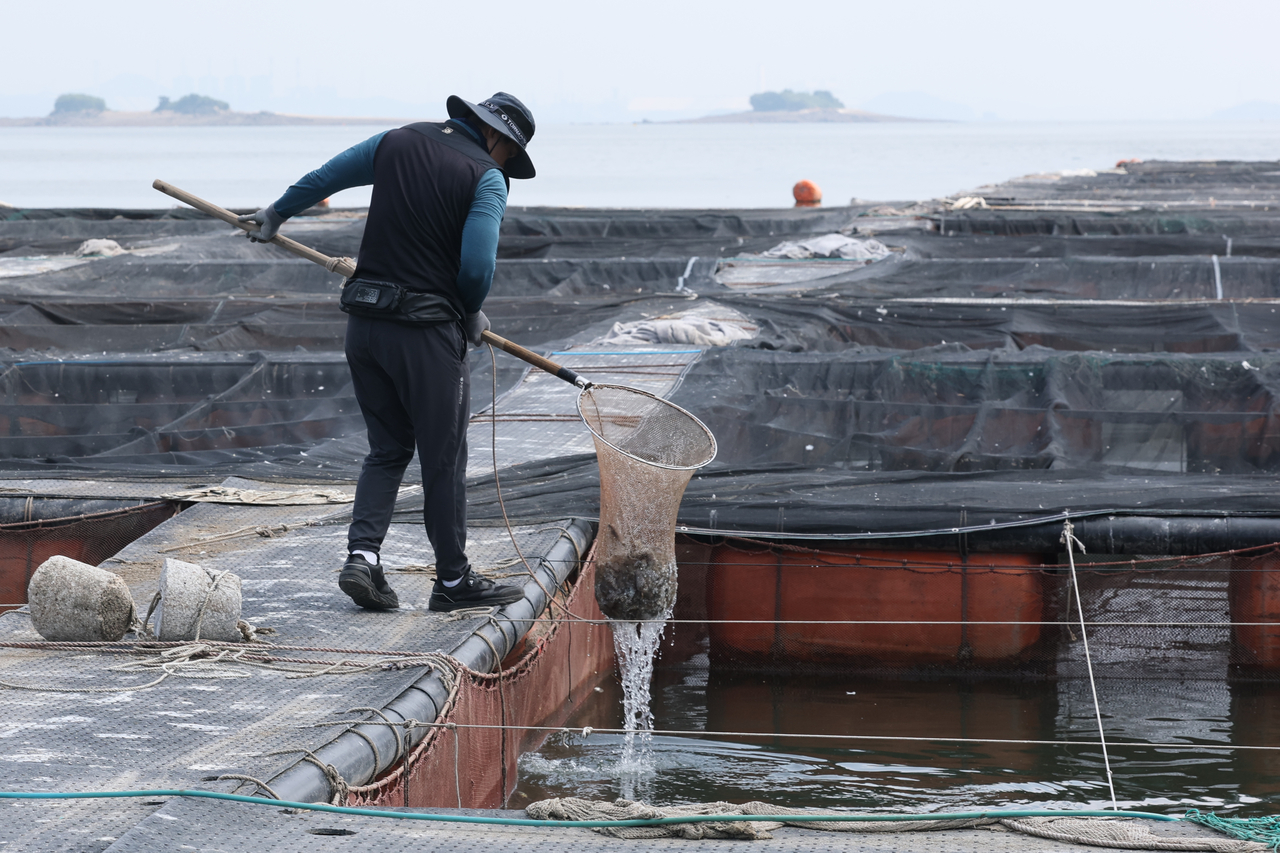
Fish farms bore the brunt. According to South Gyeongsang Province, about 4.69 million fish died from high water temperatures at farms in Namhae, Hadong, Tongyeong and Geoje between late July and Aug. 30 this year. Among them were 3,000 yellowtail, along with rockfish, mullet and other species.
Hot seas on both sides — the 'gold fish' era is far from over
Japanese imports have been filling the gap left by domestic shortfalls. At Noryangjin's November live-yellowtail auctions, not a single Japanese fish appeared from 2016 to 2018. Japanese yellowtail first showed up in 2019 and has grown steadily since, accounting for 60 percent of auction volume this year — meaning more than half the yellowtail entering the market is now imported from Japan.
But Japan's yellowtail supply is also under strain. Kagoshima Prefecture, Japan's largest yellowtail farming region, was devastated this summer by climate-driven red tides. Red tides occur when harmful plankton proliferate explosively in the water, suffocating fish — a phenomenon that intensifies in summer as water temperatures rise.
According to Kagoshima Prefecture, a red tide that broke out in the Yatsushiro Sea off southern Kyushu in June killed about 1.03 million farmed fish — including yellowtail — at farms around Nagashima Town. The damage announced in August alone was estimated at about 2.4 billion yen ($15.1 million), a consequence of rising sea surface temperatures driven by climate change.
As a result, Japanese yellowtail imported into Korea has also become expensive. According to the Ministry of Oceans and Fisheries, the value of Japanese yellowtail imports last year reached $81 million — up 47 percent in a single year. Yet import volume grew by only 7 percent over the same period, meaning Korea is paying far more for roughly the same amount of fish.
In short, demand keeps rising while the seas that supply yellowtail — on both the Korean and Japanese sides — are becoming increasingly unreliable. The "gold fish" phenomenon is not a passing blip, and the upward price trend could accelerate further in the years ahead.
The sea is warming faster than ever. According to the National Institute of Fisheries Science's "2026 Climate Change Impact Briefing Book for the Marine and Fisheries Sector," published this year, Korean sea temperatures rose by 0.09 degrees Celsius per year over the past decade (2016–2025) — more than three times the long-term average of 0.0276 degrees per year recorded over 58 years.
The Ministry of Oceans and Fisheries projects that if current trends continue, domestic seafood output will fall to 3.17 million tons by 2050 — a drop of more than 500,000 tons from 2023 levels. For yellowtail, whose catches and prices already fluctuate sharply with water temperature, maintaining current supply levels in an ever-warmer ocean will be no easy task.
Yellowtail now sits at the center of "climateflation" — the phenomenon by which warming seas drive up food prices on Korean dinner tables.
Beyond yellowtail, the species map of Korean waters is already shifting rapidly. Since the 2010s, squid catches have plummeted and mackerel and anchovy have stagnated, while warm-current species such as yellowtail and Spanish mackerel have increased. Rising water temperatures have until now worked in yellowtail's favor by expanding its habitat — but there is no guarantee that will remain the case.
The government is also responding to the threat of climate-driven seafood supply instability. The Ministry of Oceans and Fisheries has set a target of maintaining domestic seafood output at around 3.7 million tons through 2030 and keeping price increases for key seafood items within 2 percent.
"The warming of Korean waters is accelerating faster than expected, and we are seeing clear changes not only in physical conditions but across the entire ecosystem," an official at the National Institute of Fisheries Science said. "As we are at the center of the climate change crisis, we will do our utmost to develop measures for sustainable fisheries."

woo@heraldcorp.com




