
Government announces relocation plan for 5,460 civil servants from 31 agencies to Sejong
Board of Audit and Inspection among 9 agencies to move by 2031 with new buildings
13 agencies including Foreign Ministry, Defense Ministry excluded pending legal revisions
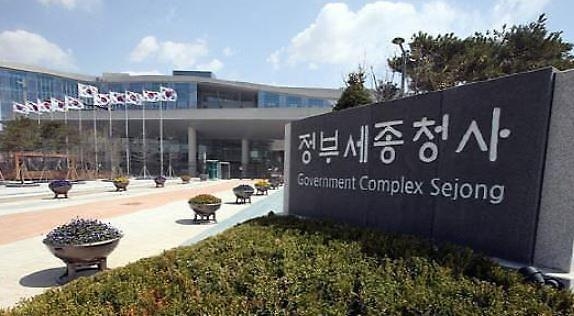
The government plans to relocate 5,460 civil servants from 31 central government agencies to Sejong by 2031, with 22 agencies moving into leased office buildings as early as next year.
The National Human Rights Commission of Korea, which had been scheduled to move next year, will now shift to a later timeline after being reclassified as a new-building relocation target.
The Ministry of Interior and Safety said Tuesday it had officially published the revised relocation plan for central government agencies.
The plan covers 31 agencies — out of 44 originally announced Oct. 13 — that are eligible to relocate under current law, following expert consultations, interministerial discussions and a public hearing.
Some 1,600 civil servants from 22 agencies, including the Korea Communications Commission and the Personal Information Protection Commission, will move first by leasing private office space next year.
Nine agencies requiring dedicated facilities or specialized infrastructure — including the Board of Audit and Inspection, the Corruption Investigation Office for High-ranking Officials and the Korean National Police Agency — will relocate 3,860 civil servants to newly constructed buildings by 2031.
At a public hearing Nov. 3, the government had proposed moving 1,831 civil servants from 23 agencies into leased offices by next year and relocating 3,629 civil servants from eight agencies to new buildings by 2031.
However, the National Human Rights Commission — with a staff of 231 — was reclassified in the final notice as a new-building relocation target, reducing the number of agencies set to move next year to 22. The commission had been one of seven agencies originally slated to move to Sejong using leased office space next year.
Earlier, the commission adopted an official statement at its plenary session Nov. 9 calling for a review of the Sejong relocation plan. The statement cited the need to respect the commission's independent status as a national human rights institution and raised concerns that relocating to Sejong could reduce accessibility for vulnerable groups — including people with disabilities, the elderly and migrants — creating barriers to rights protection.
The government estimated the cost of the relocations at about 48.2 billion won ($35.8 million) for leased-office moves and about 1.6 trillion won for new building construction.
Thirteen agencies that require legislative amendments before they can relocate were excluded from this notice — among them the Ministry of Foreign Affairs, the Ministry of Unification, South Korea's Ministry of National Defense, the Ministry of Justice, the Ministry of Gender Equality and Family, the Public Prosecution Service, the Serious Crime Investigation Agency, the Korea National Diplomatic Academy, the North Korean Human Rights Documentation Center, the Defense Information Systems Agency, the Defense Media Agency, the North Korean Human Rights Records Center and the Inter-Korean Five Provinces Committee — along with affiliated bodies, totaling 4,469 civil servants.
The government said it will pursue the necessary legislative amendments and issue additional revised relocation notices based on the timing of those changes and office availability, while continuing to coordinate with the agencies involved to finalize and announce individual relocation schedules in advance.
thlee@heraldcorp.com




