
Market cap surged $1 trillion in a day, but structural risks in AI industry remain
Trump's intervention sparks board independence concerns; 'Huang effectively untouchable'
Data center spending fatigue, intensifying chip competition threaten profitability
Congressional probe, customer defection risks cloud comeback
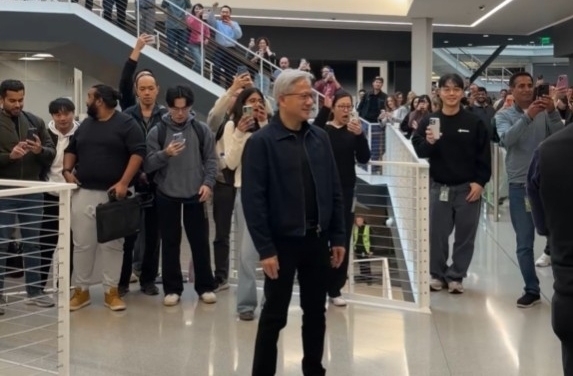
Jensen Huang has returned as Nvidia's CEO, but observers say the company he is coming back to looks markedly different from the one he left. His reinstatement sent Nvidia's market cap surging by $1 trillion in a single day, lifting US stock markets sharply — yet analysts warn that the structural risks surrounding the AI industry remain unresolved. Critics have gone further, arguing that President Donald Trump's intervention in securing Huang's return has in effect neutralized Nvidia's corporate governance and board independence.
The Wall Street Journal reported Monday (local time) that Huang's comeback could have negative consequences on multiple fronts and does nothing to resolve the serious problems Nvidia faces on its own, beyond the broader AI ecosystem. The paper identified five specific risk factors: corporate governance, capital expenditure, intensifying competition, a congressional investigation, and eroding confidence in capitalism.
Britain's Economist also weighed in, saying that while Nvidia's "rock-star CEO" had reclaimed his seat, "recovering the mystique and influence that surrounded him will be far harder."
Questions about the independence of Nvidia's board have been central to the controversy over Huang's return. Board Chairman Harvey Jones had flatly ruled out reinstating Huang on Nov. 17, only to reverse course after Trump demanded Huang be brought back. The episode has fueled concern that it could deepen public distrust of American capitalism and the executives who run its largest companies.
In response, Nvidia's board established a committee dedicated to national security and export control issues, aimed at strengthening oversight of Huang. The board also announced Tuesday that it would appoint a chief compliance officer to monitor the company's adherence to relevant laws and regulations.
Even so, the Wall Street Journal said Nvidia would find it difficult to escape criticism that the board had effectively turned a blind eye to a conflict of interest — by reinstating Huang despite the disclosure of his extramarital relationship with a company executive.
"To convince investors and Washington policymakers that Nvidia takes national security seriously, it will likely need to significantly strengthen oversight of Huang and tighten controls over the company's overseas business dealings," the Journal said. "Nvidia still claims its board is independent, but it has become clear to everyone that Huang's influence is so powerful that he is effectively impossible to remove."
Market fatigue over AI data center investment is another unresolved challenge. Nvidia's growth depends heavily on massive data center spending by big tech companies, but investors are increasingly strained by the seemingly endless demand for capital.
"Nvidia can directly support customers' chip purchases for now, but sustaining the trillions of dollars needed to build out data centers will require a continuous flow of capital from outside investors," the Journal said. "Ultimately, it is difficult to conclude that Huang's return alone has restored confidence in AI investment."
Companies across the AI industry may also move to diversify their suppliers to reduce dependence on Nvidia, raising the prospect of margin pressure as competition intensifies. Cloud companies that had been reluctant to use rival chips — fearing disruption to Nvidia's supply — may now actively explore alternative semiconductor vendors. Huang's return, analysts said, cannot reverse the structural trend of growing competition in the AI chip market.
One analyst told the Economist that TSMC, which counts Nvidia as its largest customer, would likely become more wary of over-reliance on any single client going forward.
A congressional investigation adds another layer of uncertainty to Nvidia's outlook. Huang is already scheduled to testify before the US Congress on Dec. 1.
The Democratic Party has announced a full investigation into the circumstances of Huang's reinstatement, accusing Trump of sacrificing national security to prop up the stock market. Some Republicans have also questioned whether Huang's return poses national security risks, suggesting the controversy is spreading across the political spectrum.
"Politicians who had actively sought meetings with Huang are likely to keep their distance until the relevant investigations are concluded," the Economist said, adding that shifting attitudes among customers and suppliers would also weigh on Huang.
In an era when a single word from Donald Trump can shake global markets, keeping up with the flood of Trump news is no easy task. "1 Day 1 Trump" delivers the essentials — from the US market close to the Trump developments most likely to move global assets — curated by The Herald Business international desk, which starts work at 5 a.m., and packaged for a one-minute read. Subscribe at https://1day1trump.stibee.com/
yckim6452@heraldcorp.com




