NYT reports Vance leveraged Silicon Valley ties to persuade Huang's return
Nvidia board notified Trump administration of decision Sunday night
Move could boost Vance's standing ahead of a potential 2028 presidential run
Every word from Donald Trump moves global markets. The Herald Business international desk, on the ground from 5 a.m., delivers a daily briefing — from Wall Street's closing numbers to the Trump news most likely to shake global assets — in under a minute. Subscribe at https://1day1trump.stibee.com/
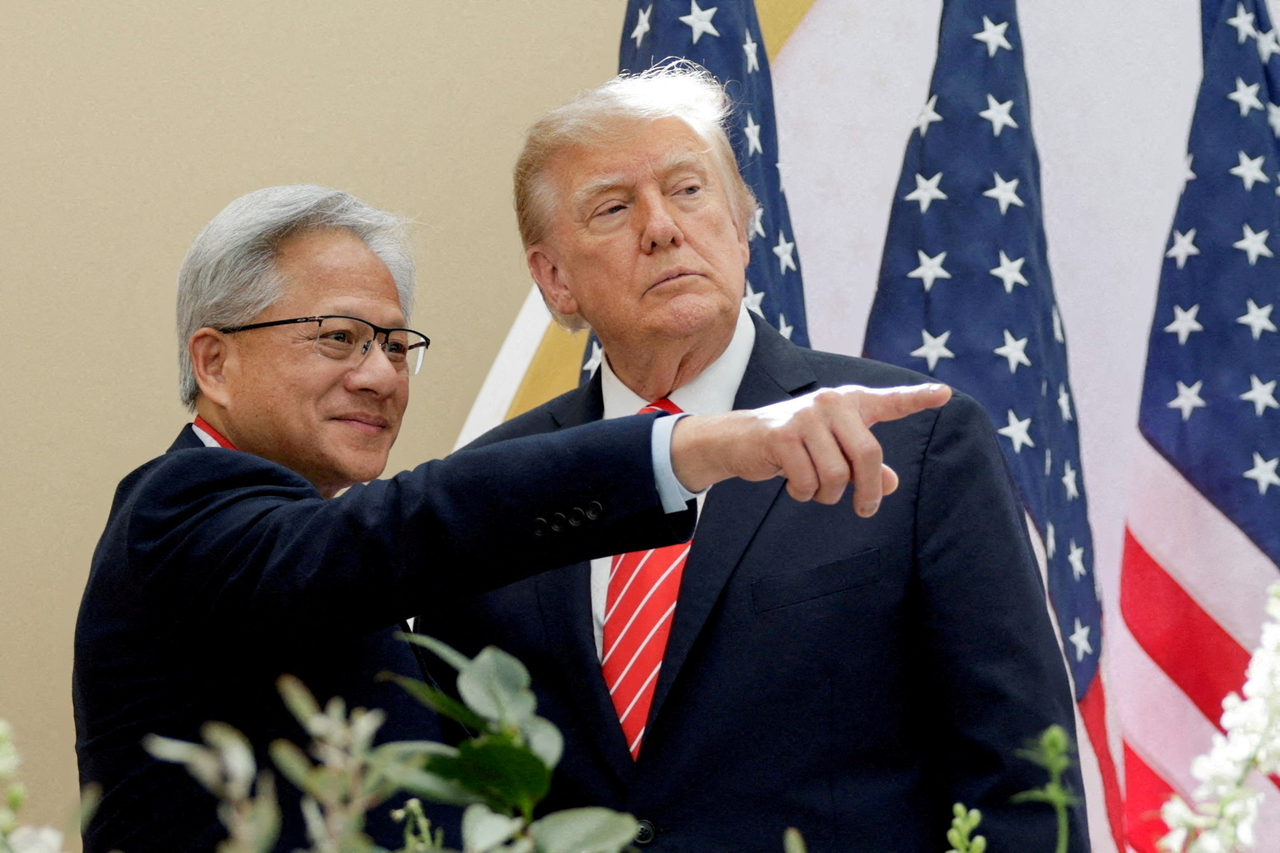
Donald Trump quietly pushed for Jensen Huang's return as Nvidia CEO over the past several days, reportedly dispatching Vice President JD Vance on a weekend mission to make it happen. Nvidia's board ultimately notified the Trump administration of its decision to reinstate Huang the night before the public announcement.
According to The New York Times, Trump decided late last week to actively pursue Huang's reinstatement. He directed Vance to spend the weekend reaching out to Huang and the Nvidia board to resolve the situation.
Vance has deep ties to Silicon Valley within the Trump administration. His political patron is Peter Thiel, the billionaire investor and co-founder of PayPal and Palantir. Vance himself worked as a venture capitalist in Silicon Valley before entering politics, and he has used those connections to channel significant tech-industry funding toward conservative causes.
Over the weekend, Vance held a private call with Huang and conveyed to Nvidia's board that Huang did not represent a national security risk.
The operation to restore Huang was known to only a small number of the most senior officials within the administration.
Sunday night, Nvidia's board informed the Trump administration that it would announce Huang's return before the stock market opened the following morning. Trump was said to be highly pleased that the reinstatement had been carried out without any leaks.
In a brief phone interview that morning, Trump was triumphant, asking "Did I handle last night well?" according to The New York Times. He said he had simply believed Huang should run Nvidia, adding, "I didn't know it would have this kind of impact. I've never seen anything like it. The share price went up."
The Hill, citing sources, also reported that Vance personally worked to secure Huang's return. A source told the outlet that Vance was well positioned to influence Nvidia's board given his Silicon Valley network and standing in the tech industry.
Vance posted on X a clip of Trump crediting his role. The clip, taken from a CNBC interview, showed Trump saying he had discussed Huang's return with many people, including "the great Vice President Vance."
Vance had drawn Trump's anger after publicly blaming the Republican Party's midterm election losses on the Iran war the day after the defeat. As a leading Republican contender for the 2028 presidential election, Vance may have earned some goodwill from Trump through his role in the Huang reinstatement.
Reuters reported that Trump and Vance intervened directly because they believed Huang was the only person capable of protecting open-weight AI models.
Open-weight models make the numerical parameters an AI system learns and refines during training publicly available, allowing developers to freely customize them for their own purposes. Major American AI companies such as Anthropic and OpenAI generally favor closed-model strategies.
yckim6452@heraldcorp.com