
Spinoff plan approved at extraordinary shareholders' meeting; 600 billion won deal on track
Company streamlines 'department store' portfolio; bumper unit also in talks
Shedding capital expenditure burden to concentrate on future core businesses
Robot actuators and automotive semiconductors seen as growth drivers
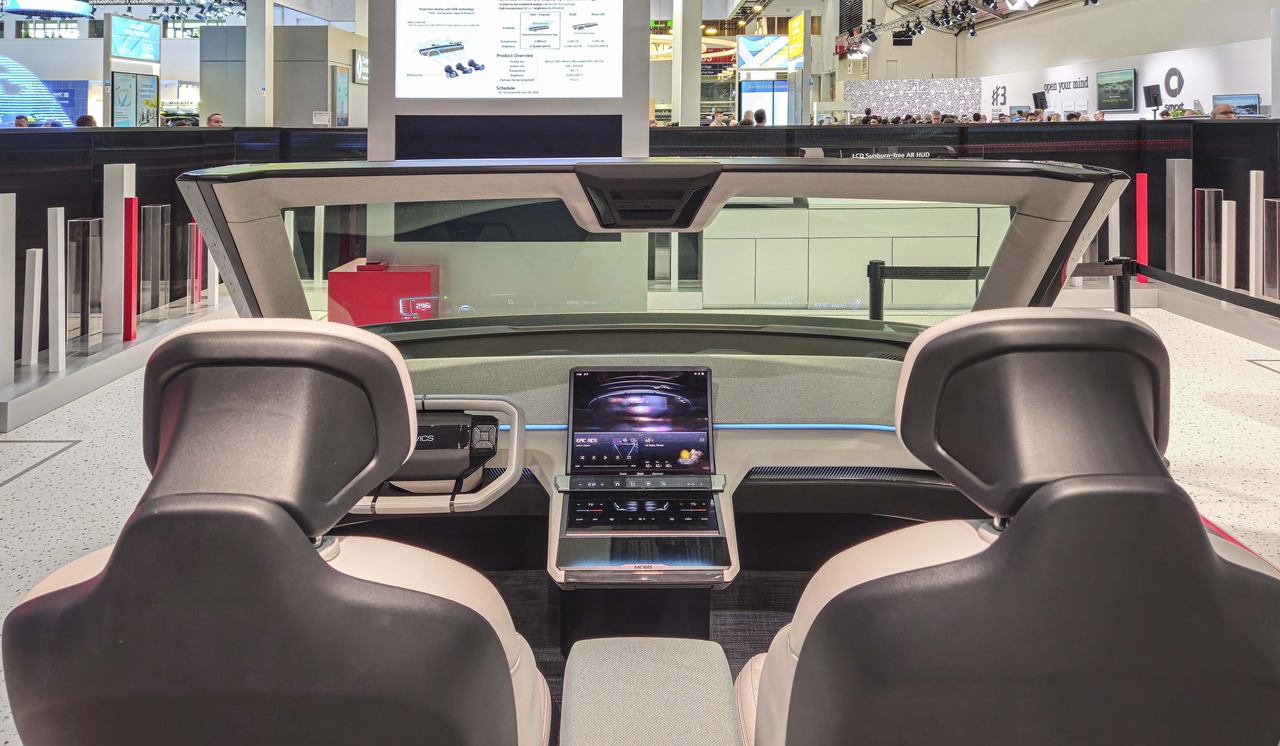
Hyundai Mobis appears set to accelerate its portfolio restructuring after clearing a critical hurdle in the sale of its lamp business. The company plans to shed the recurring capital expenditure burden and redirect its resources toward high-value core businesses such as robotics and automotive electronics to build future growth engines.
Hyundai Mobis held an extraordinary shareholders' meeting Tuesday at GS Tower in Gangnam-gu, Seoul, where shareholders approved a plan to spin off its automotive lamp business as a separate entity. The company had signed a sale agreement in September with French automotive parts maker OP Mobility in a deal worth about 600 billion won ($446 million).
The plan calls for spinning off the domestic lamp operations on April 1 next year to establish a new entity tentatively named Hyundai Mobis Lamp, which will then be sold to OP Mobility along with overseas lamp subsidiaries. The entire transaction is targeted for completion by the second half of next year.
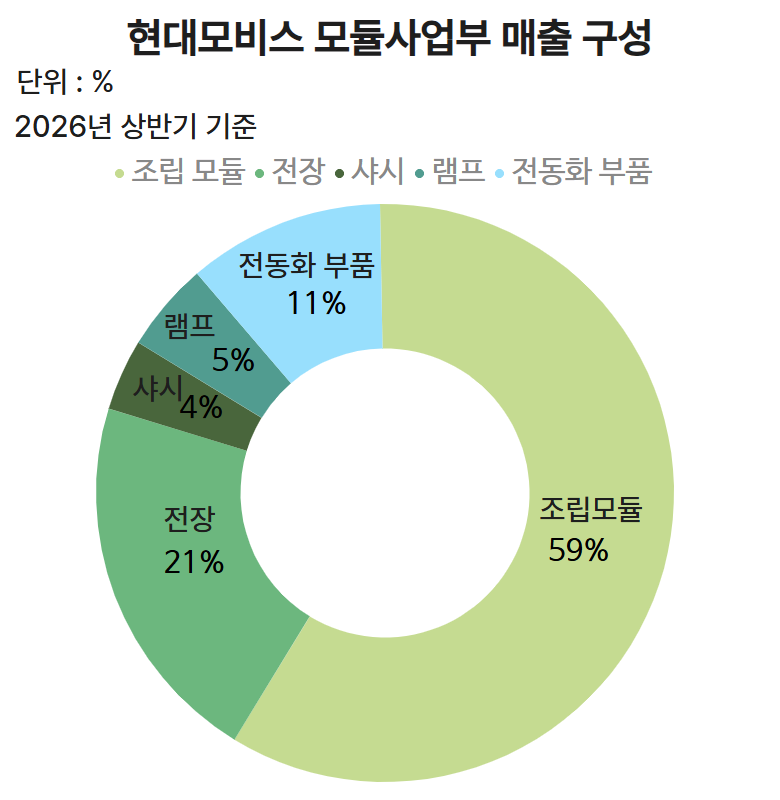
The sale marks the first concrete step in Hyundai Mobis's "selection and concentration" strategy. The company had expanded into eight business areas to meet the diverse needs of Hyundai Motor and Kia, but concluded that limited investment resources and personnel spread too thin were hampering its ability to strengthen competitiveness. It is now restructuring its business mix with an eye on profitability and synergies with future businesses.
Beyond the lamp unit, Hyundai Mobis is also in talks to sell parts of its overseas bumper business. It plans to pursue operational efficiency in existing businesses such as modules and chassis safety systems, while expanding investment in automotive electronics and electrification.
The lamp business being divested posted sales of about 2.5 trillion won last year. It employs roughly 5,000 people at home and abroad and has the capacity to produce about 7 million headlamps annually across five production sites in four countries.
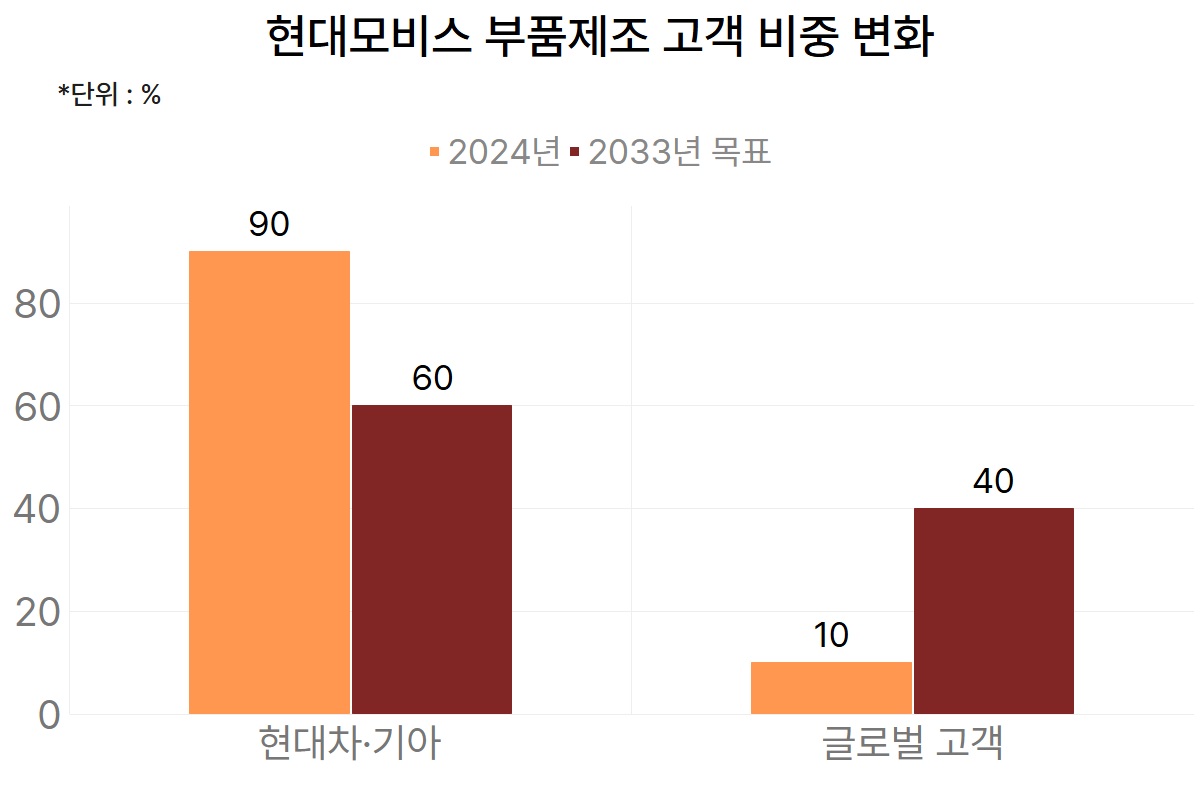
Despite its sizable revenue, the lamp business carries an operating profit margin of only 3 to 4 percent. Each new vehicle launch triggers another round of product development and capital investment, and 85 percent of the unit's sales are concentrated with Hyundai Motor and Kia — meaning the business would need to expand its global customer base to achieve the economies of scale required to improve profitability.
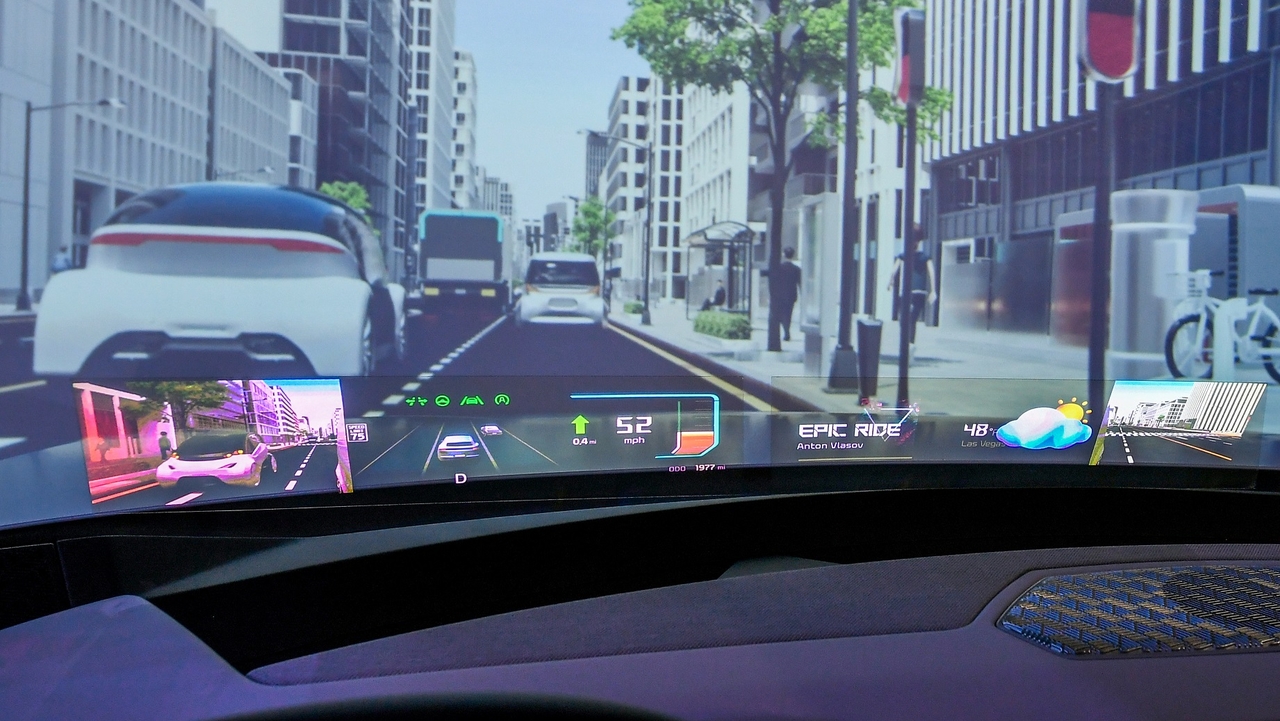
Hyundai Mobis concluded it would be more advantageous to pair the lamp business with a specialist rather than retain it, allowing a dedicated operator to achieve economies of scale. The sale proceeds will free up investment capacity and allow the company to concentrate its resources on future businesses including robotics, automotive electronics and automotive semiconductors.
Robotics is the flagship growth driver. Hyundai Mobis is pursuing the supply of key components — including actuators — for Boston Dynamics's Atlas humanoid robot. Actuators, which drive the joints of a robot, are an area where the company can leverage the motor and control technology it has accumulated through automotive parts manufacturing. Hyundai Mobis is also working toward opening an actuator factory in the United States in 2028.
The robotics business is also broadening its scope. Hyundai Mobis is jointly developing gripper and hand modules — the components that serve as a robot's hands — with Boston Dynamics.
The automotive electronics business is already showing growth momentum. Samsung Securities projected that Hyundai Mobis's electronics systems sales this year will rise 12 percent from a year earlier to 10.8 trillion won, with an operating profit margin of 7 to 8 percent. Vehicle displays, sensors, advanced driver assistance systems and integrated controllers are driving the expansion.
Results from the automotive semiconductor business are expected to become visible from next year. Hyundai Mobis is set to begin mass production of silicon-based power semiconductors (Si-IGBT) next year and is expected to complete development of next-generation silicon carbide (SiC) power semiconductors by 2029. Autonomous driving sensors and integrated controllers are also expected to see wider adoption in line with the industry's shift toward software-defined vehicles.
The company said the sale of the lamp business will not disrupt parts supply to Hyundai Motor and Kia. Hyundai Mobis plans to transfer to the new entity only the intellectual property primarily used in the lamp business, while retaining the core technologies needed for its other operations. The sale proceeds will be used to strengthen competitiveness in future businesses such as robotics and automotive electronics.
Clearing the shareholders' meeting, however, does not mean the sale is finalized. Dissenting shareholders have until Dec. 14 to exercise their appraisal rights. If total claims exceed 230 billion won, Hyundai Mobis may withdraw the spinoff plan.
Yu Min-gi, an analyst at Sangsangin Securities, said the sale was a positive development for the company's medium- to long-term value. "Streamlining the business portfolio through the lamp sale, securing investment capacity and concentrating on future businesses such as robotics are positive factors for medium- to long-term corporate value," Yu said.
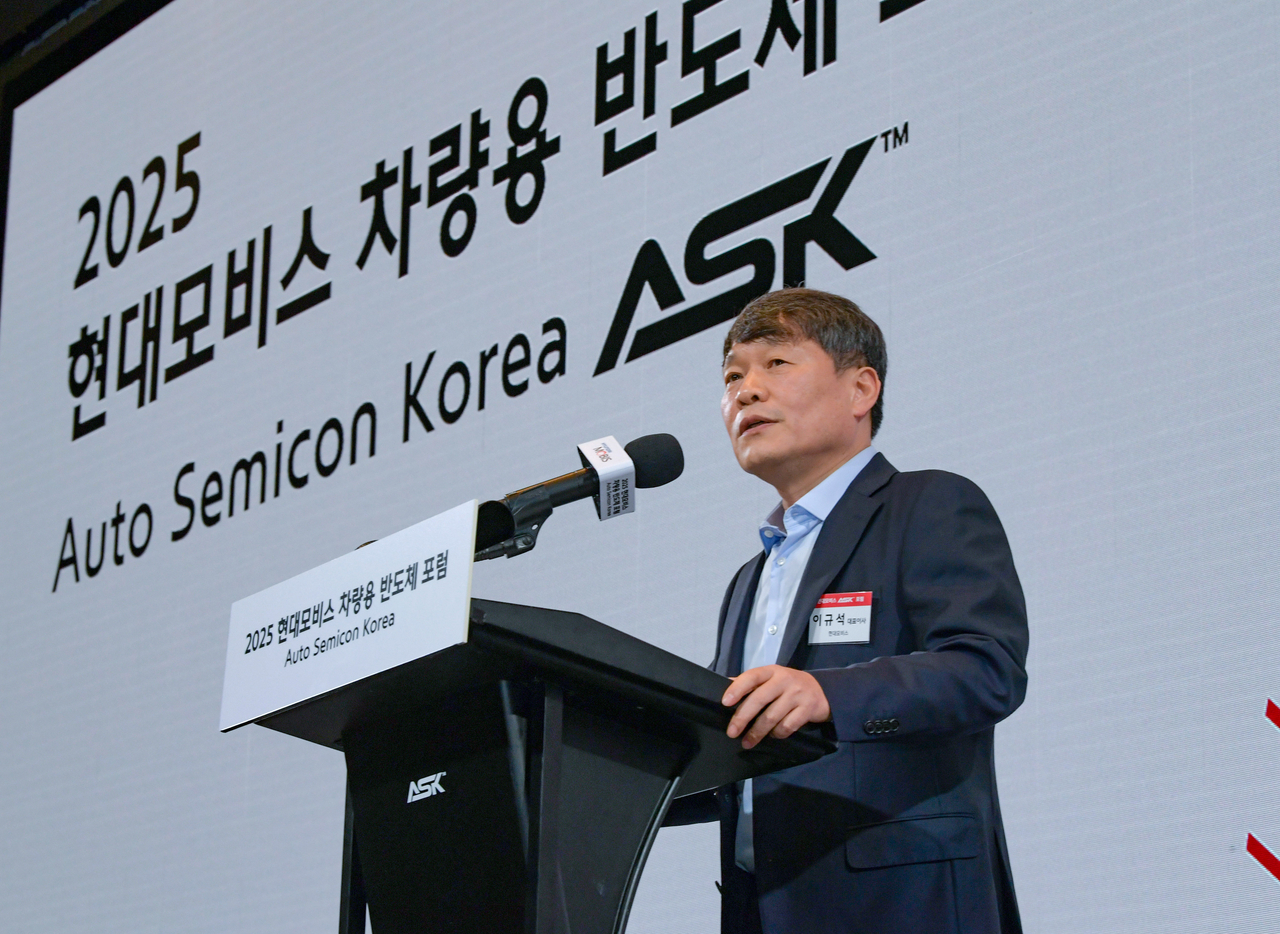
Hyundai Mobis President Lee Kyu-seok told the shareholders' meeting that the company had reached an important inflection point in its medium- to long-term growth roadmap. "This will serve as an opportunity to gain further momentum in restructuring the business portfolio around core future mobility areas and executing a growth strategy aligned with the company's future vision," Lee said.
Lee added that Hyundai Mobis would continue to honor its previously announced shareholder return policy, including planned dividends, while maintaining stable financial capacity for future growth. "We will continue to refine our priorities for investment and resource allocation for the future," he said.
kwater@heraldcorp.com




