
124,954 units sold January–October
Full-year sales on track to exceed 9-year cumulative total
Chinese EVs hold 43.2% share of domestic passenger EV market
Tesla, BYD expand sales
Small parts makers strained by electrification investment and cost pressures
Decline in domestic output could hit orders and jobs
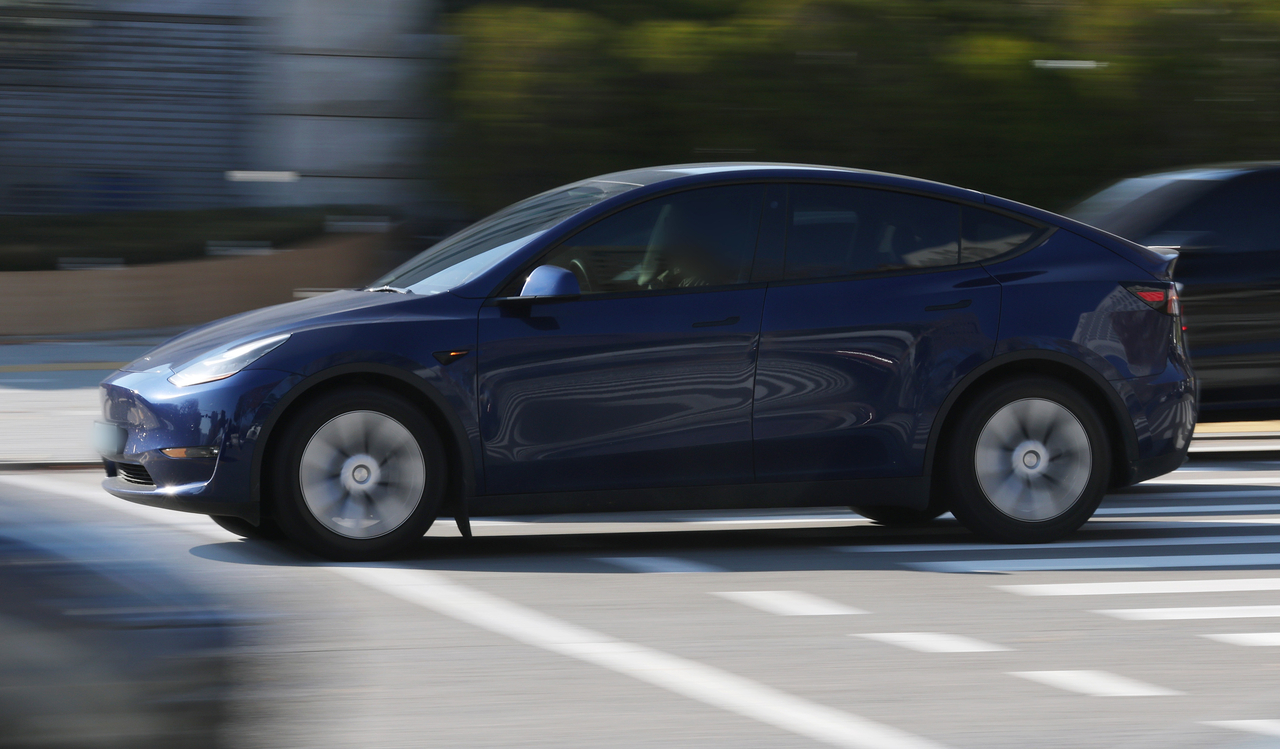
Chinese electric vehicle sales in South Korea this year are on track to surpass the cumulative total recorded over the previous nine years, as a relentless push by Chinese automakers leaves domestic small and medium-sized parts suppliers caught between electrification investment costs, rising raw material prices and shrinking orders from Korean EV makers.
According to the Korea Automobile Mobility Industry Association, 124,954 Chinese-made EVs were sold in South Korea from January through October — equivalent to 88.4 percent of the 141,290 units sold cumulatively over the nine years from 2017 through last year. If the current pace holds, full-year sales alone will exceed that nine-year cumulative figure.
Chinese EV sales in Korea began in 2017, initially led by commercial vehicles such as electric buses. The market remained modest until 2023, when Tesla began supplying its Model Y — produced at its Shanghai Gigafactory — to Korean consumers, triggering a sharp acceleration in sales. Last year, BYD, China's largest EV maker, entered the domestic passenger car market, adding further momentum to the trend.
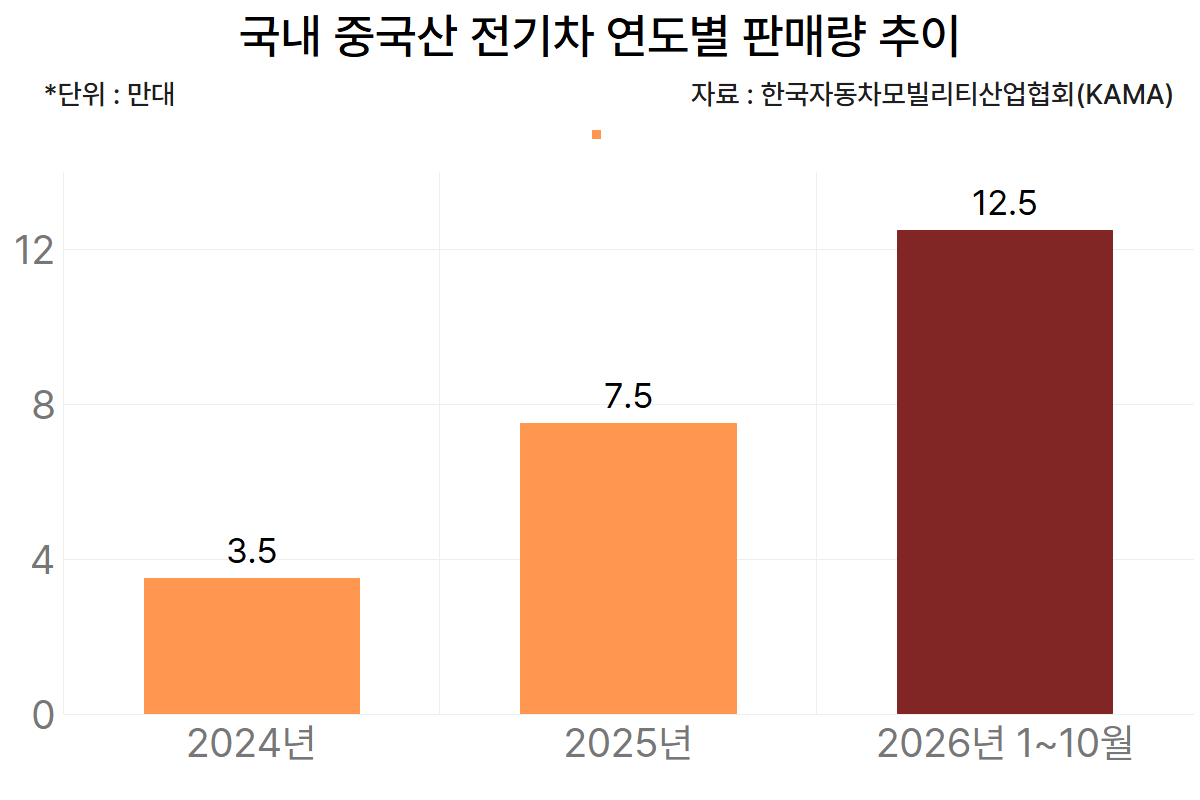
The pace at which Chinese EVs have penetrated the Korean market dwarfs that of other countries. American-made EVs sold just 80,407 units over 13 years from 2014, while German-made EVs reached 75,813 units over 14 years from 2013. Chinese EVs, which only entered the Korean market in 2017 — later than both — have already surpassed 120,000 units in just 10 months this year.
Chinese vehicles are particularly dominant in the domestic passenger EV segment. Their market share in that category reached 43.2 percent in the January–October period, meaning more than four out of every 10 passenger EVs sold in Korea were made in China.
Chinese automakers are also accelerating their push into the Korean market. BYD, which launched passenger car sales last year, has secured 38 showrooms nationwide. Zeekr began delivering its electric SUV, the 7X, to customers in October. Next year, Xpeng and Chery Automobile are also set to enter the Korean market, which is expected to intensify competition among Chinese brands.
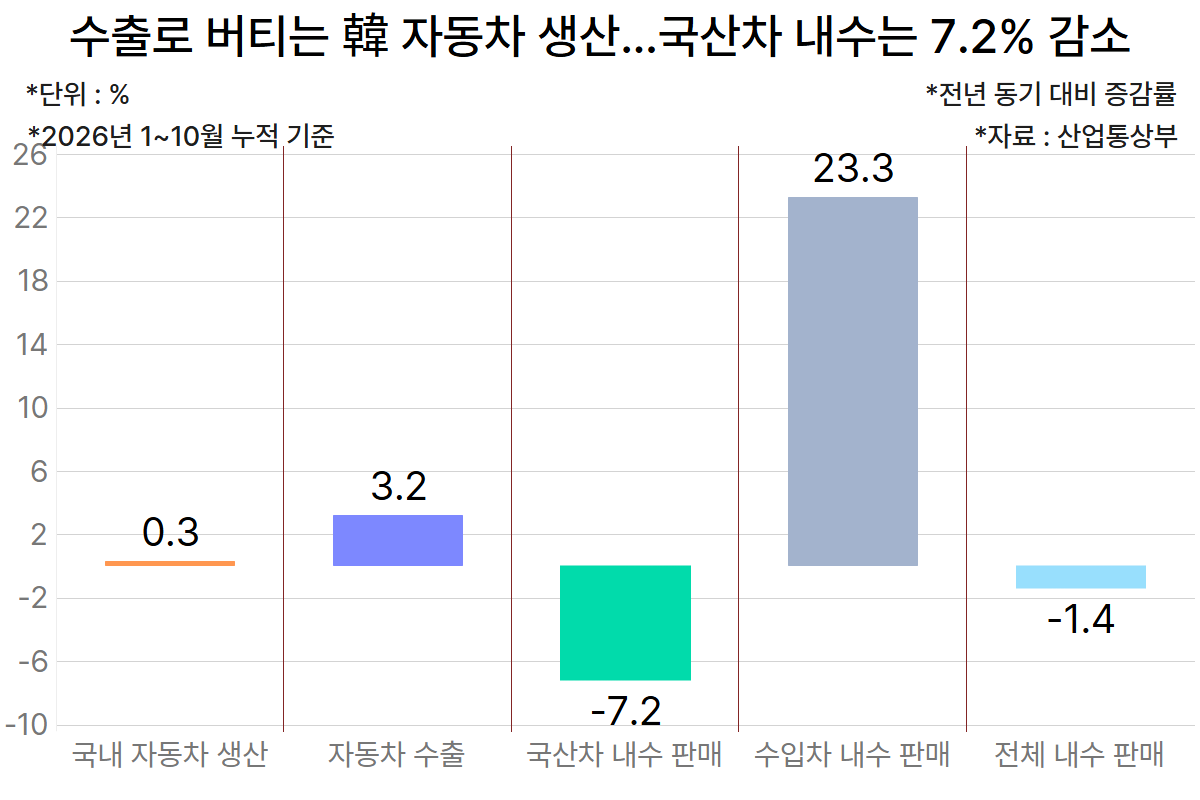
The concern now centers on the impact on Korea's domestic auto production base. Output rose just 0.3 percent year-on-year in the January–October period, sustained only by a 3.2 percent increase in exports even as domestic sales of Korean-made vehicles fell 7.2 percent. With Chinese EVs absorbing a growing share of domestic demand, analysts warn that any slowdown in exports could push domestic production into decline — directly hitting orders and employment at small parts suppliers.
The operating environment for domestic parts makers is already under severe strain. According to the Ministry of Trade, Industry and Resources, auto parts exports totaled $16.98 billion from January through October, down 4.0 percent from the same period last year. Among major Daegu-based auto parts companies, the combined third-quarter sales of SL, Sambo Motors and PHA rose 6.1 percent, but their combined operating profit fell 8.1 percent, and net profit for the period swung to a loss.
Profitability is even weaker among smaller suppliers. A report published last year by the Korea Automotive Research Institute found that the average operating profit margin among 213 major domestic parts companies in 2024 was 3.62 percent. For the 94 small and medium-sized enterprises in that group, the figure was just 2.22 percent.
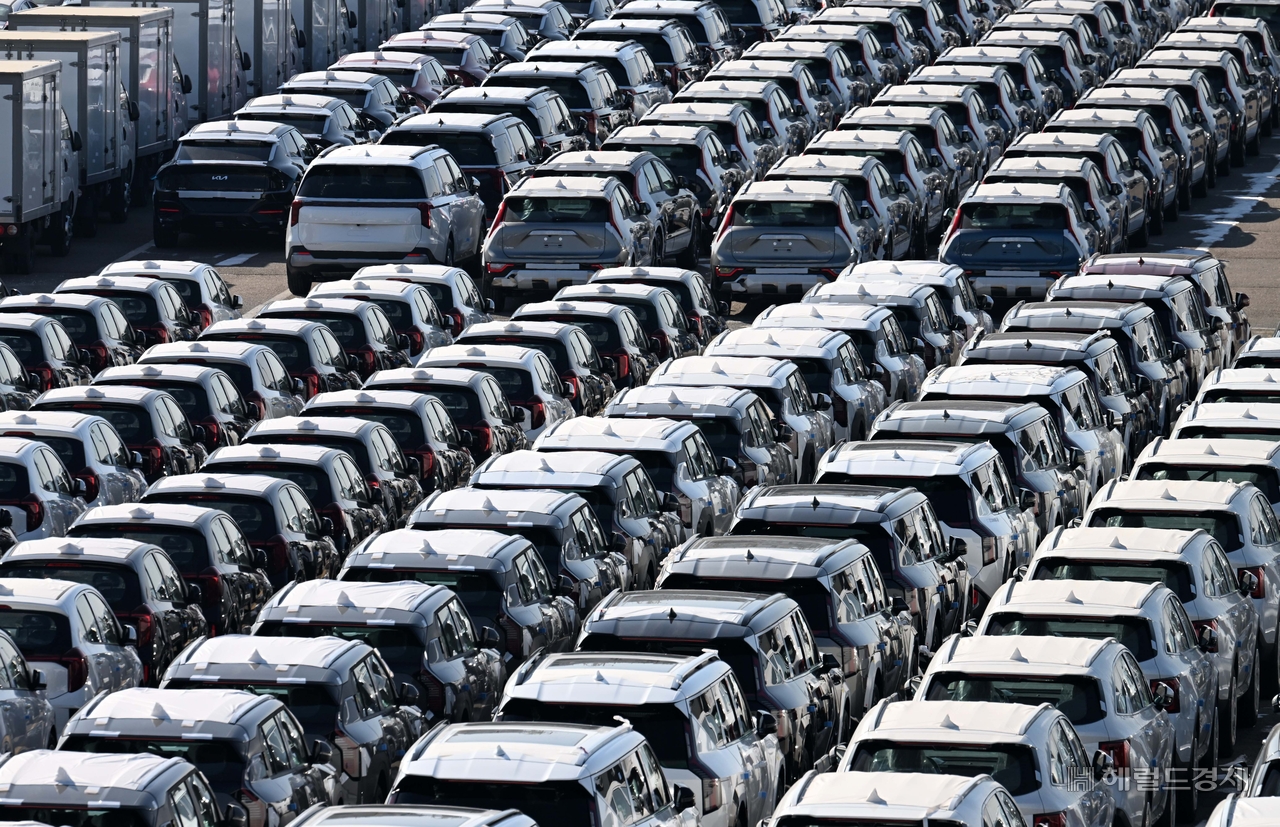
The shift from internal combustion engines to electric vehicles also demands substantial capital investment. Parts makers must develop EV-specific components and build new production lines while maintaining existing facilities — all at a time when rising raw material costs and labor expenses are further limiting the investment capacity of smaller suppliers.
A survey on the state of the auto parts industry published by the Korea Automotive Research Institute in May found that of the 21,049 domestic auto parts companies, only 578 — or 2.7 percent — were dedicated to next-generation vehicle components. Just 1,286 companies, or 6.1 percent, were pursuing or planning a business transition. The main obstacles cited were financing (38.8 percent), lack of technology (29.9 percent) and difficulty securing workers (29.3 percent).
"A drop in finished-vehicle production immediately translates into fewer parts orders, directly affecting the capacity utilization and employment of small suppliers," said the head of one small parts company. "The investment burden from the electrification transition is mounting, and simply keeping production going has become the biggest challenge on the ground."
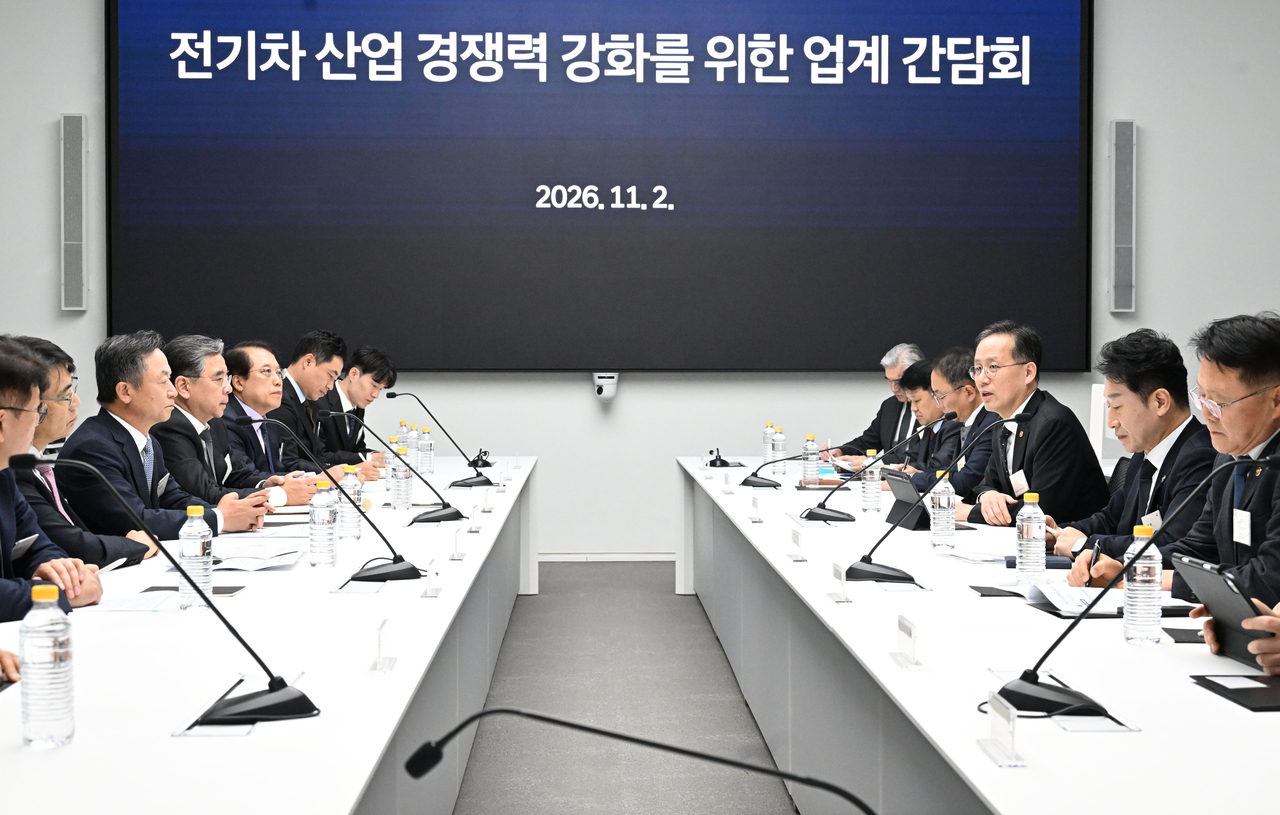
The government plans to announce a package of measures to strengthen the competitiveness of the EV industry this month. The government and the National Assembly are also reviewing whether to include electric vehicles in the scope of domestic production tax credits, with the aim of boosting local output and protecting orders and jobs at small parts suppliers.
However, questions of fairness across industries have been raised, given that other sectors such as steel and shipbuilding are also facing financial difficulties — making it unclear whether expanding tax support for a specific industry is appropriate.
The auto industry, for its part, argues that electric vehicles are not simply a sector in need of support but a strategic field that will determine Korea's future industrial competitiveness. EVs, the industry contends, are a central driver of the transition to next-generation industries — not only in carbon reduction but also in AI, autonomous driving and software.
"Given that domestic EV demand continues to grow, introducing a production tax credit is likely to translate directly into expanded production and investment," an industry official said. "Protecting the domestic production base means protecting not only finished-vehicle makers but also the orders, jobs and future-vehicle transition capabilities of small parts suppliers."
kwater@heraldcorp.com




