
K-New Deal Academy budget set at 489.5 billion won for next year
Youth job-leap incentive to cover 130,000 people, up from 105,000
Minister Kim Young-hoon: 'People sustain businesses, businesses sustain regions'
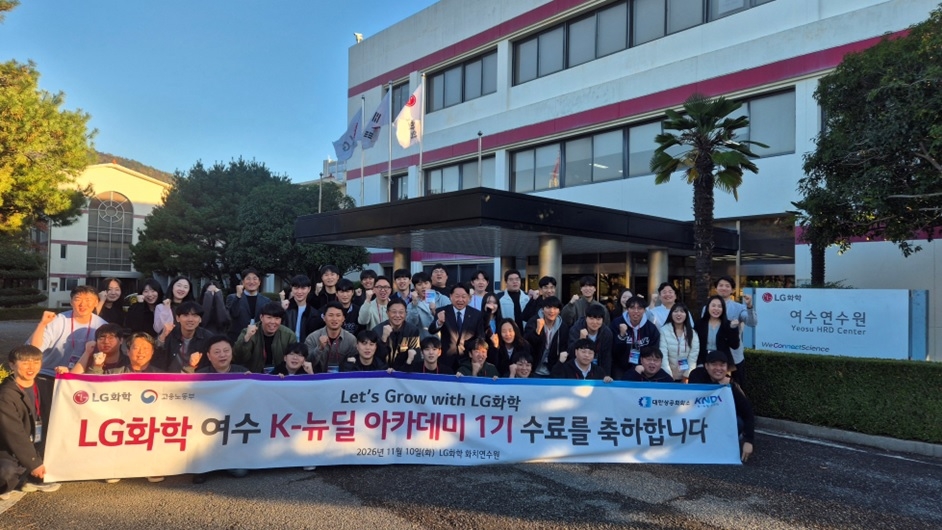
The government plans to expand its company-led youth skills training initiative, the K-New Deal Academy, from 10,000 participants this year to 50,000 next year. It will also deepen cooperation with regional business communities to ensure that its balanced regional growth policies translate into quality jobs outside the Greater Seoul area.
The Ministry of Employment and Labor and the Korea Chamber of Commerce and Industry held a forum Tuesday at the Korea Chamber of Commerce and Industry building in Jung-gu, Seoul, attended by Labor Minister Kim Young-hoon and about 20 presidents and officials from regional chambers of commerce across the country, to discuss local job creation and youth employment.
The forum was organized to gather input from the business community and explore ways to ensure that the government's regional balanced-growth policies — including the "Five Poles, Three Special Zones" growth engine initiative and three major megaprojects, among them the construction of a semiconductor fab in the southwestern region — translate into more job opportunities for young people in the regions.
The ministry asked regional chambers of commerce to encourage leading local companies to participate actively in the K-New Deal Academy. The program has large corporations and representative companies by region and industry design their own curricula to build practical skills among young workers, giving youth hands-on job experience while helping companies identify and develop future talent.
The government has allocated 489.5 billion won ($364 million) for the K-New Deal Academy in next year's budget, with plans to expand the number of participants to 50,000 — five times this year's figure. At Tuesday's forum, SK AX, which runs the program in Gwangju, and Jeongrim Architecture, which operates it in Cheonan, shared their experiences developing young local talent.
Support measures to ease hiring costs for small and medium-sized enterprises and encourage young workers to stay longer at their jobs will also be expanded. The number of beneficiaries under the Youth Job-Leap Incentive will rise from 105,000 this year to 130,000 next year. The overall program budget will edge down from 908 billion won to 901.2 billion won, but the portion paid directly to young workers will increase by 122.2 billion won to 211.6 billion won.
The budget for the Youth Work Experience Support Program will also grow, rising 16.3 billion won from 207.6 billion won this year to 223.9 billion won next year. The program aims to support a total of 39,000 participants — 26,000 in internship placements, 10,000 in project-based tracks, and 3,000 in a newly created tailored-support track.
The government is also pursuing fiscal support for locally driven job creation. Next year's budget includes 81 billion won for the Job-Bridge Project and 25 billion won for a regional gap-reduction support program. Legislation to establish a legal foundation for locally led employment policy — a Regional Employment Revitalization Act — is also being drafted.
"Recent employment indicators show signs of recovery, but that warmth has not reached far enough into the industrial complexes and back alleys of our regions," Minister Kim said. "Some regions are seeing their core industries falter, and some companies cannot fill the void left by young people who have moved away." Kim added: "People sustain businesses, and businesses sustain regions. I hope the chambers of commerce, which know the local scene best, will be a steadfast partner in this effort."
Park Yun-gyeong, president of the Daegu Chamber of Commerce and Industry, said young people must be able to work and grow in their home regions for local economies to recover. "Regional chambers of commerce across the country will work with the Korea Chamber of Commerce and Industry and the government to further strengthen efforts to develop young talent and create local jobs," Park said.
fact0514@heraldcorp.com




