
Music industry: 'No training without permission'
Zero of 14 member companies back 'use first, compensate later' model
Korea Music Copyright Association to hold public hearing Monday after 3-month pause
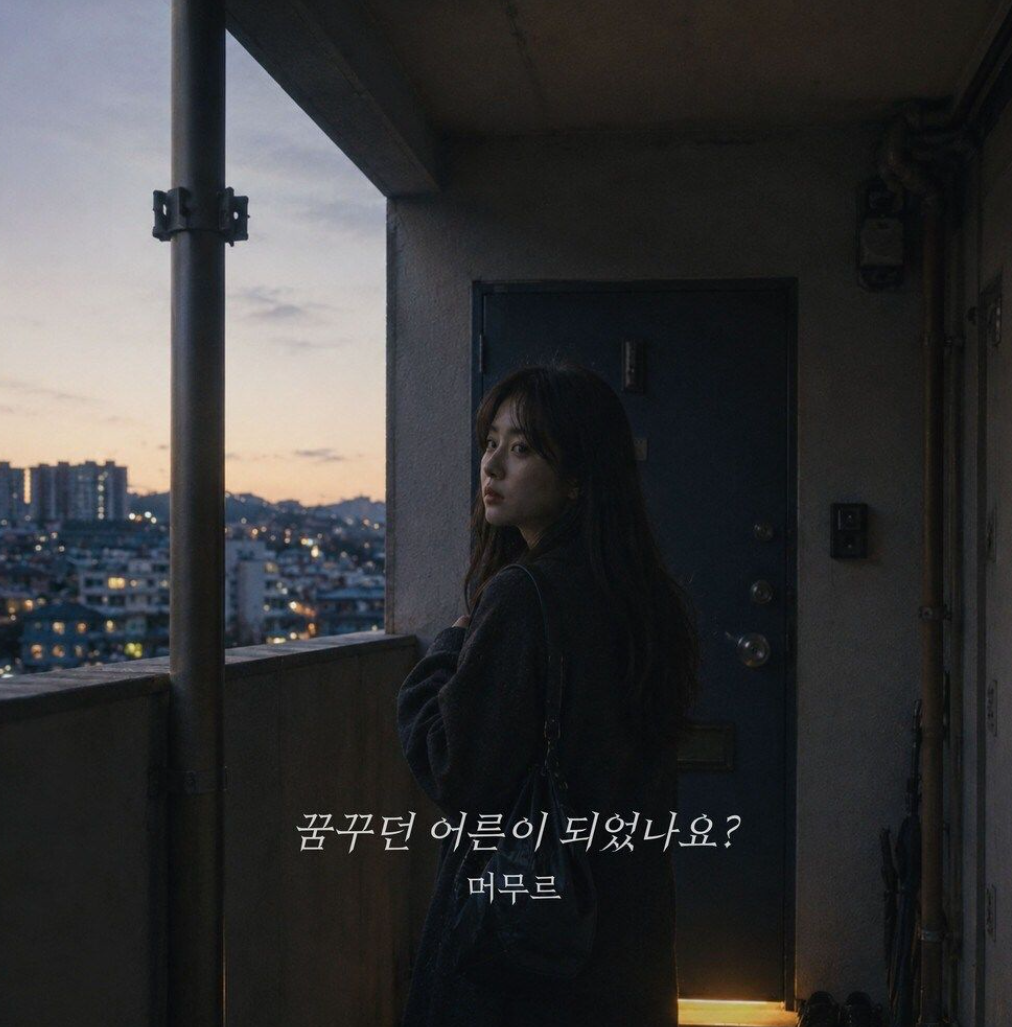
An AI-sung song has topped the Melon Top 100 chart for the first time. The track, "Kkumkkudeun Eoreuni Doeeonnayo?" (Did You Become the Adult You Dreamed Of?) by music project MEOMURU, climbed to No. 1 on Nov. 13 and has held the position since. It took roughly five months after its June 23 release to reach the top. MEOMURU said the vocals were generated using Suno, a generative AI music tool, while the concept, lyrics and overall production were handled by the project's human creators. The song has not been registered with a copyright trust, however, meaning its creators receive no royalties for composition, lyrics or arrangement. The chart may have embraced AI music, but domestic standards governing copyright registration, royalty settlement and distribution labeling have yet to be established.
Across the popular music industry — record labels, distributors and songwriters alike — calls are growing for domestic rules to protect the music sector as AI moves rapidly into the space.
The Korea Popular Music Industry Association, which represents record labels and distributors, announced Tuesday the results of a member survey along with three guiding principles for protecting the music industry in the AI era. Separately, the Korea Music Copyright Association, which manages the trust rights of lyricists and composers, said it will hold a public hearing on standards for registering AI-assisted music at the Conrad Seoul hotel in Yeouido on Monday.
Labels and distributors: prior consent required for commercial AI training; none back liability exemption
"Anyone seeking to use music for commercial AI training must obtain prior consent from rights holders."
That is the first of three principles — "responsible AI training" — released by the Korea Popular Music Industry Association. Its membership includes the four major entertainment companies Hybe, SM Entertainment, JYP Entertainment and YG Entertainment, as well as Kakao Entertainment and the Korean subsidiaries of the three global majors: Universal Music, Sony Music and Warner Music. Of the 20 companies in the association's AI working group, 14 responded to a survey. Those 14 accounted for 83.4 percent of annual album sales on the Circle Chart's top 100 for 2025, including affiliated labels.
None of the 14 respondents said they would support introducing an unconditional text and data mining exemption, nor did any say they would actively participate in a "use first, compensate later" model that allows music to be used before rights holders are paid.
A text and data mining exemption would shield AI developers from copyright liability for reproducing works during the training process. The "use first, compensate later" approach was floated after the National AI Strategy Committee included a recommendation to amend the Copyright Act in its AI action plan released in December last year. In January, 16 organizations including the Korea Publishers Association demanded the proposal be withdrawn.
All 14 respondents said stronger protection of publicity rights is needed. Current law does not recognize publicity rights as an independent legal right, making criminal prosecution difficult even when an artist's face or voice is replicated without consent using AI. The Intellectual Property Office said Oct. 14 it would pursue legislation to explicitly bring so-called digital replicas under the Unfair Competition Prevention Act and introduce criminal penalties. Nine of the 14 respondents, or 64 percent, said their distribution contracts already include clauses holding suppliers liable if fraudulent tracks are detected.
A particular concern for the Korea Popular Music Industry Association is the prospect of AI-generated tracks flooding streaming platforms and fraudulent plays eroding the royalty share of existing rights holders. French streaming platform Deezer detected more than 13.4 million AI-generated songs last year and found that up to 85 percent of plays of fully AI-generated tracks were fraudulent. At the MWM Conference in September, Dora Zhen, head of Tencent Music, said the share of AI-generated music among newly registered tracks on the platform had risen to 44.1 percent this year.
"We are not opposed to AI technology itself," an association official said. "What we want is a market where music used for training requires proper consent and fair compensation, and where AI-assisted tracks that reflect genuine human creative contribution are distributed transparently — not simply machine-generated content."
'Disclose and register, hide and face sanctions' — copyright body restarts push three months after retreat
Copyright registration for AI-assisted music has also hit a wall.
The Korea Music Copyright Association introduced rules in August allowing registration of AI-assisted works in which a human played a substantive creative role, only to withdraw them 22 days later. The reversal came after the National Assembly criticized the organization for setting standards without broader social consensus, and the Ministry of Culture, Sports and Tourism sent an official letter calling for public deliberation.
In the interim, copyright applications for AI-assisted music filed with the association surged 5.7-fold in a year, from 133 to 759 — yet all 892 applications on file remain unregistered. Verification has also proved difficult. The association filed a criminal complaint in October last year against individuals suspected of mass-producing and registering AI-generated songs, but investigators ruled in July that there was insufficient evidence to establish the tracks were AI-generated and declined to refer the case for prosecution.
Since then, the association has co-organized two National Assembly forums, in September and October, together with the K-Music Rights Holders Mutual Prosperity Committee, a body comprising six music rights organizations. At the October forum, co-hosted by Rebuilding Korea Party lawmaker Kim Jae-won and People Power Party lawmaker Bae Hyun-jin, participants put forward the principle of "disclose and register, hide and face sanctions": works with recognized human creative contribution would be eligible for registration, while anyone misrepresenting AI-generated content as human creation would face strict penalties. The forum also proposed a four-stage verification framework combining voluntary disclosure, ongoing monitoring, expert review and sanctions for false reporting.

At Monday's public hearing, Korea Music Copyright Association President Lee Si-ha will personally explain the proposed scope for recognizing creative contribution, registration criteria, and collection and distribution methods. GEMA, the German music copyright management organization that won most of its first-instance copyright lawsuit against Suno at a Munich regional court in July, will present international precedents via video message. Pre-registration filled the roughly 200-seat capacity within 30 minutes of opening. The association plans to submit the hearing's findings to its board of directors and the Ministry of Culture, Sports and Tourism, and to use them as material for a third National Assembly forum.
Domestic platforms lack AI labeling standards
The "prior consent and compensation" principle the Korea Popular Music Industry Association has championed has already become a baseline for deals between major overseas labels and AI companies. Warner Music Group, itself a member of the association, settled lawsuits against Suno and Udio last November and signed licensing agreements with both. In September, Suno released its first model trained on music licensed from Warner Music, BMG and Believe.
Both the Korea Music Copyright Association's "disclose and register" principle and the labeling requirement sought by the Korea Popular Music Industry Association depend on AI use being made visible in the first place. Deezer tags fully AI-generated tracks and excludes them from algorithmic recommendations and editorial playlists.
By contrast, the release registration forms of major domestic music platforms include no field for disclosing AI involvement. For MEOMURU's track, the use of AI was disclosed only in the production team's own description of the song — the platform itself carries no separate label. "Without agreed standards for what counts as an AI track, a platform cannot make that call unilaterally," a Melon official said. "Our understanding is that the Ministry of Culture, Sports and Tourism, trust organizations and private operators are working together on guidelines." Melon said it will announce a related policy once industry-wide standards are in place.
The six organizations on the mutual prosperity committee launched a public tender in July to jointly adopt an AI detection program, reflecting the difficulty of relying on creators' voluntary disclosure alone to determine whether AI was used.
"We cannot build a perfect framework from the outset, but we also cannot afford to delay any further — that has been the association's consistent position," President Lee said. "We will establish effective standards so that creators no longer suffer from the gaps in the current system."
shee@heraldcorp.com




