Three unions to negotiate in sequence; indefinite strike begins with first train Wednesday if talks fail
Staffing cuts of 2,212 and hiring demand of 1,313 at center of dispute
Wage demand trimmed from 5.2% to 3.5%; outcome hinges on Seoul's staffing offer
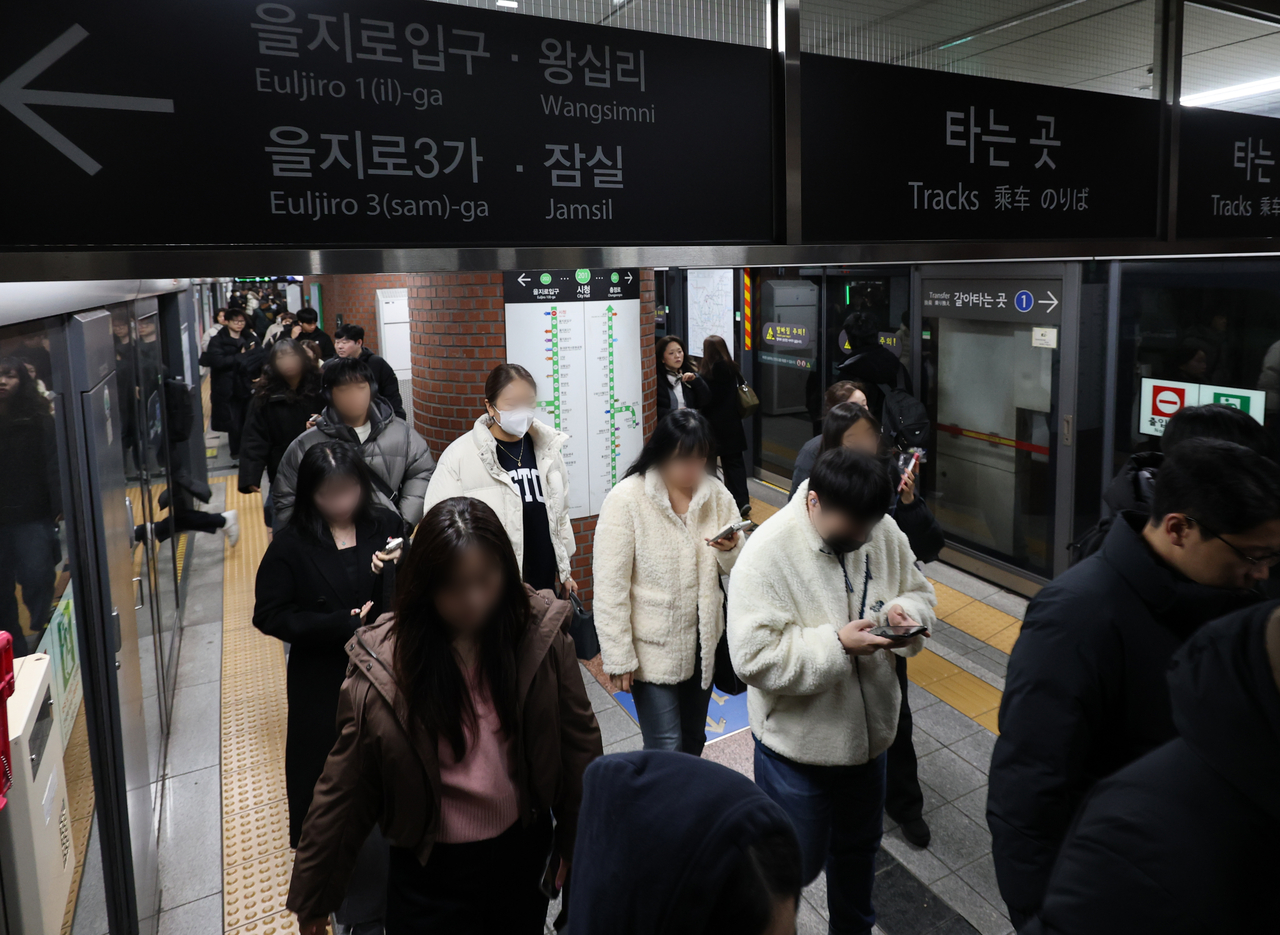
Seoul Metro and its unions are holding final negotiations Tuesday, one day before a threatened general strike. If the two sides cannot narrow their differences over staffing cuts and new hires, all three unions within the company plan to launch an indefinite strike starting with the first train Wednesday, raising fears of severe morning rush-hour disruption.
Seoul Metro, which operates subway lines 1 through 8 and part of Line 9, is holding a series of wage and collective bargaining talks Tuesday — beginning with the first union, the Transport Workers' Union, at 10 a.m., followed by the second union, the Integrated Union, at 11 a.m., and the third union, the Right Union, at 1:30 p.m. As the last round of negotiations before a potential strike, talks could stretch late into the night or into the early hours of Wednesday.
The central sticking point is staffing. The first union is demanding that management scrap a plan to cut 2,212 positions between 2021 and 2026, and hire 1,313 workers to fill vacancies before the end of this year. The union argues that a combination of unfilled posts and employees on extended leave has left frontline operations dangerously understaffed, threatening passenger safety. The union is also calling for government funding to cover public-service costs and a mandatory two-person crew requirement at worksites.
The Seoul Metropolitan Government and Seoul Metro have maintained that restructuring is necessary to ease fiscal pressure and improve operational efficiency. Finding common ground between unions demanding more safety staff and management pushing for cost cuts is the central challenge of the negotiations.
The unions have already scaled back their wage demand, lowering it from an initial 5.2 percent increase to 3.5 percent in line with government guidelines. That shift means the staffing reduction plan and the scale of new hiring — not wages — are now the decisive variables in whether a deal can be reached.
Headcount and hiring levels are matters Seoul Metro cannot decide on its own. How far the Seoul Metropolitan Government is willing to move on staffing in the final round of talks will likely determine the outcome of negotiations.
The two sides have gone through three rounds of formal bargaining and a labor commission mediation process this year without reaching an agreement. All three unions have secured the legal right to strike.
Last year, a deal was struck just before a strike was set to begin. At the time, the unions declared talks had broken down at 3:30 a.m. on the day of the planned strike, but management came back with a revised offer, prompting negotiations to resume — and a final agreement was reached just before the first train of the day, averting the walkout.
A last-minute deal remains possible this time if both sides can find a compromise on staffing. However, if no agreement is reached before the first train Wednesday and the strike goes ahead, reduced service is expected to cause significant inconvenience for commuters from the morning rush hour onward.
fact0514@heraldcorp.com