Youth, women's and non-regular worker panels submit first joint policy proposals to government
Proposals also include standard wage system for care workers and employee presumption rule
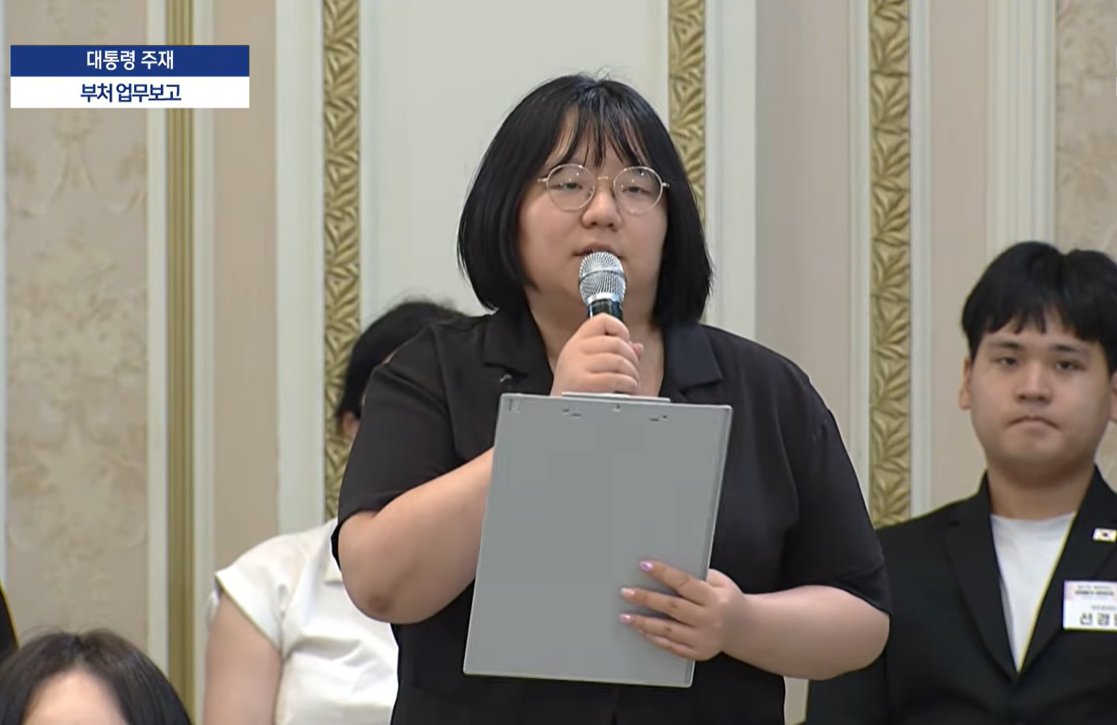
The youth committee of the Economic, Social and Labor Council has proposed that the government require employers to disclose wages and working hours in job postings, so that job seekers can review and compare key conditions before applying. The women's committee called for the introduction of a standard wage system for care workers and expanded protections for domestic workers, while the non-regular worker committee called for the adoption of an employee presumption rule.
The council held its first joint policy forum among the three committees Monday afternoon, chaired by council Chairman Kim Ji-hyung. It was the first time the three panels had directly presented their individually developed proposals to government ministries and discussed ways to have them reflected in policy.
The youth committee said job seekers often struggle to obtain key information — such as wages and working hours — at the recruitment stage, leading some new hires to leave early after finding that actual working conditions differ from what they had expected. In response, the committee proposed building a public disclosure system that would allow applicants to compare working conditions across job openings before applying. "Policy improvements should be made to expand the provision of recruitment information so that young job seekers can choose jobs based on sufficient information, and to close the information gap between companies and applicants," said Han Da-sri, chair of the youth committee.
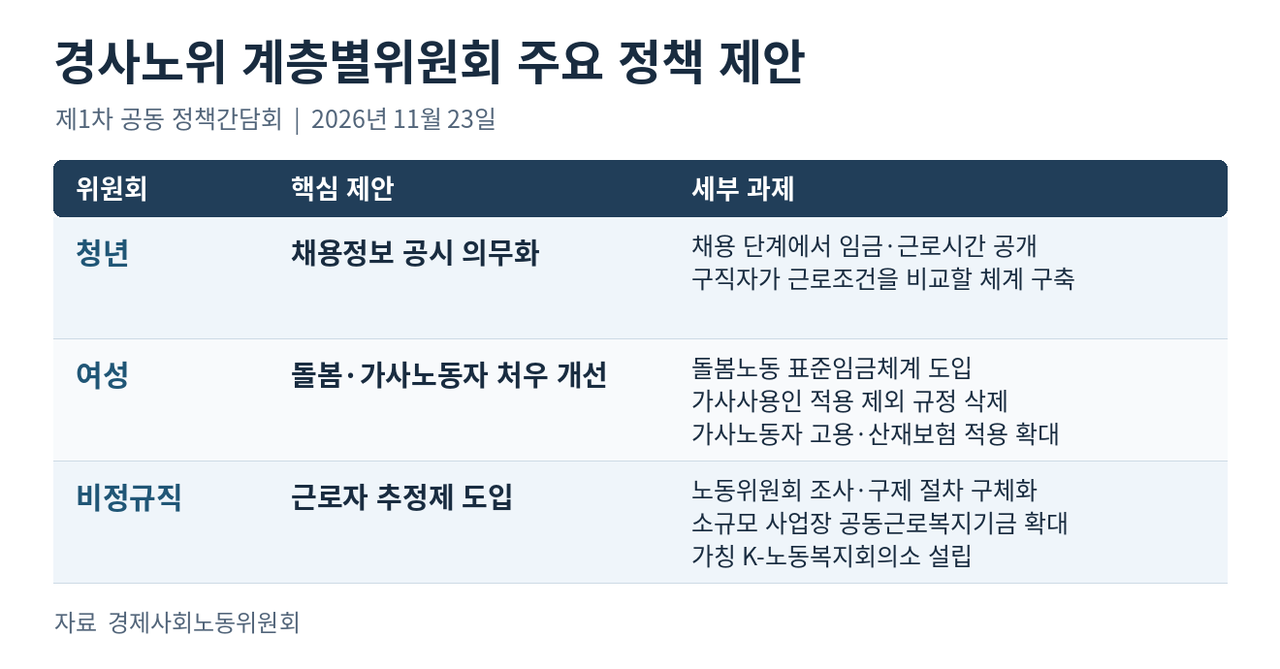
The women's committee noted that 94.1 percent of care workers are women and that the average monthly wage for workers in care and health services stands at about 1.47 million won ($1,100), and proposed the introduction of a fair compensation framework and a standard wage system. The committee also said only 1.2 percent of the roughly 300,000 domestic workers in South Korea are employed through government-certified agencies, and called for removing the exemption for domestic employees from the Labor Standards Act and the minimum wage law, as well as expanding coverage under employment and industrial accident insurance. It also called for ratification of International Labour Organization Convention No. 189 on the rights of domestic workers.
The non-regular worker committee proposed enacting a basic law for working people, introducing an employee presumption rule, and formalizing investigation and relief procedures at the Labor Relations Commission. Fair contracts, remuneration, social insurance coverage, and issues related to platform algorithms and account suspension were identified as follow-up tasks. The committee also put forward proposals to expand joint labor welfare funds for workers at small businesses, support workplace laundry facilities, and establish a tentatively named "K-Labor Welfare Chamber" to cooperate with private mutual aid associations.
Son Pil-hun, director general for planning and coordination at the Ministry of Employment and Labor, said the ministry would push to swiftly enact the basic law for working people, stabilize income-based employment insurance, implement measures to restore youth employment, and establish the K-Labor Welfare Chamber. The council said it plans to monitor the progress of the proposed measures, track whether they are reflected in policy, and regularize policy proposals from the sector-specific committees.
fact0514@heraldcorp.com