Suspect used ChatGPT to create fake police ID, robbed sex worker of 1.3 million won in luxury goods
AI-generated employee badge used to lure victim into stock fraud worth 11.5 million won
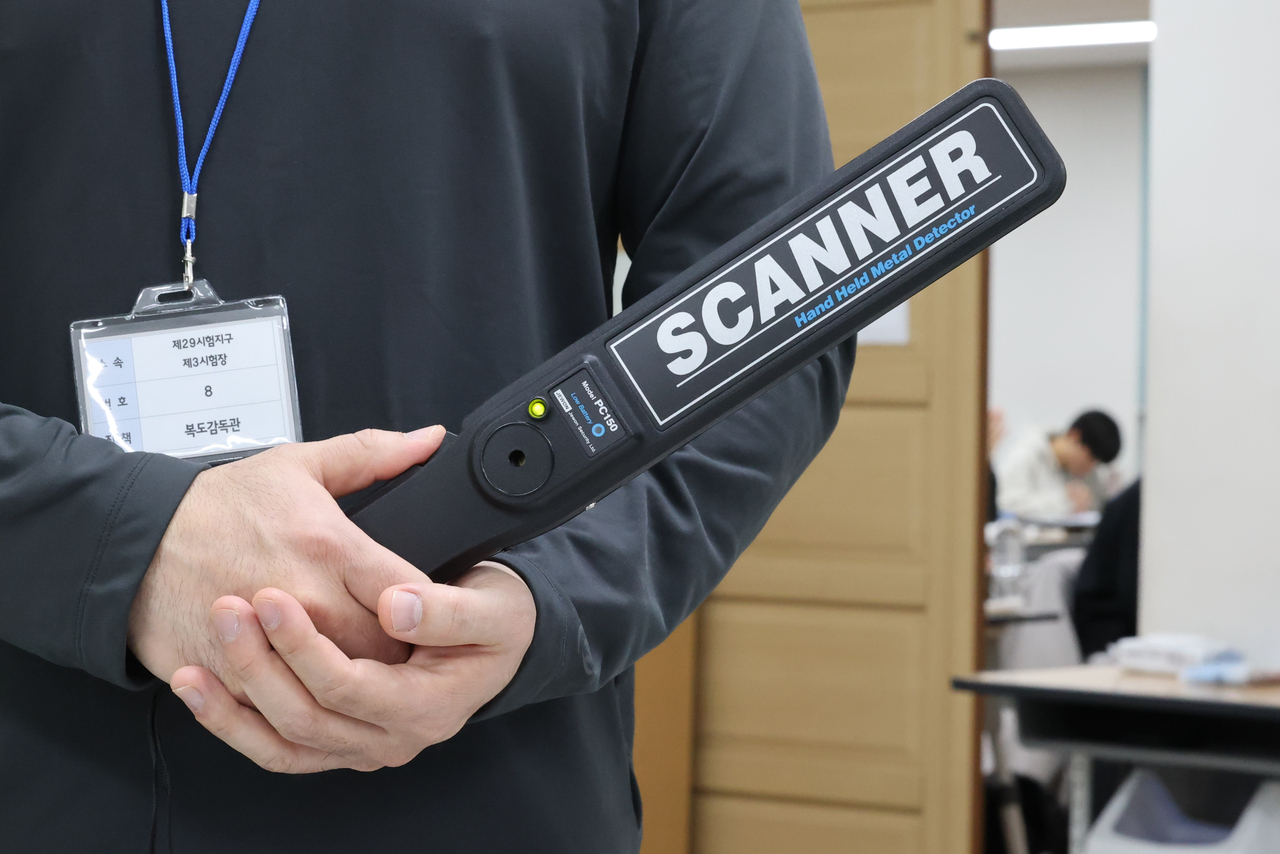
Public concern over the use of AI to cheat on exams has been growing, but court records show AI is already being exploited across a far wider range of crimes — from robbery and fraud to impersonation of public officials.
According to legal sources, the Jeju District Court's Criminal Division 2 sentenced a suspect identified only as A to two years in prison, suspended for four years, on charges including robbery, theft and impersonation of a public official. The ruling, handed down in September, has since been finalized.
According to facts established by the court, A used ChatGPT to create a fake police officer identification card. In May, while talking with a worker at a sex establishment, A suddenly declared "I'm a police officer — I'm conducting a search and seizure" and presented the forged ID. A then threatened the victim, saying, "Get in the bathroom, or I'll put handcuffs on you."
While the victim was frightened, A took 500,000 won ($374) in cash, a gold necklace valued at 900,000 won and a luxury handbag valued at 1.3 million won — a total of about 2.7 million won in goods and cash. About a month earlier, A had also fled another sex establishment with 1 million won in cash while the victim was in the bathroom, committing theft while impersonating a government official.
The court noted that A "exploited the fact that women engaged in illegal businesses would find it difficult to report crimes to police." It added that after the initial theft, when the victim failed to take active countermeasures, A escalated to robbery a month later by presenting a police ID created with generative AI.
The court further said A "committed the crimes in a calculated manner by targeting the victims' vulnerabilities," and that "the methods became increasingly sophisticated and brazen." It also found that A had "damaged the public interest of social trust in the police," calling the nature of the offenses poor.
The court also noted that A "spent all the stolen cash immediately after the crimes," that evidence suggested an attempt to dispose of stolen goods, and that A tried to flee when police ordered a stop at the time of arrest — all of which reflected poorly on A's conduct after the offenses.
However, the court opted for a suspended sentence, citing A's acknowledgment of wrongdoing and remorseful attitude, the fact that A had reached settlements with the victims, and a clean record beyond minor fines.

AI has also been used in a fraud scheme involving about 10 million won.
Judge Kim Yeon-su of the Cheongju District Court's Chungju Branch sentenced a suspect identified as B to four months in prison on fraud charges last month. That ruling has also been finalized.
According to facts established by the court, B registered a fake employee identification badge — created using an AI program — as a profile image on the messaging app KakaoTalk. B then posed as a company employee to befriend a victim on the platform before carrying out the fraud.
In March, B told the victim, "I can get you company shares at a 30 percent discount — pay part of the total amount and I'll buy the stock in both our names." The victim transferred a total of 11.5 million won to B in three installments. B, however, had never been an employee of the company and had no intention of buying any shares from the outset.
The court sentenced B to an immediate custodial term.
The court said B "actively deceived the victim by using an AI program to fabricate employee stock allocation records, KakaoTalk chat logs and photos of a company commendation plaque." It added that it took into account the fact that the victim had not been compensated and was petitioning for a severe punishment.
Cases of AI being used to cheat on national licensing exams have also been mounting.
The Incheon District Court in February fined an examinee 3 million won for using a mobile phone to query ChatGPT during a written technician certification exam. The Gwangju District Court sentenced an examinee to one year in prison, suspended for three years, in July last year for cheating on a maritime pilot trainee written exam using augmented-reality smart glasses.
notstrong@heraldcorp.com