Two-day workshop in Seoul covers customs modernization, UNI-PASS demonstration and AI and big data innovation cases
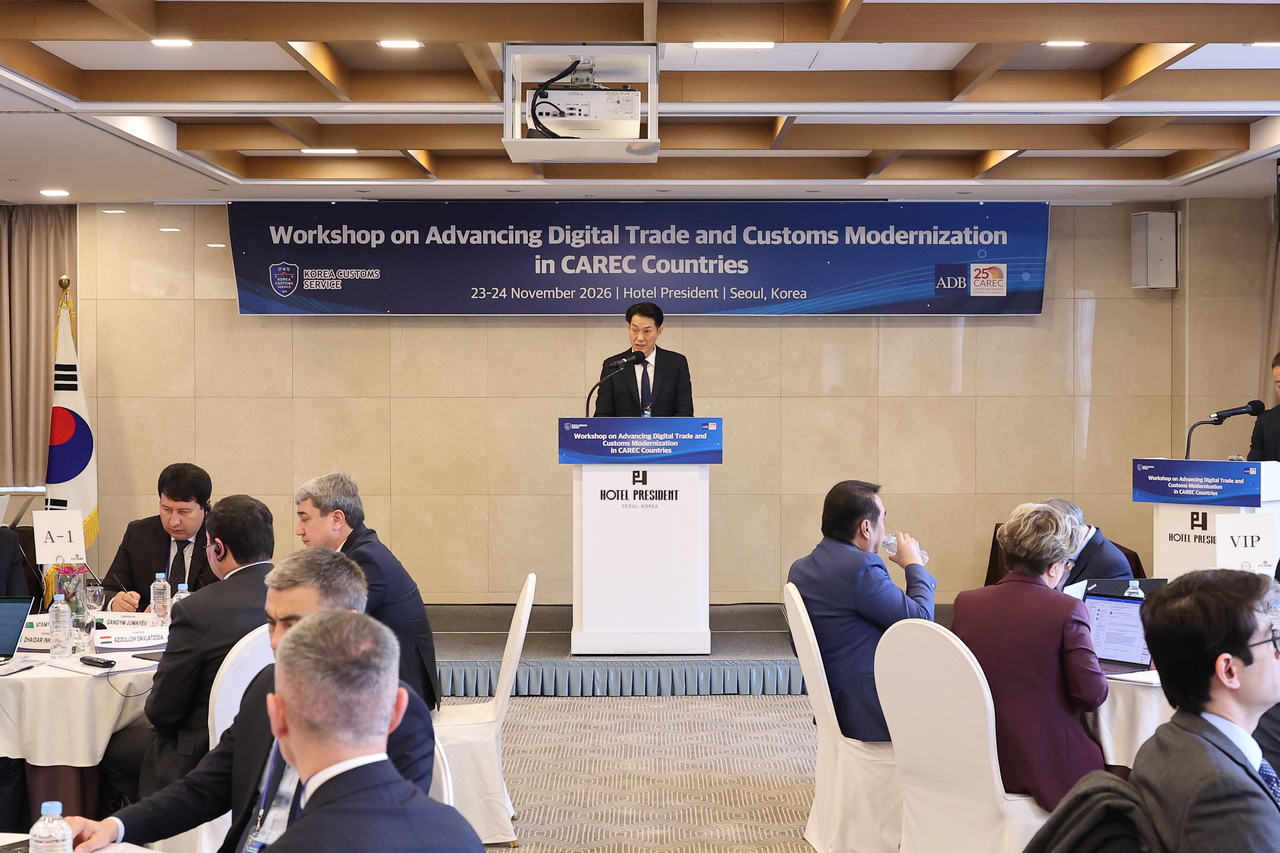
The Korea Customs Service has organized a forum to share the results of its cooperation with Central Asian countries and the broader CAREC region on digital trade facilitation and customs modernization, and to chart the course for future collaboration.
The Korea Customs Service said it is co-hosting a two-day capacity-building workshop with the Asian Development Bank in Seoul on Monday and Tuesday, bringing together delegations from 10 member states of the Central Asia Regional Economic Cooperation program under the theme "Promoting Digital Trade and Modernization of Customs Administration."
CAREC is a multilateral economic cooperation partnership launched in 1997 under ADB leadership to promote economic growth and reduce poverty across Central Asia and neighboring countries. Its members include five Central Asian states — Kazakhstan, Uzbekistan, Kyrgyzstan, Tajikistan and Turkmenistan — along with six neighboring countries: China, Mongolia, Azerbaijan, Georgia, Pakistan and Afghanistan.
The event will bring together delegations from 10 CAREC member states — all except Afghanistan — as well as representatives from the ADB, the Asian Development Bank Institute and the International Chamber of Commerce, for a total of 28 participants.
The joint workshop is part of a three-year cooperation project that the Korea Customs Service and the ADB have been pursuing under an MOU signed in 2023.
As cross-border e-commerce has expanded rapidly in recent years, the real-time exchange of customs clearance data between countries and the integration of customs administration systems have emerged as key priorities for trade facilitation.
The workshop will focus on three topics: trade facilitation and digital commerce, data interoperability and international standards, and legal recognition of electronic trade documents and mechanisms for building cross-border trust.
The Korea Customs Service will conduct a live demonstration of UNI-PASS, South Korea's advanced electronic customs clearance system. It also plans to share with CAREC member states its experience applying AI in actual customs administration operations, as well as risk management cases such as detecting smuggled imports through big data analysis.
"Activating digital trade through system integration and data exchange between customs authorities is an important foundation for reducing trade costs for businesses and expanding commerce," said Han Min, director general of the Korea Customs Service's International Customs Cooperation Bureau. "We will continue to support the advancement of customs administration in Central Asia and broaden our cooperation, doing our utmost to ensure that Korean exporters and importers can trade smoothly in a favorable environment."
kwonhl@heraldcorp.com