The agency has launched a dedicated task force and is pursuing amendments to the Forestry Resources Act and the Forest Technology Act to crack down on illegal and irregular practices.
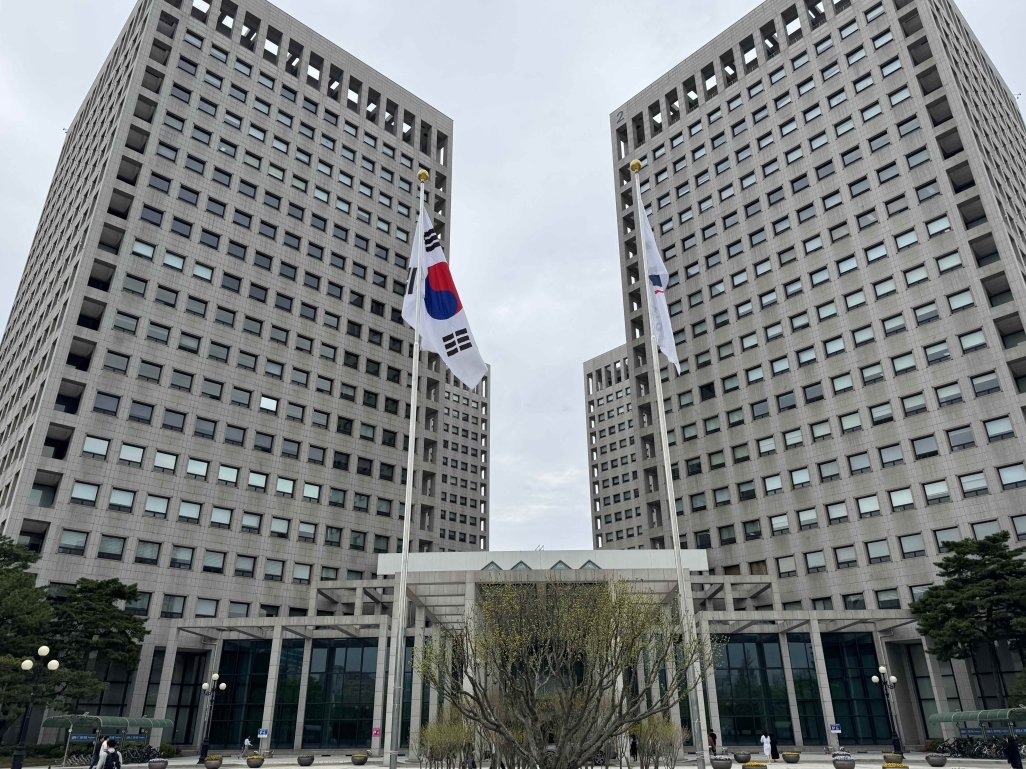
The Korea Forest Service said Monday it is pressing ahead with follow-up measures to complete its forestry normalization agenda, building on progress made so far in rooting out abnormal practices, irregular systems and illegal conduct in the sector.
Since April, the agency has operated an online suggestion channel on its official website where any member of the public can propose normalization tasks. In May, it launched a dedicated "Forestry Normalization Task Force" composed of internal and external experts.
Through these efforts, the agency has identified and acted on five normalization tasks: establishing a sound market order for forestry business entities, eliminating fraudulent resale of auction-acquired forest land, improving transparency and quality in forestry projects, reducing the disparity between the agriculture and forestry sectors, and operating nighttime wildfire-suppression helicopters.
▶ Establishing a sound market order for forestry business entities — To normalize the operation of poorly managed forestry firms, the agency conducted two comprehensive surveys this year covering roughly 1,900 companies. It has referred 496 firms suspected of violations for investigation and is pursuing administrative and judicial measures against unlicensed technicians and non-compliant entities. It also plans to promptly amend the Forestry Resources Act and the Forest Technology Act to prevent recurrence of illegal acts such as credential lending and the operation of shell companies.
▶ Eliminating fraudulent resale of auction-acquired forest land — The agency has put in place a regulatory framework to stop the short-term practice of buying forest land through auctions or public sales and reselling it to the state for a profit. By amending the Korea Forest Service's state-owned property management regulation, the agency tightened the rules so that forest land acquired through auction or public sale must be held for at least five years before it qualifies for state purchase.
▶ Improving transparency and quality in forestry projects — The agency has expanded the share of forestry contracts awarded through competitive bidding. After incorporating the competitive-contract ratio into the performance evaluation criteria for Korea Forest Service agencies, the ratio reached 58.9 percent as of August — surpassing both last year's figure of 37.5 percent and this year's target of 52 percent. The agency also plans to complete within the year a revision of its detailed eligibility-review standards for forestry projects, which will introduce a new credibility rating tied to disaster occurrence levels and tighten the criteria for a firm's registered headquarters location, further strengthening the foundation for project quality.
▶ Reducing the disparity between the agriculture and forestry sectors — The agency is stepping up support to close the gap between farming and forestry. It is drawing up the 2027 budget to raise the per-unit direct payment rate for forestry, which has lagged behind the rate for agriculture. It is also introducing a dedicated card system for tax-exempt fuel in the forestry sector — an inconvenience that has long set forestry apart from agriculture, which already has such a system. After a pilot run, the system is set to go into full operation in the first half of 2027.
▶ Operating nighttime wildfire-suppression helicopters — The agency has built a framework for full-scale nighttime wildfire-suppression helicopter operation. It trained nighttime-flight pilots through dedicated education and training, and all seven nighttime wildfire-suppression helicopters are now in operation for the autumn wildfire-prevention period, which runs from Nov. 1 through Dec. 15. Going forward, when a daytime wildfire extends into the night, the agency plans to deploy helicopters for nighttime suppression, taking into account weather conditions such as wind speed and visibility, as well as safety considerations.
Im Ha-su, head of the Forestry Normalization Task Force and deputy chief of the Korea Forest Service, said the agency would "continue to listen to the public and build a trustworthy forestry administration by steadily improving unreasonable practices and systems."
kwonhl@heraldcorp.com