Scale of national support, funding source in focus ahead of budget review
National Assembly Budget Office publishes report on fire service finances
'Under current system, local governments will shoulder 94.3% of firefighter wages by 2031'
Ruling party and government at odds over expiring tobacco tax revenue — fire services or housing welfare?
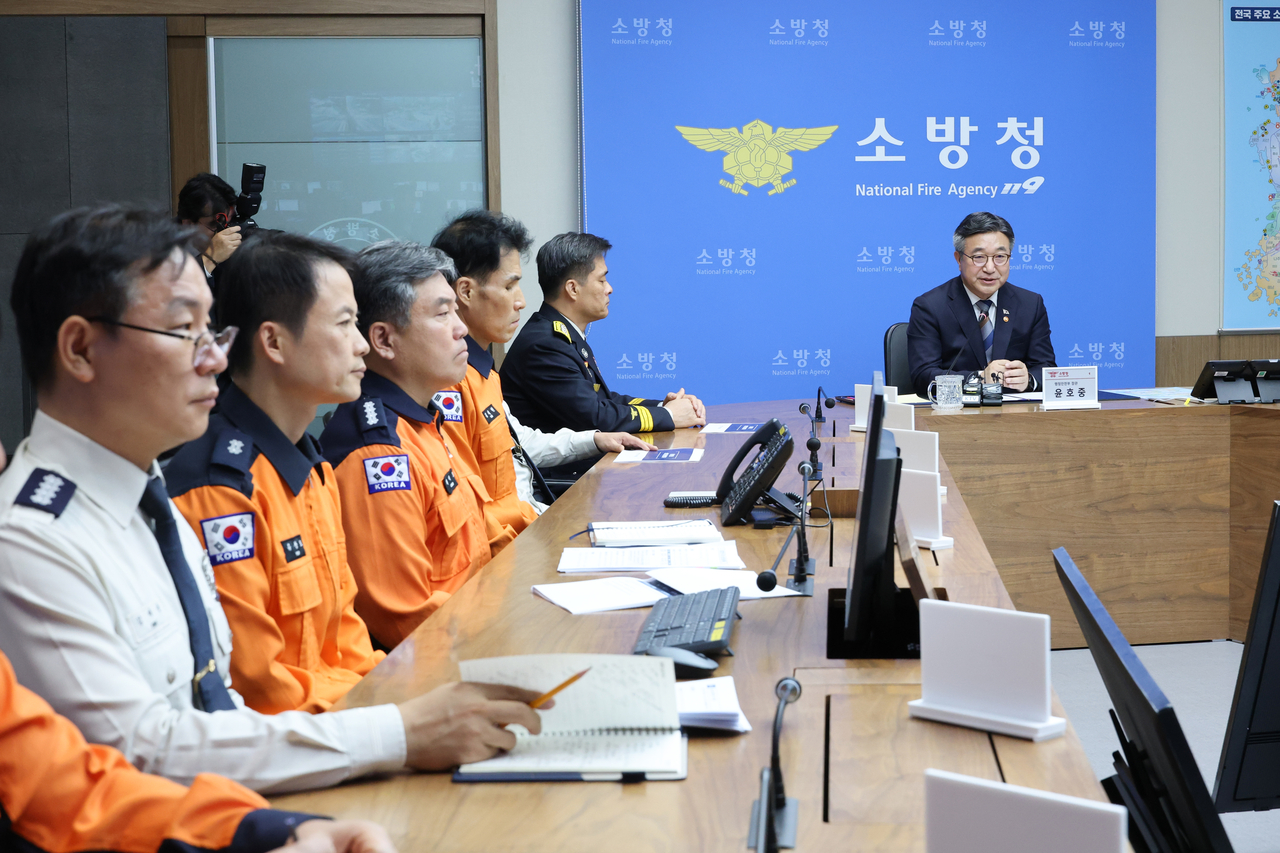
How to fund a proposal to raise the national government's share of firefighter wage costs to 30 percent has emerged as a key flashpoint in the National Assembly's budget review. The Public Administration and Security Committee has added 2.03 trillion won ($1.53 billion) in wage support to next year's budget bill. Further negotiations over the exact level of support and how to finance it are expected when the Special Committee on Budget and Accounts takes up the measure.
The Public Administration and Security Committee voted Monday to amend the National Fire Agency's budget bill, adding a new line item under the national general account to cover firefighter wages. The Democratic Party of Korea, while broadly supportive of easing the wage burden on local governments, is still working through how to pay for the measure.
Next year's total firefighter wage bill is estimated at 6.94 trillion won, according to a report on fire service finances published Thursday by the National Assembly Budget Office. The government's original budget submission to the Assembly proposed covering 422.5 billion won of that through the fire safety allocation tax, which would put the national government's share at 6.1 percent of total wages, with the remainder borne by metropolitan and provincial governments.
Firefighters were reclassified as national civil servants in 2020, yet the share of their wages paid by local governments has risen from 87.8 percent in 2021 to 91.6 percent this year. National support through the fire safety allocation tax has hovered at around 500 billion won a year even as the overall wage bill has grown. Local governments have covered the gap by supplementing that grant with the local resource facility tax — a local levy — and drawing on their own budgets for whatever remains. The Budget Office projected that, if the current system is left unchanged, the local share will climb to 94.3 percent by 2031.
As wages have consumed a growing slice of local fire budgets, the share going to operational spending — equipment, vehicles and firefighter safety — has shrunk. Firefighter wages rose from 4.65 trillion won in 2021 to 6.51 trillion won this year, an increase of 1.87 trillion won. Over the same period, operational spending edged up only 41 billion won, from 2.04 trillion won to 2.08 trillion won. The operational share of total fire budgets fell 6.3 percentage points, from 30.5 percent to 24.2 percent.
The Budget Office proposed that, if expanded national funding reduces the wage burden on local governments, a minimum operational spending floor should be set to ensure the freed-up fiscal room goes toward equipment, vehicles and firefighter safety rather than being absorbed elsewhere.
The office also said the law should spell out how wages are to be split between the national and local governments and set a timetable for raising the national share. It further proposed that any shortfall in the fire safety allocation tax caused by declining tobacco excise revenue be made up from the national general account.
The government and the ruling party have agreed to reactivate a pan-government fiscal decentralization TF to explore ways to expand local revenue. Interior and Safety Minister Yun Ho-jung told the Public Administration and Security Committee on Monday that budget measures to strengthen the national government's responsibility for fire services "will be finalized through the pan-government fiscal decentralization TF, using approaches such as converting national taxes to local taxes or raising the local allocation tax rate."
Within the ruling party, a proposal has emerged to redirect a local education tax on tobacco consumption — set to expire at the end of this year — toward fire services. Democratic Party lawmakers Bu Seung-chan and Kim Tae-nyeon have each introduced bills to convert that revenue source into a local resource facility tax earmarked for fire services.
The government, however, has submitted legislation to redirect the same revenue into a local housing welfare tax. Disagreement over how to use the expiring revenue was also on display at a senior ruling party-government consultative meeting Nov. 8. The budget committee is expected to wrestle with how much national money to commit to firefighter wages next year, while the legislative track will center on whether the soon-to-expire tax revenue should go to fire services or housing welfare.
thanks@heraldcorp.com