Suneung response cited as new reason for disapproval
Economic optimism hits lowest since current government took office
47% want opposition to check government in next general election
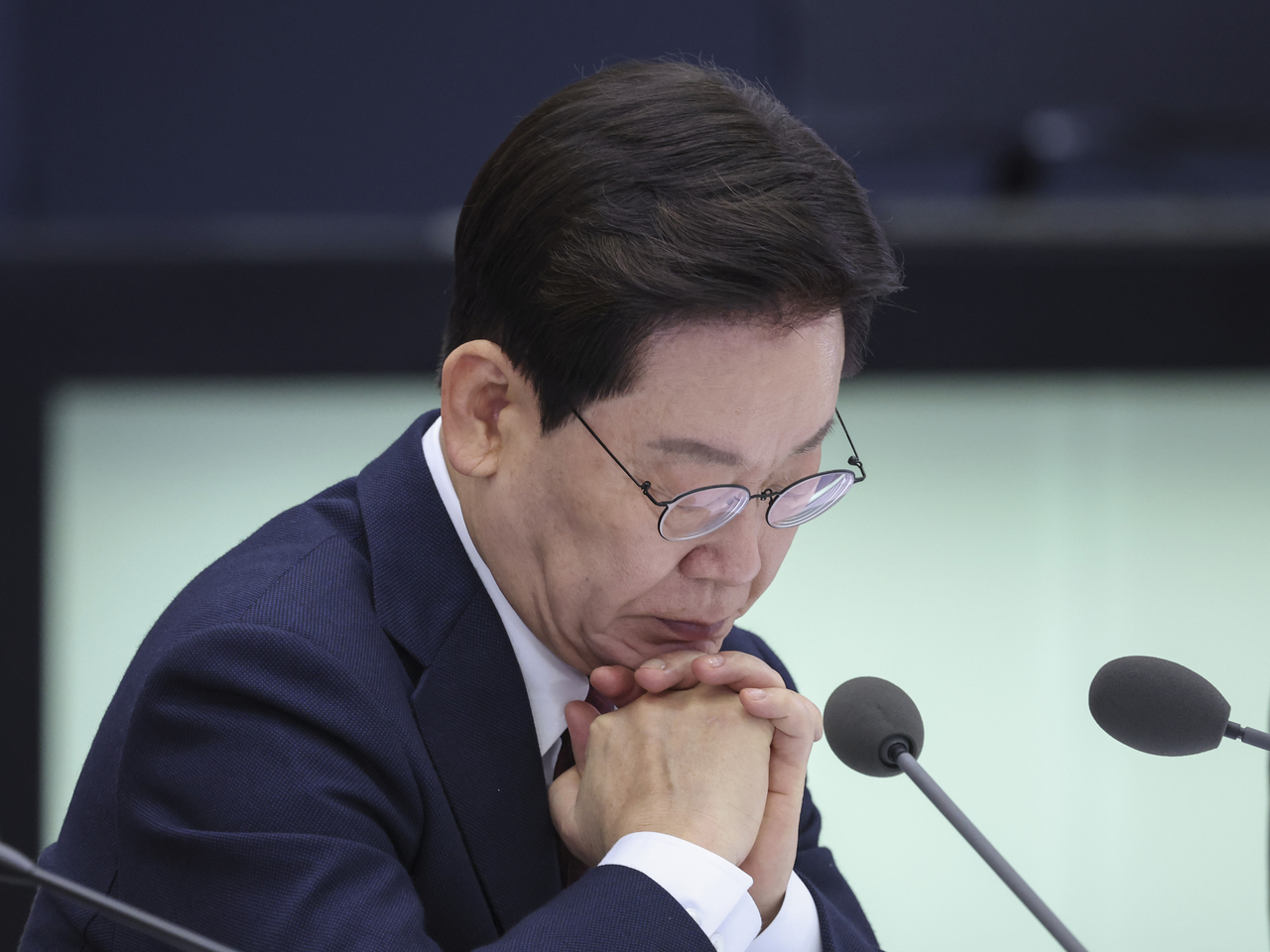
President Lee Jae Myung's approval rating has held steady at 40% despite ongoing controversy over the government's handling of AI cheating on national qualification exams and issues surrounding the College Scholastic Ability Test, known as the Suneung, according to a poll released Friday. While "Suneung response" appeared as a new reason for disapproval at 2%, it had only a marginal effect on the overall rating.
Gallup Korea conducted the survey Tuesday through Thursday among 1,001 adults aged 18 and older nationwide. It found that 40% gave a positive assessment of Lee's job performance while 49% gave a negative one. Although the leading digits shifted slightly from the previous week, the rating has remained essentially flat for six consecutive weeks.
Notably, "economy and livelihoods" topped the list of reasons for disapproval at 18%, overtaking "real estate policy" at 12% for the first time since the Lee administration took office. On the positive side, "diplomacy" led approval reasons at 24%.
Economic optimism fell to its lowest level since the current government took office. The share of respondents who said the economy would improve over the next year dropped to 26% — roughly half the 52% recorded in June last year, shortly after Lee's inauguration. Meanwhile, 38% said conditions would worsen. Economic pessimism has outpaced optimism every month since July.
Gallup Korea noted that despite favorable macroeconomic indicators — including annual exports surpassing $1 trillion and upward revisions to growth forecasts by the IMF and the Korea Development Institute — individuals' sense of the economy remains cold.
In party support, the Democratic Party of Korea stood at 36% and the People Power Party at 28%. On the general election scheduled for April 2028, sentiment favored checking the government over supporting it. Some 47% said opposition candidates should win more seats to check the current government, compared with 37% who said ruling party candidates should win more seats to support it.
The survey was conducted via telephone interviews using random samples of virtual numbers provided by three mobile carriers. The response rate was 10.1%, with a margin of error of plus or minus 3.1 percentage points at a 95% confidence level. Further details are available on the website of the National Election Survey Deliberation Commission.
thanks@heraldcorp.com