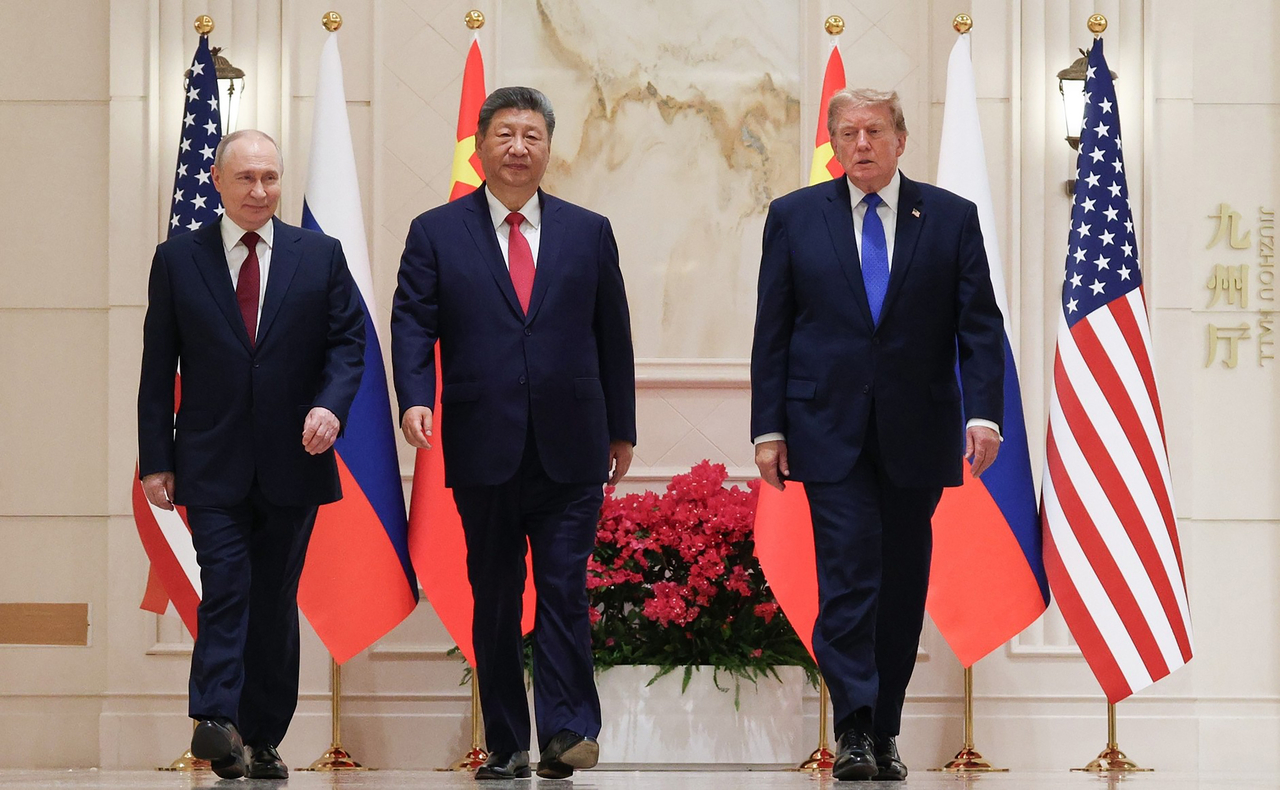
A trilateral summit among the leaders of the United States, China and Russia, held Thursday on the sidelines of the Asia-Pacific Economic Cooperation summit in Shenzhen, had raised fears of a second Yalta Conference — a great-power carve-up of the world order — but foreign media broadly concluded it yielded little beyond a photo opportunity for the three leaders. Even so, analysts caution that the summit should not be dismissed simply because it ended without results.
At the heart of the concern is the perception that China and Russia are seeking to overturn the international order by force, and that the United States, rather than pushing back, appeared ready to engage them on transactional terms. President Donald Trump's remarks boasting of the summit's achievements drew criticism for suggesting a classic great-power condominium — a shared system of dominance.
The Nikkei Asian Review said the trilateral meeting produced no progress on nuclear disarmament, a truce in Ukraine or the war involving Iran, but warned it should not be taken lightly. The crux of the problem, it said, lies not in what the three leaders decided but in the diplomatic momentum the meeting itself generates.
China and Russia are seeking to change the status quo in international relations by force, while the United States has shifted away from resisting that and toward prioritizing deals with them instead. Nikkei said that if this trend deepens, the summit could be remembered as a turning point that raised the risk of a third world war.
The rationale for the meeting also runs counter to the direction the international community should be heading. The original Yalta Conference aimed to end World War II, but this summit brought together parties to — or deeply involved in — active conflicts to discuss ending those wars. Russia, one of the three participants, is the aggressor that invaded Ukraine, while China has in effect been supporting Russia by sustaining its wartime economy. The United States, for its part, launched a war by invading Iran.
Another stark difference from Yalta is that two of the three countries at this summit — China and Russia — are authoritarian states, whereas two of the three at Yalta, the United States and Britain, were democracies. Trump himself has shown little interest in international law or human rights; the summit reportedly included discussion of curtailing the authority of the International Criminal Court. Experts warn that if these three leaders pursue diplomatic deals among themselves, democracy will further erode and the world will increasingly operate on the law of the jungle.
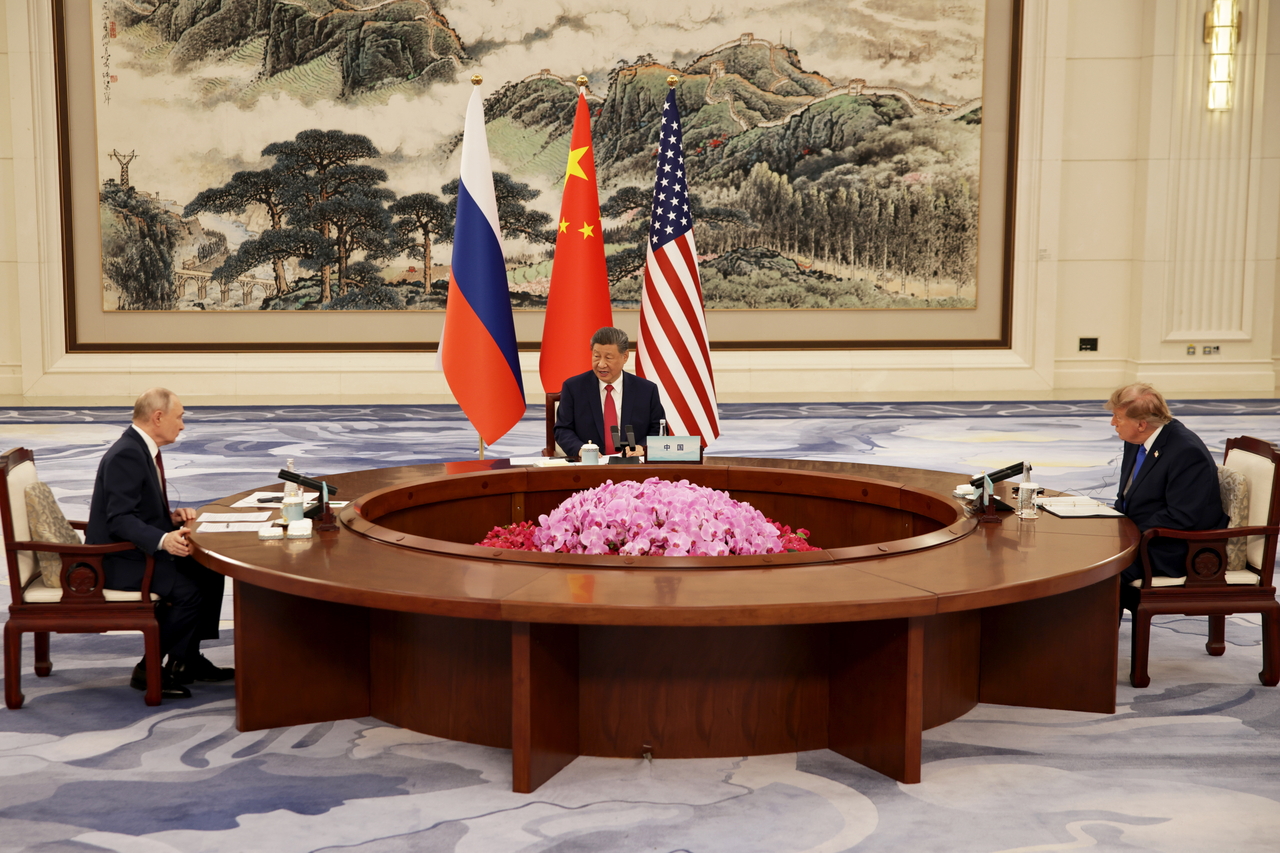
The logic the three leaders displayed at this APEC gathering has also drawn criticism for reflecting a classic great-power condominium mindset. Victor Cha, Korea Chair at the Center for Strategic and International Studies, said on a CSIS podcast Thursday that Trump had made remarks to the effect that "if we all agree, there will be no problems in the world," calling it "a textbook great-power condominium statement."
Cha was referring to Trump's comment to Chinese President Xi Jinping at their bilateral meeting — "As long as you and I are in charge, we will have no problems." Xi appeared to echo the sentiment at the trilateral summit, emphasizing that the three countries bear a "special responsibility" to the world, while Vladimir Putin also highlighted the role of great powers in maintaining international peace and security.
In that sense, Nikkei said, the summit more closely resembles the 1938 Munich Conference than the Yalta Conference. At Munich, British Prime Minister Neville Chamberlain and others acceded to Adolf Hitler's demands and ceded part of Czechoslovakia's territory to Nazi Germany. Emboldened by the lesson that Britain would not resist the logic of force, Germany invaded Poland the following year, triggering World War II. The Munich Conference left a lasting warning: concessions to an aggressor invite greater aggression.
Critics say this summit similarly opened the door for Russia to return to the great-power diplomatic stage without paying any price for its aggression — sending the message that force pays. That, analysts say, could embolden Russia to extend its military threats beyond Ukraine toward Europe, and could lead China to conclude that it too can change the status quo by force, prompting more aggressive moves in the Taiwan Strait and the South China Sea.
kate01@heraldcorp.com